


You book a cruise. You see the price. Then you notice the fine print: automatic daily gratuities. Some travelers accept it without question. Others call guest services on day one to remove them. The debate rages on.
Here's everything you need to know about cruise gratuities in 2026: what they are, why they exist, and whether you should adjust them.
What Are Automatic Gratuities, Really?
Automatic gratuities are daily charges added to your onboard account. They're meant to compensate the crew members who make your cruise run smoothly: cabin stewards, dining staff, kitchen workers, and behind-the-scenes personnel.Most cruise lines charge between $16 and $25 per person, per day. The amount depends on your cabin category. Suite guests typically pay more than interior cabin guests. Children under 2–4 years old cruise free of gratuities. Kids aged 4–14 usually pay half the adult rate.
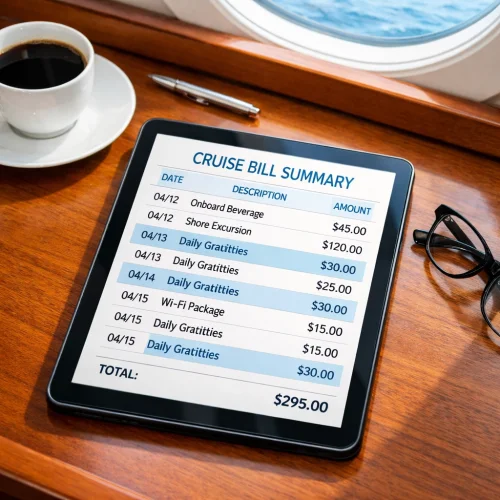
The charges hit your account automatically. You'll see them on your final bill at the end of the cruise. No cash envelopes. No awkward handoffs. The cruise line distributes the money among the crew according to their internal system.
The Real Cost Breakdown for 2026
Here's what you're looking at for automatic daily gratuities on major cruise lines:Carnival Cruise Line: $17–$19 per person, per day starting April 2, 2026. That's up from $16–$18. For a family of four on a seven-day cruise, that's $476–$532 in gratuities alone.
Royal Caribbean: $18.50–$21 per person, per day depending on cabin type. A couple in a balcony cabin will pay roughly $260 for a week.
Norwegian Cruise Line: $20–$25 per person, per day. On the higher end of the spectrum.
Disney Cruise Line: No automatic charge. Disney suggests $16 per day for standard cabins and $27.25 for concierge-level guests. You can adjust freely.
Virgin Voyages: Gratuities included in the fare. No additional daily charges. No debate.
Luxury lines like Regent Seven Seas, Seabourn, and Silversea also include gratuities. They pay crew higher base wages and build the cost into your fare.
What Those Daily Charges Cover (and What They Don't)
Your automatic daily gratuities go to the staff you interact with most:- Your cabin steward who cleans your room twice daily
- Dining room servers and assistant servers
- Kitchen staff and food prep workers
- Behind-the-scenes crew who keep operations running
- Bartenders and bar staff (15–20% auto-gratuity per drink)
- Specialty restaurant servers (18–20% auto-gratuity)
- Spa and salon staff (18–20% auto-gratuity)
- Room service delivery (some lines charge a flat fee)
- Shore excursion guides
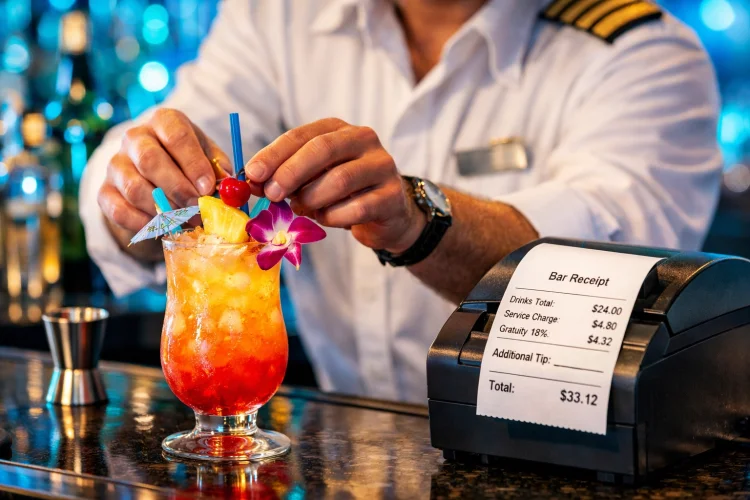
When you order a drink, you'll see the base price, the auto-gratuity, and a line for an optional additional tip. Same with spa services. The automatic daily gratuities don't eliminate all tipping: they just handle the baseline crew compensation.
The Controversial Question: Should You Remove Them?
This is where the debate gets heated. You can adjust or remove automatic gratuities on most cruise lines. You visit guest services, explain your reasoning, and they'll adjust your account.Arguments for removing them:
You want to tip based on actual service received. If your cabin steward skips cleanings or your dining server is inattentive, you don't want to pre-pay for subpar service. You prefer to reward exceptional service directly with cash at the end of the cruise.
Some travelers argue the cruise line should pay crew members a living wage without relying on passenger tips. They view mandatory gratuities as the company passing labor costs to customers.
Arguments against removing them:
Crew members earn minimal base wages. They rely on gratuities as a significant portion of their income. When you remove automatic gratuities, you're not making a statement to the corporation: you're directly impacting workers.
The crew often pools and shares gratuities. Your cabin steward and dining server aren't the only ones who benefit. Kitchen staff, dishwashers, and assistant dining staff all receive a portion. By removing gratuities entirely, you're affecting people you never even see.
The middle ground: If you receive genuinely poor service from a specific staff member, you can visit guest services and request an adjustment for that individual. Most cruise lines will accommodate reasonable requests without removing all charges.

Extra Tipping for Exceptional Service
The automatic gratuities are the baseline. They're not meant to be the ceiling.If your cabin steward goes above and beyond: arranging towel animals, fulfilling special requests, or simply making your vacation better: an extra $20–$50 cash tip on the last night is appropriate. Hand it to them directly.
If your dining server remembers your preferences, accommodates dietary restrictions, or makes dinner a highlight of your evening, slip them an extra $20–$40 cash at the end of the cruise.
Bartenders who make your favorite drink without you asking? A few extra dollars in cash throughout the cruise shows appreciation.
The automatic system handles fair compensation. Cash tips reward excellence.
How Different Lines Handle Gratuities
Not all cruise lines operate the same way.Virgin Voyages builds gratuities into the fare. You pay one price. No daily charges appear on your account. No guilt. No math. This model appeals to travelers who want true all-inclusive pricing.
Disney Cruise Line suggests amounts but doesn't charge automatically. You control the process entirely. You can prepay at booking, adjust during the cruise, or handle it manually at the end.
Luxury lines like Regent, Seabourn, and Silversea pay crew higher base wages and include gratuities in fares. You're not expected to tip on top of your already-premium pricing. Some crew members may even politely decline tips.
Mainstream lines like Carnival, Royal Caribbean, and Norwegian stick with the automatic model. It's predictable for budgeting and ensures crew members receive consistent compensation.
The 2026 Gratuity Increases
Several cruise lines raised gratuity rates for 2026. Carnival increased charges on April 2, 2026. Other lines adjusted rates throughout late 2025 and early 2026.Why the increases? Rising labor costs, inflation, and industry-wide wage adjustments. Cruise lines argue that gratuity increases help crew members keep pace with the cost of living.
Critics argue the increases shift more costs to passengers while cruise lines post record profits. The debate continues in online forums and social media groups.
One thing is certain: Gratuity rates will likely continue rising. Budget accordingly. A seven-day cruise that cost $300 in gratuities last year might cost $340–$360 this year.
The Cultural Divide
American and Canadian cruisers generally accept tipping culture. It's standard in restaurants, hotels, and service industries. Automatic cruise gratuities feel like an extension of that system.European, Australian, and Asian travelers often find the system confusing or frustrating. In many countries, service workers earn full wages without relying on tips. The concept of mandatory gratuities feels contradictory.
This cultural tension plays out on cruise ships daily. Some passengers tip generously beyond the automatic charges. Others view the automatic charges as excessive and resent the pressure to tip more.
There's no universal right answer. Understand the system, respect the crew, and make choices that align with your values.
Where Do You Stand on the Gratuity Debate?
The conversation doesn't end here. Head over to our Tipping & Gratuities forum to share your experiences. Have you ever adjusted your gratuities? Do you tip extra for exceptional service? How do you feel about the 2026 rate increases?Real cruisers, real opinions, real debate. Join the conversation at CruiseVoices.