

Jake_Harmon
Moderator
Why Specialty Dining Deserves a Real Strategy
Listen, I've been on over 40 cruises, and I can tell you with absolute certainty: how you approach specialty dining can make or break your cruise experience. This isn't just about picking a nice restaurant—it's about understanding pricing structures that vary wildly between cruise lines, knowing when to reserve, decoding what's actually worth the upcharge, and avoiding the common mistakes that leave you either overspending or missing out entirely.
The problem is that specialty dining on cruise ships in 2026 has become beautifully complicated. Royal Caribbean's dynamic pricing looks nothing like Carnival's flat fees. Norwegian has all-inclusive options baked into certain packages. Disney charges differently for families. Celebrity's "Go Big" package works on a completely different math than Princess's à la carte model. Most cruisers just wander into a specialty restaurant, see a $45 per-person charge, panic, and eat at the buffet for the fifth night in a row. You're not going to be that person.
Understanding the Three Pricing Models Used in 2026
Before you book a single specialty restaurant, you need to understand how your cruise line charges. There's no universal standard, and that's where most people go wrong.
Model One: Per-Person, Per-Visit (Royal Caribbean, Disney, Celebrity)
Royal Caribbean is the clearest example here. When you walk into Izumi on the Oasis-class ships or Wonderland on the Icon, you're charged a single flat fee per person—typically $35 to $60 per visit, depending on the restaurant. This fee covers just that meal. You walk in, pay once, eat, and you're done. No package required.
Disney Cruise Line does something similar but charges $50 to $85 per adult, depending on the restaurant. Here's the catch: they often charge $25 per child, which can save families money if you're bringing kids. Palo (their signature restaurant) and Remy (their high-end option) are separate tiers.
Celebrity uses their "Go Best" specialty package model, where you can buy upfront access to multiple restaurants. In 2026, this runs around $65–$85 per person per day for the package, but it covers multiple dining venues across your entire cruise.
- Royal Caribbean: Straightforward per-visit pricing—pay $35–$60 each time you eat there
- Disney: Per-visit with child discounts—adults pay $50–$85, kids often $25
- Celebrity: Package model—pay $65–$85 per day to unlock multiple restaurants
Model Two: Included or Package-Based (Norwegian, Virgin Voyages)
Norwegian Cruise Line's model is different entirely. If you buy certain package tiers (like their "Freestyle Dining" plus beverage package), some specialty restaurants are already included. Others still require an upcharge. This creates confusion because you think something's free, then find out it's not.
Virgin Voyages goes all-in: virtually all specialty dining is included in your cruise fare. You're not paying per-restaurant. This is their whole pitch. It's a massive advantage if you love variety, but the sticker price of a Virgin cruise is higher upfront to account for it.
- Norwegian: Packages vary—some specialty restaurants included, others still à la carte ($25–$40 per visit)
- Virgin Voyages: All specialty dining included in cruise fare—no surprise charges
Model Three: À la Carte with Premium Surcharges (Carnival, Disney)
Carnival charges $15 to $35 per person per specialty dining venue on most ships. This is the lowest per-visit cost in the industry, but it's also because their specialty restaurants aren't always as elaborate. Their steakhouses (like Supper Club) are well-regarded at the higher end of that range.
Disney also uses à la carte for some experiences, like their special wine-pairing dinners or character dining packages, which can run $100+ per person.
The Reservation Game: Timing and Strategy
Here's what separates smart cruisers from everyone else: when you reserve matters enormously.
Book Before You Sail (The Sweet Spot)
On Royal Caribbean ships, you can now pre-book specialty restaurants online 75 days before your sailing. This is crucial because popular spots like Izumi, Wonderland, or the Italian Trattoria sell out quickly. If you're sailing in spring or summer 2026, book these slots immediately when they open. Don't wait.
Disney lets you book 120 days in advance. Same rule applies—book Remy and Palo the moment reservations open or you'll be locked out.
Carnival allows reservations 60 days out. Shorter window, but the same principle: book early for peak times.
Book Strategically Around Your Itinerary
Here's a pro move: book specialty restaurants on sea days, not port days. When your ship is in Cozumel or Nassau, fewer people are dining onboard. This means:
- You have more flexible timing (no rush to get back for excursions)
- The restaurant is less crowded
- Staff actually has time to upsell wine pairings or explain dishes
- You're not eating dinner at 5 p.m. because you're nervous about missing your ship
I booked Izumi on Royal Caribbean's Harmony on a sea day, and the difference was night and day compared to port days. Fewer tourists, better pacing, actual conversation with the sommelier.
Reservation Timing During Your Cruise
If you didn't pre-book (which you should have, but life happens), here's the backup plan:
- Visit the dining desk on embarkation day or the first sea day—this is when walk-ins are most likely to find openings
- Ask about last-minute cancellations—cruisers cancel specialty dining reservations constantly due to excursion overruns or changed plans
- Book for dinner time around 6 p.m. or after 8:30 p.m.—earlier slots (5:30–6 p.m.) and peak times (7–8 p.m.) fill fastest
- Consider lunch reservations—most cruisers skip specialty dining lunch entirely, so availability is usually high
Decoding Menus and Understanding What's Actually Worth the Money

Not all specialty restaurants are created equal, and this is where your budget strategy really matters.
High-Value Specialty Restaurants (Worth the Full Price)
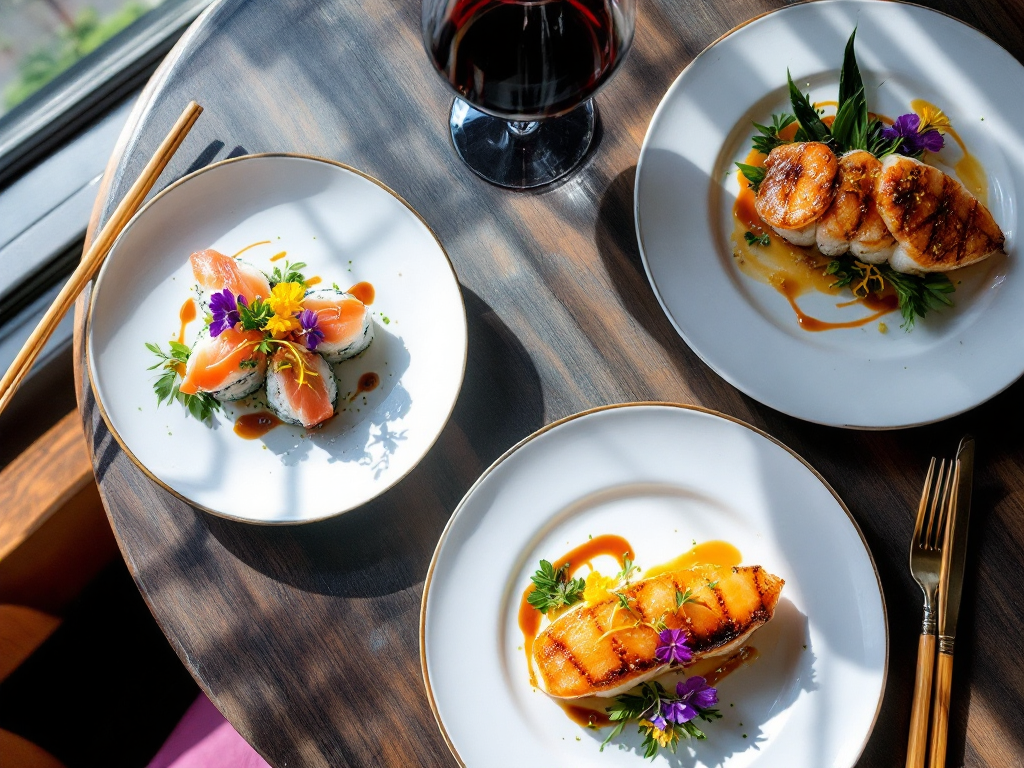
On Royal Caribbean, Izumi (Japanese/sushi) is worth every penny of that $50+ charge. You're getting sushi-grade fish that the main dining room never sees, prepared by dedicated sushi chefs. The rolls are fresh, the nigiri is pristine, and the experience is genuinely different from casual sushi at home.
Wonderland (molecular gastronomy) is polarizing—some love the theatrical presentation, others find it pretentious. But if you enjoy innovative cuisine and aren't fussed about portion size, it's a legitimate specialty experience.
On Celebrity, their seafood restaurants are consistently excellent. The raw bar alone (oysters, shrimp, crab) justifies the upcharge for cruisers who love shellfish.
Disney's Remy (French tasting menu) is $145 per adult in 2026, but it's genuinely restaurant-quality. If you love fine dining and you're already paying Disney prices for the cruise, this is where you splurge.
Medium-Value Options (Worth Trying Once)
Most steakhouses fall here. Carnival's Supper Club, Royal Caribbean's Chops Grille, and Celebrity's Specialty restaurants offer better beef than the main dining room, but not dramatically so. They're nice experiences, usually $35–$50 per person, and worth doing once per cruise if you love steak.
Italian specialty restaurants (Trattoria on Royal, Palo on Disney) are generally solid but not revolutionary. Good pasta, decent wine list, pleasant ambiance. Worth one reservation if Italian food matters to you.
Lower-Value Traps (Skip These)
Here's where I'm going to be honest: some specialty restaurants aren't worth the upcharge. Burger restaurants that charge $25 per person. "Seafood" restaurants that serve frozen fish. Noodle bars that basically duplicate the buffet.
Before you book, read recent reviews on the CruiseVoices specialty dining forum. Cruisers who sailed in the last month are brutally honest about whether something's worth the money.
The Math: When Does a Specialty Dining Package Actually Save You Money?
Let's do real numbers for a typical 7-night cruise in 2026.
Scenario 1: À la Carte Ordering (Royal Caribbean)
Let's say you want to visit 3 specialty restaurants:
- Izumi (2 people): $50 × 2 = $100
- Italian Trattoria (2 people): $35 × 2 = $70
- Steakhouse (2 people): $45 × 2 = $90
- Total: $260 for the couple
If you'd visited 4 restaurants, you'd hit $340+. At that point, you might've been better off with a Celebrity-style package.
Scenario 2: Package Model (Celebrity)
Celebrity's "Go Best" package for 2 people × 7 nights × $85 per day = $1,190.
But here's the thing: this unlocks all specialty restaurants for the entire cruise. So if you visit specialty restaurants 5+ times, the package pays for itself. If you're only doing 2–3 visits, you overpay.
Scenario 3: All-Inclusive (Virgin Voyages)
Virgin's base fares in 2026 start around $1,200 per person for a 7-night cruise. But that includes all specialty dining, beverages, gratuities, and entertainment. If you were planning to spend $300 on specialty dining à la carte, you might save nothing on a per-cruise basis, but you're guaranteed better value overall.
The Real Strategy
Here's what I actually do:
- On Royal Caribbean (à la carte): I pre-book 2–3 specialty restaurants per week, sticking to the high-value ones (sushi, molecular gastro). Total spend: ~$300 for two people, 7 nights. Totally worth it.
- On Celebrity: I only book if I'm cruising for 10+ days. Otherwise, I skip the package and do 2–3 à la carte visits.
- On Disney: I splurge on one dinner at Remy (because it's the best fine dining experience on their ships) and do the main dining room the rest of the week.
- On Norwegian: I check my package to see what's included, book the included restaurants, then skip additional specialty dining because Norwegian's pricing is unreliable.

Hidden Charges and Terms You Need to Know
Gratuities
Most cruise lines now automatically add 18% gratuity to specialty dining charges. Royal Caribbean, Disney, and Celebrity all do this. It's usually noted in tiny print on the menu. Make sure you know this before you sit down—a $50 meal becomes $59 after tip.
Norwegian and some Carnival ships often add 15%, not 18%. Always ask your server or check the menu.
Wine Pairings
This is where specialty restaurants make serious money. Wine pairings on Royal Caribbean's Izumi can run an additional $60–$85 per person for 5–6 pours across a multi-course meal. Are they good? Usually yes. Are they optional? Absolutely. Don't feel pressured to add them unless you genuinely want to.
Cancellation Policies
Here's what most people don't know: if you pre-book a specialty restaurant and your plans change, you can usually cancel up to 24 hours before your reservation without penalty. But cruise lines have started getting stricter—some now charge a $25–$35 cancellation fee. Always check the fine print when you book.
Dietary Restrictions
If you have allergies or dietary restrictions (vegetarian, vegan, gluten-free), notify the dining desk when you board. Specialty restaurants have smaller kitchens than the main dining room, so they need advance notice. I've seen vegan diners get turned away from specialty restaurants because the kitchen couldn't accommodate on short notice.
The Booking Strategy: Your Action Plan
Here's exactly what you should do:
75 Days Before Your Cruise
- Log into your cruise line's website (Royal Caribbean, Disney, etc.)
- Identify 3–4 specialty restaurants that genuinely appeal to you (not just the famous ones—read reviews)
- Pre-book these for sea days or flexible port days
- Note the cancellation policy and set a phone reminder for 24 hours before each reservation
At Check-In
- Stop by the dining desk to confirm your specialty restaurant reservations
- Ask about any last-minute additions or cancellations (opportunity to add more restaurants)
- Request your server's recommendations for wine pairings (helps you decide whether to splurge)
During Your Cruise
- Eat at your reserved specialty restaurant at the scheduled time (don't skip—it affects other guests' dining)
- Ask your server about the restaurant's most popular dish (it's usually the best)
- If you find an opening for a restaurant you missed, book it immediately at the dining desk
Real Cruise Stories: What Went Right and Wrong
I sailed on Royal Caribbean's Harmony in January 2026, and I watched two couples handle specialty dining completely differently.
Couple A showed up for their Izumi reservation without pre-booking. The restaurant was booked solid. They were offered a 9:30 p.m. seating (super late) or told to come back the next day. They ended up missing Izumi entirely and ate at the Italian Trattoria instead. They paid $70 for two people and spent the whole time wishing they'd gotten sushi.
Couple B had pre-booked Izumi 75 days in advance for a sea day at 6:15 p.m. They had a perfect table, no wait, and the chef even sent out a complimentary appetizer because there was time to interact properly. Same restaurant, completely different experience.
Later that same cruise, I met a solo traveler who'd bought Celebrity's "Go Best" package for a 10-night cruise thinking it would save money. She ate at the main dining room most nights because she didn't want to eat alone in specialty restaurants. She spent $950 on a package she barely used. Wrong strategy for her situation.
Meanwhile, a family of four I met had booked Remy on Disney for just $200 total (child pricing) and said it was the highlight of their cruise. They pre-booked 120 days in advance, planned it as a special celebration dinner, and loved the experience.