

Jake_Harmon
Moderator
The Solo Parent Cruise Challenge: Space, Privacy, and Sanity
I've watched solo parents navigate cruise cabins on more than 40 voyages, and I'll be honest—it's one of the toughest space puzzles on the ocean. You're not just booking a bed for yourself. You're fitting your kids, their stuff, your stuff, and everyone's emotional need for a little breathing room into a space that's typically designed for couples. Add in the fact that you're trying to supervise kids while getting a break yourself, and suddenly that 150-square-foot interior cabin starts to feel very small.
The good news? There are cabin configurations designed specifically with solo parents in mind. And once you know which ones work best for your family's size and needs, you'll cruise so much smarter in 2026.
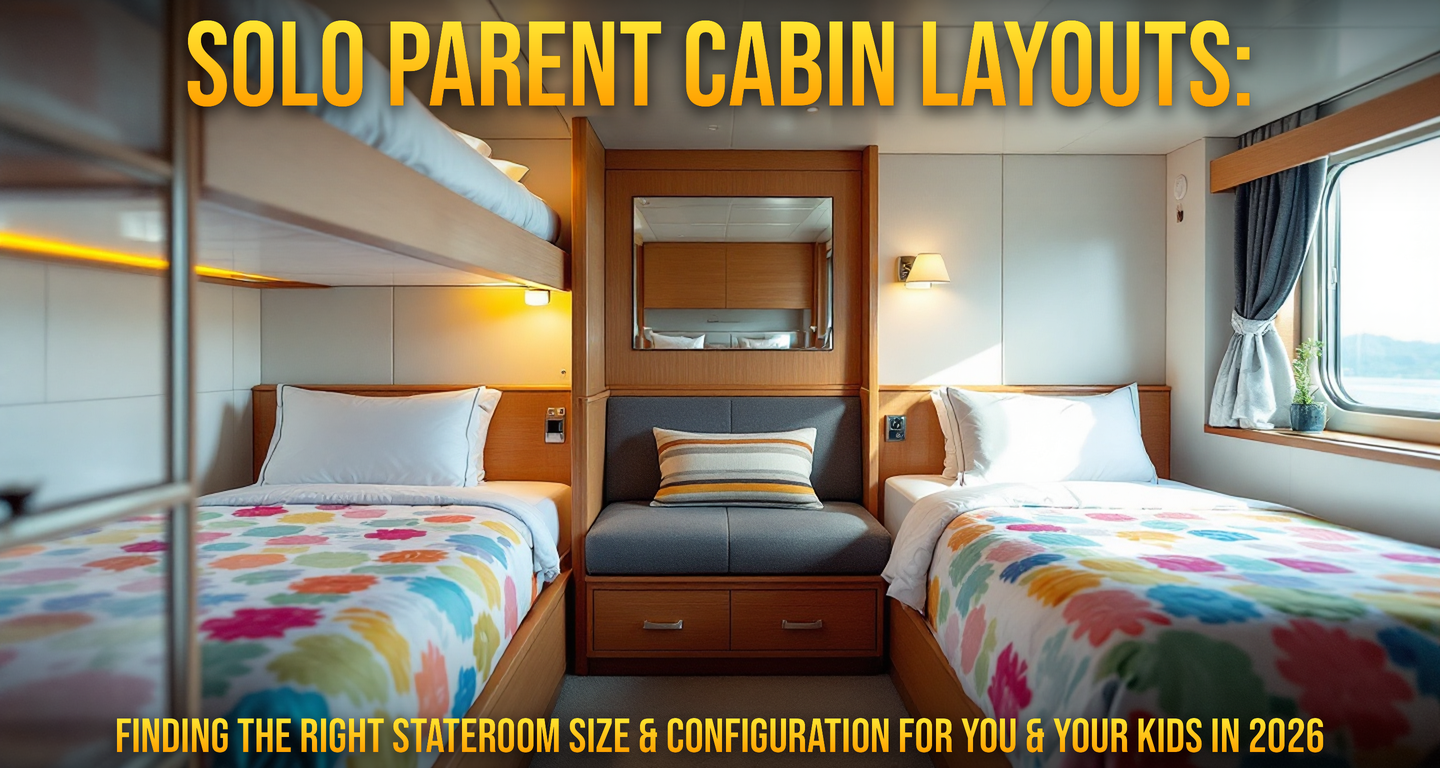
Understanding Solo Parent Cabin Categories Across Major Cruise Lines
Most cruise lines don't have a dedicated "solo parent with kids" category—yet. Instead, you're choosing between standard family staterooms, connecting cabins, or occasionally, studios with sofa beds. Each has real tradeoffs.
Inside Cabins (Interior Staterooms)
These are your budget option, typically 150-185 square feet. For a solo parent with one child, an inside cabin with a sofa bed or fold-down upper bunk can work. You get a real bed, your kid gets a safe sleeping spot, and you're paying $800–$1,500 for a week-long Caribbean cruise (pricing varies by cruise line and sail date in 2026).
The reality check: no natural light, no escape route when cabin fever hits, and if your child gets restless at 2 AM, you're trapped in a dark box together. I've seen parents on my sailings use inside cabins for one-night positioning cruises but switch to oceanview for anything longer.
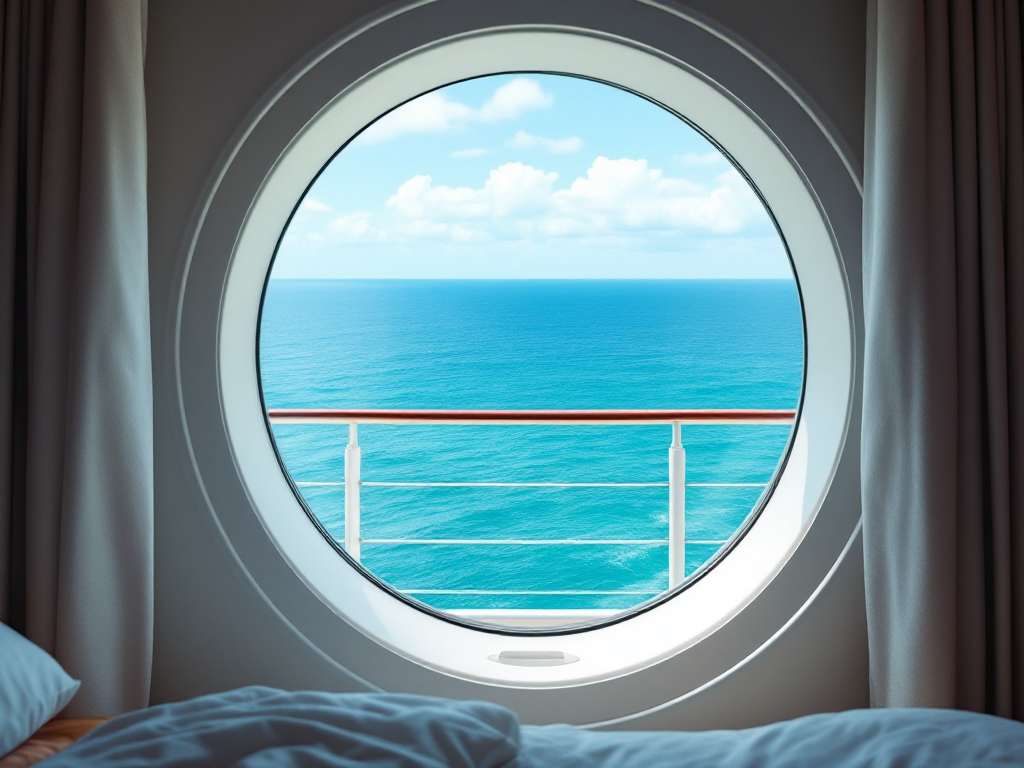
Oceanview Cabins (Outside Staterooms)
Same square footage as inside, but with a porthole or window. That natural light is a game-changer for mood and your child's sleep schedule—their circadian rhythm actually syncs better with daylight. Oceanview cabins typically cost $200–$400 more per cruise than inside cabins, but solo parents tell me it's worth every penny for the sanity factor.
For a solo parent with one child, this is my baseline recommendation. You get that psychological break of seeing the ocean, and your kid can look outside without feeling trapped.
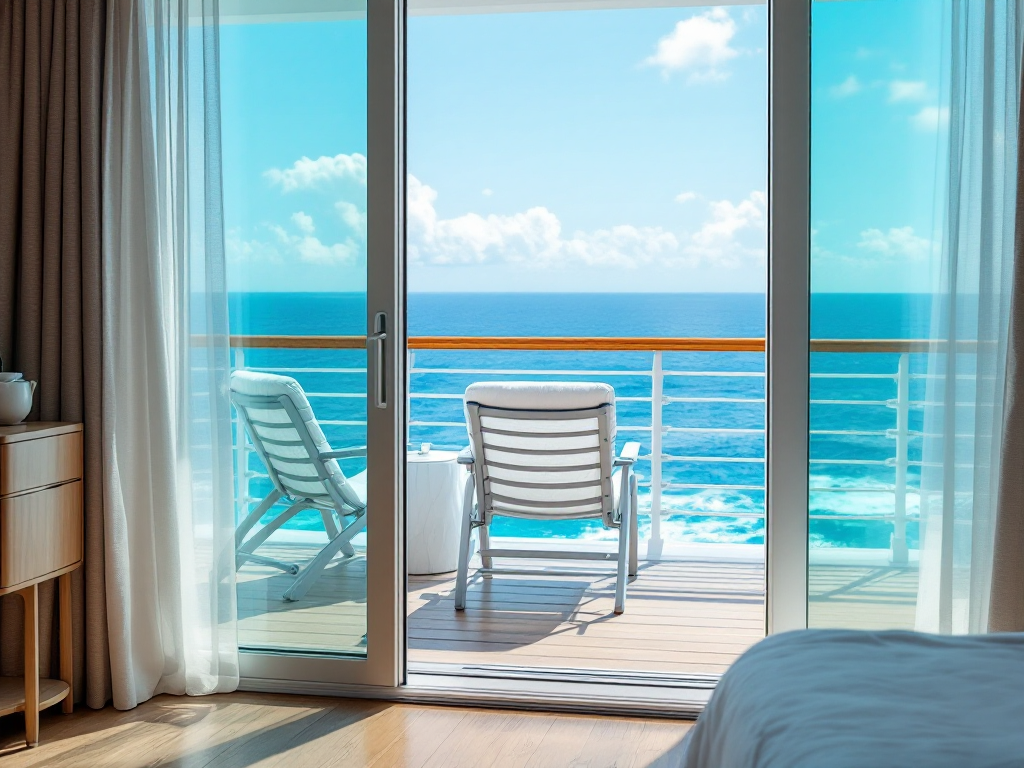
Balcony/Veranda Cabins
Now you have 180–220 square feet inside plus 40–80 square feet of outdoor space. A private balcony is essentially a second room—you can step outside after bedtime, supervise kids from a chair while they nap, and decompress without leaving the cabin. Royal Caribbean's balcony cabins on ships like Symphony of the Seas or Wonder of the Seas start around $1,800–$2,200 per week for a solo parent plus one child.
Carnival's balcony cabins are typically $300–$500 cheaper than Royal Caribbean for the same week and ship class. Norwegian's balcony cabins fall in between. The balcony itself is smaller on budget lines, but it still works as a getaway space.
Honest con: If your child is under 5, that balcony comes with anxiety. You'll need to confirm the railing meets safety codes (46 inches minimum height), and you may not feel comfortable letting your toddler play unsupervised out there. Older kids? This is luxury.
Cabin Size by Family Composition: What Actually Works
Solo Parent + One Child (Any Age)
You have the most flexibility. An oceanview cabin with an upper berth or sofa bed works fine. Your child sleeps in the upper bunk or sofa, you get the queen bed, and you're not stacked on top of each other.
Budget: $1,200–$1,800 per week (oceanview), 2026 pricing.
Pro tip: Request a cabin on a lower deck (deck 4–6 on most ships). Higher decks have thinner walls, and you'll hear your neighbors' kids at 6 AM on saildays. Lower decks are quieter and closer to elevators if you have a tired kid.
Solo Parent + Two Kids (Under 12)
This is where cabin choice gets real. A standard family stateroom with two beds plus a sofa bed or upper berth gives you 200–240 square feet. Your kids share one bed or use the sofa and upper bunk, and you get the other queen bed. It's tight but livable.
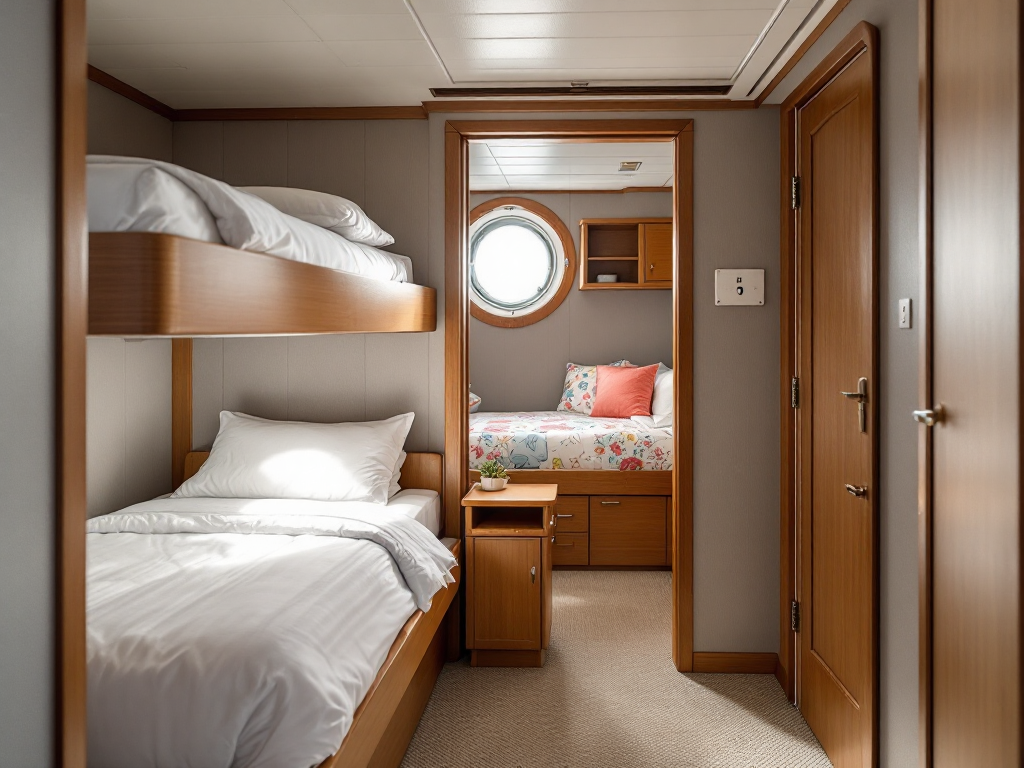
Better option: Connecting cabins—two adjoining staterooms with an interior door. One cabin is your sleeping space (usually an inside cabin), and one is the kids' cabin (oceanview if budget allows). You're paying double cabin fare, but you get 300+ square feet total, separate sleeping zones, and—critically—the ability to tuck kids in and then sit in the other cabin to decompress. This runs $2,000–$3,500 per week for a week-long cruise.
Many solo parents I've talked to on recent sailings say connecting cabins saved their cruise when they had two kids. Yes, it costs more. But the divorce rate among solo parents who didn't spring for connecting cabins is... well, let's just say space matters.
Solo Parent + Three or More Kids
You're in connecting cabin territory, or potentially a family suite. Princess Cruises offers Family Suites on ships like Royal Princess and Regal Princess with 280–350 square feet, separate sleeping areas for kids and adults, and a dedicated cabin attendant who understands you're not a couple. These run $3,000–$4,500 per week.
Royal Caribbean's Family Cabins on the Oasis-class ships (Wonder, Symphony, Harmony) can be 256 square feet, but they compress the space horizontally instead of offering separate zones. It works, but it's not as comfortable as a true suite.
Connecting cabins remain your best value play for three kids: two inside or oceanview cabins connected by a door gives you the most flexibility and usually costs $500–$1,000 less per week than an actual suite.
The Best Cruise Lines for Solo Parent Cabin Options
Royal Caribbean
Their Oasis-class ships have been upgraded in 2026 with larger family cabins and more connecting cabin pairs available. The Icon of the Seas (their newest Icon-class ship) offers 260+ square-foot cabins designed for families, with studio cabins that have sofa beds and work for solo parents on a tighter budget.
Real pricing on Icon: Family cabin with balcony, $2,000–$2,400 per week. Interior cabin, $900–$1,200 per week. Connecting cabins? You're looking at $1,900–$2,800 combined for a week-long cruise.
Royal Caribbean's app also lets you reserve connecting cabins during booking, which means you're not relying on crew availability to connect doors.
Disney Cruise Line
Their family cabins are specifically designed for multiple occupants. All Disney staterooms include a sofa, which is huge for solo parents because your kid sleeps on the sofa and you get the bed. Even the 184-square-foot inside cabins work okay because the sofa is actually comfortable.
Disney cabins start around $1,500–$2,000 per week for an inside cabin with a solo parent and one child. Balcony cabins run $2,500–$3,500 per week.
Disney's concierge staff is also genuinely helpful with solo parent logistics—they understand your needs and won't treat you like a booking error.
Princess Cruises
Princess has probably the best family suite options in the industry, especially their Sky and Sun-class ships, which have separate sleeping areas. They also have excellent connecting cabin availability and cabin attendants specifically trained for multi-generational and non-traditional family bookings.
Family Suite on Royal Princess: $3,200–$4,000 per week. Connecting oceanview cabins: $2,200–$3,000 combined per week.
Honest bonus: Princess includes gratuities on some 2026 bookings for families, which saves you $200–$300 on a week-long cruise.
Norwegian Cruise Line
NCL's family cabins aren't as specialized as Disney or Princess, but they're comfortable. Their newer Encore-class and Prima-class ships have large balcony cabins (220+ square feet) with sofa beds that actually fit adults. The Norwegian Luna (launched early 2026) has family accommodations that are worth booking specifically for.
Standard family balcony: $1,600–$2,200 per week. Interior family cabin: $900–$1,300 per week.
NCL's freestyle cruising philosophy also works well for solo parents—you can eat when you want, where you want, which removes a lot of scheduled logistics stress when you're managing kids.
Carnival Cruise Line
Carnival's family cabins are functional but not fancy. They're also the most affordable option if you're budget-conscious. A family cabin with balcony runs $1,200–$1,600 per week. Inside cabin? $700–$1,000 per week.
The tradeoff: walls are thin, cabin layouts are less efficient, and connecting cabins feel smaller than competitors. But if you're a solo parent on a tight budget, Carnival gets you on the water for less money, which is real value.
Deck Placement: Location Matters More Than You Think
I've booked the exact same cabin type on the same ship and had completely different experiences based on deck location. Here's what I've learned:
- Midship, Lower Decks (4–8) — Quietest cabins, least rocking motion, closest to main elevators. Perfect for solo parents with young kids. You'll hear fewer crying babies and party noise from the pool deck above.
- Forward Cabins — The ship pitches more forward, meaning more motion in rough seas. Kids get queasier. Crew also uses forward corridors more, so there's hallway traffic until late hours.
- Aft Cabins — Less motion than forward, but higher vibration from engines. You'll hear them more at night. Farther from main dining venues, which is both pro (quieter) and con (longer walks).
- Upper Decks — Thinner walls, you'll hear neighbors' kids, pool deck noise in summer. Avoid if your child wakes early and you need quiet mornings.
- Lower Decks — Closer to guest services and dining, easier to access elevators with tired kids, quieter at night. Request deck 5–7 specifically when you book.
When you book through our Solo Parent Cabin forum, experienced cruisers will tell you which specific cabins they loved and which ones they'd avoid. That's insider data you can't get anywhere else.

Connecting Cabins: The Questions You Need to Ask
If you're booking connecting cabins, know the questions to ask:
- Are connecting doors guaranteed, or does crew need to "facilitate" them onboard? (Some lines guarantee them; others don't.)
- Can you request connecting cabin location during booking, or is it assigned at check-in?
- Do both cabins have full bathroom/shower access, or does one share a shower?
- Are connecting cabins automatically charged double occupancy rates, or do they honor single cabin pricing for one occupant?
- If one cabin is inside and one is oceanview, which deck are they on? (You don't want them separated by three decks.)
Royal Caribbean lets you reserve connecting cabins through their system. Princess and Disney handle them at check-in. Norwegian varies by sailing. Always confirm in writing before you pay final balance.