

Jake_Harmon
Moderator
The Real Talk About Cruise Motion Sickness
Listen, I've been on over 40 cruises, and I can tell you with absolute certainty: seasickness doesn't discriminate. I've seen first-time cruisers on calm Caribbean itineraries get queasy, and I've watched veterans of 20+ voyages spend a rough Atlantic crossing in their cabins. Motion sickness is one of the biggest unknowns before you step onboard — and honestly, it's worth taking seriously because nothing ruins a vacation faster than feeling miserable for three days straight.
The good news? You have legitimate options. The bad news? There's a lot of conflicting information out there. So I'm going to walk you through the three most popular solutions — scopolamine patches, Dramamine, and Sea-Bands — based on what actually works in real cruising conditions, not just what the marketing says.
Understanding Motion Sickness and Why Cruises Are Different
Before we talk solutions, let's understand the problem. Motion sickness happens when your inner ear (which controls balance) sends signals that conflict with what your eyes see. On a cruise ship, you're constantly experiencing gentle, repetitive motion — especially in rough seas or during transatlantic crossings.
Here's what matters: the type of motion you experience varies dramatically by ship size, itinerary, and season. A 6,000-passenger Oasis-class ship rocks differently than a smaller 2,000-passenger vessel. Caribbean cruises in June? Smooth. Northern Europe in November? Rough. Your cabin location matters too — midship cabins on lower decks experience less motion than forward or aft cabins on higher decks.
This is important because the solution that works for you depends on the severity of motion you're likely to experience.
The Scopolamine Patch: The Heavy Hitter
What it is: A prescription patch (brand name Transderm Scop) that delivers medication through your skin over three days. It's the strongest option available.
How it works: Scopolamine is an anticholinergic drug that reduces nausea signals from your inner ear. You apply it behind your ear 4-6 hours before you board, and it releases medication continuously for 72 hours.
The honest pros:
- Most effective option — I've known cruisers who swear nothing else works for them
- Set it and forget it — one patch covers your entire cruise (or most of it)
- Works even in genuinely rough conditions
- Great for people who get motion sickness in cars/planes too
The honest cons:
- Requires a prescription — you'll need to talk to your doctor before your cruise
- Side effects can be real: dry mouth, dilated pupils, blurred vision, drowsiness, and rarely, hallucinations or confusion
- Not safe if you have certain health conditions (glaucoma, urinary retention, heart problems)
- Can cause constipation in some people
- Expensive: often $30-50 per patch without insurance
- If it doesn't agree with you, you're stuck with it for three days
Real cruiser experience: I've had friends absolutely love the scopolamine patch. One regular cruiser told me it's "life-changing" for her Atlantic crossings. But I also had a cabin mate on a Caribbean cruise get so drowsy that she slept through formal night and two sea days. The patch works, but it's not a magic bullet.
My take: Use this if you have a history of severe motion sickness, you're doing a rough itinerary (transatlantic, Alaska winter), or you're sailing on a smaller ship. Get your prescription well before your cruise — don't wait until the week before.
Dramamine: The Popular Middle Ground
What it is: Over-the-counter antihistamine (dimenhydrinate or meclizine) available at any pharmacy. Dramamine makes several versions: original, Dramamine Less Drowsy, and Dramamine-N (for nausea specifically).
How it works: It reduces inner ear sensitivity and nausea signals. You take a pill (or chew a tablet) 30-60 minutes before boarding, then continue every 4-6 hours as needed.
The honest pros:
- No prescription needed — grab it at CVS the day before you cruise
- Cheap: about $10-15 for a box that covers multiple cruises
- Flexible dosing: take it only when you need it, or preventatively
- Dramamine Less Drowsy exists for people who can't tolerate the sedation
- Easy to pack and carry with you onboard
- Most cruisers have success with it for mild to moderate motion
The honest cons:
- Regular Dramamine causes drowsiness — and I mean DROWSINESS. Many cruisers miss pool days because they're napping
- The "less drowsy" versions are less effective for actual seasickness
- Works best for prevention — if you're already nauseous, it's less helpful
- Requires you to remember to take it on schedule
- Can cause dry mouth, blurred vision, and constipation
- Not as effective in rough seas compared to the scopolamine patch
- Some people simply don't respond to it at all
Real cruiser experience: This is the most commonly used motion sickness remedy I see on cruises. Most casual cruisers I know grab a box from the drugstore and take it "just in case." It works fine for calm Caribbean cruises. But on a rough Atlantic crossing? I've watched people realize halfway through their trip that Dramamine alone isn't cutting it.
My take: Dramamine is your best starting point if you've never cruised before or you're doing a calm, warm-water itinerary. It's low-risk, cheap, and available everywhere. But if you discover you're still nauseous on sea days, have backup options ready (like asking your ship's doctor about stronger meds).

Sea-Bands: The Non-Medication Option
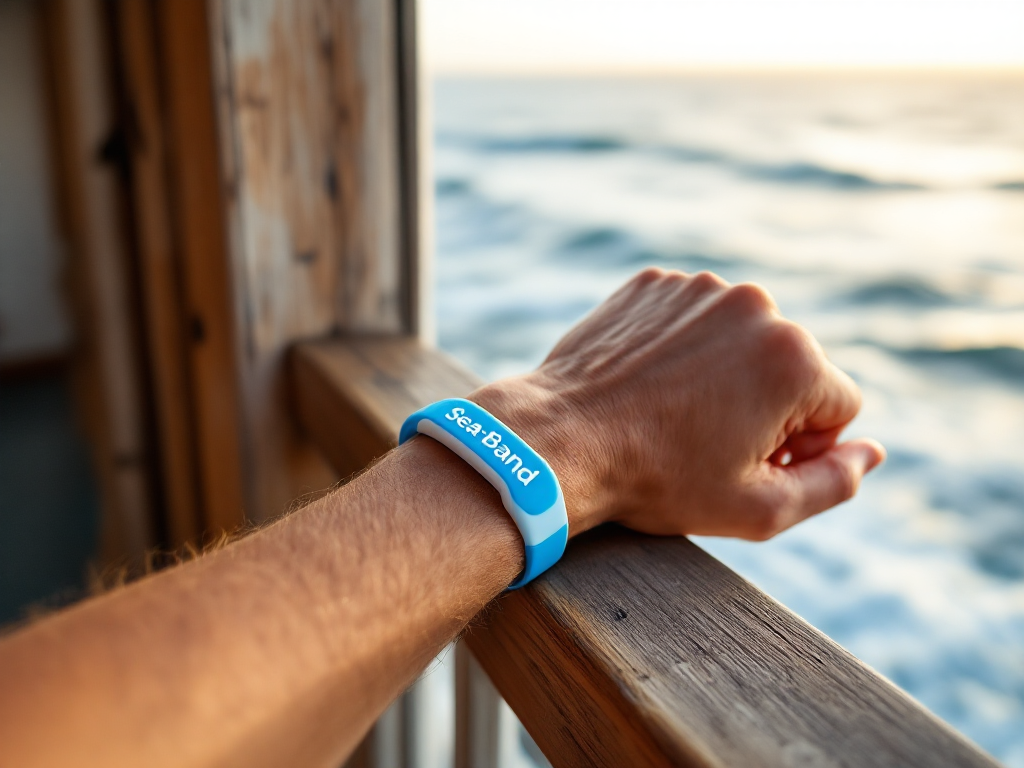
What it is: Acupressure wristbands that apply continuous pressure to the P6 (Neiguan) point on your inner wrist, which Traditional Chinese Medicine claims controls nausea.
How it works: You wear them like regular wristbands. The small plastic button on each band applies pressure to an acupressure point. You wear them throughout your cruise.
The honest pros:
- Zero side effects — no drowsiness, no blurred vision, no dry mouth
- Super affordable: $15-25 for a pair that lasts years
- Great for people who can't take medications (pregnant women, certain health conditions)
- Non-prescription and available everywhere
- You can wear them proactively or only when you feel queasy
- Some people swear by them — genuinely swear by them
The honest cons:
- Scientific evidence is weak. Studies show mixed results — some show it works, others show it's placebo
- Less effective for severe motion sickness — they're more of a mild-to-moderate solution
- Require proper placement to work (you need to find the exact right pressure point)
- Won't help if your seasickness is already in full swing
- Can be uncomfortable or leave marks on your wrists
- Not reliable for rough ocean conditions
Real cruiser experience: I've met cruisers absolutely convinced Sea-Bands saved their trip. I've also met cruisers who wore them faithfully and still got sick. Here's the honest truth: Sea-Bands work best for mild queasiness or if you're psychologically confident they'll help (which genuinely does reduce nausea through the placebo effect — and there's nothing wrong with that).
My take: Sea-Bands are your safest bet if you're pregnant, nursing, or have conditions that prevent you from taking medications. They're also great to layer with another solution — like wearing Sea-Bands AND taking a mild dose of Dramamine for extra insurance. But don't count on them alone for a rough-water cruise.

Comparison Chart: Side-by-Side
- Effectiveness in calm water: All three work well; Sea-Bands slightly less predictable
- Effectiveness in rough water: Scopolamine > Dramamine > Sea-Bands
- Side effects: Scopolamine (most) > Dramamine (moderate) > Sea-Bands (none)
- Cost: Dramamine ($10-15) < Sea-Bands ($15-25) < Scopolamine ($30-50)
- Ease of use: Scopolamine (easiest) > Sea-Bands > Dramamine (need to remember doses)
- Flexibility: Dramamine (take as needed) > Sea-Bands (wear anytime) > Scopolamine (committed for 3 days)
My Personal Recommendation Strategy
After 40+ cruises, here's how I approach it:
For calm Caribbean cruises (summer, southern routes): I pack Sea-Bands and a small box of Dramamine Less Drowsy. I rarely need either, but knowing I have options keeps me from worrying.
For rough-water cruises (Atlantic crossings, Northern Europe in fall/winter, Alaska): I ask my doctor for a scopolamine prescription well in advance. I apply it the morning of departure and don't think about it again.
For my first cruise or an unknown itinerary: I go with Dramamine as my baseline, plus Sea-Bands as backup, and I talk to my doctor about whether a scopolamine patch makes sense for me.

Practical Tips Before Your Cruise
Cabin location matters: Request a midship cabin on a lower deck. You'll feel significantly less motion. This is one of the most underrated seasickness prevention strategies.
Timing is crucial: Start your motion sickness remedy before you feel sick. Once you're nauseous, it's much harder to recover.
Combination strategy works: There's nothing wrong with using multiple approaches. Sea-Bands + Dramamine is a solid backup plan. Many experienced cruisers do this.
Don't wait until departure: If you need a scopolamine prescription, get it now — don't email your doctor the week before your cruise.
Ask your ship's doctor: Most cruise lines have doctors onboard who can provide stronger medications if needed. Royal Caribbean, Carnival, Disney, and others all have medical staff. If Dramamine isn't working by day two, visit the medical center.
Ginger and accupressure aren't magic: I mention this because they're popular "natural" remedies. Real talk: they don't work as well as people claim. They're fine as supplements, but don't count on them as your primary strategy.
Hydration and fresh air help: Stay hydrated, get outside on deck when seas are rough, and focus on the horizon. These genuinely reduce nausea.
The Bottom Line
Motion sickness is one of those things where the right solution is personal. Your body might respond completely differently than your friend's. The safest approach? Start low-risk (Sea-Bands + Dramamine), and upgrade to scopolamine if needed on rougher cruises.
The worst thing you can do is ignore the problem and hope for the best. I've seen too many cruisers suffer through sea days because they were too embarrassed to ask the doctor or they didn't pack anything preventatively. Don't be that person.
You're investing time and money in this cruise. Take your motion sickness seriously, pick the option that fits your situation, and enjoy your vacation. Your future cruising self will thank you.
Have you found a motion sickness solution that works for you? Share your real-world experience with other cruisers in our Health & Accessibility forum — your honest review might help someone else discover what works for them.