

Jake_Harmon
Moderator
The Setup: Why This RCCL Loyalist Finally Left the Fold
I've been sailing Royal Caribbean since 2008. I'm talking Oasis-class obsessed, Diamond lounge regular, the whole nine yards. I've logged over 40 cruises across their fleet, and honestly, I thought I knew exactly what I wanted in a cruise ship. Then Carnival invited me aboard the Mardi Gras in early 2026, and I decided to spend a week breaking my own loyalty rules.
Here's the thing: I went in skeptical. Like, *really* skeptical. Carnival has a reputation, and as an RCCL devotee, I'd absorbed every piece of conventional wisdom about Carnival being the "budget cruise line." But after seven days at sea, I've got some genuinely surprising things to tell you—along with some hard truths that remind me why I keep coming back to Royal Caribbean.
The Ship Itself: Mardi Gras Is Actually Impressive
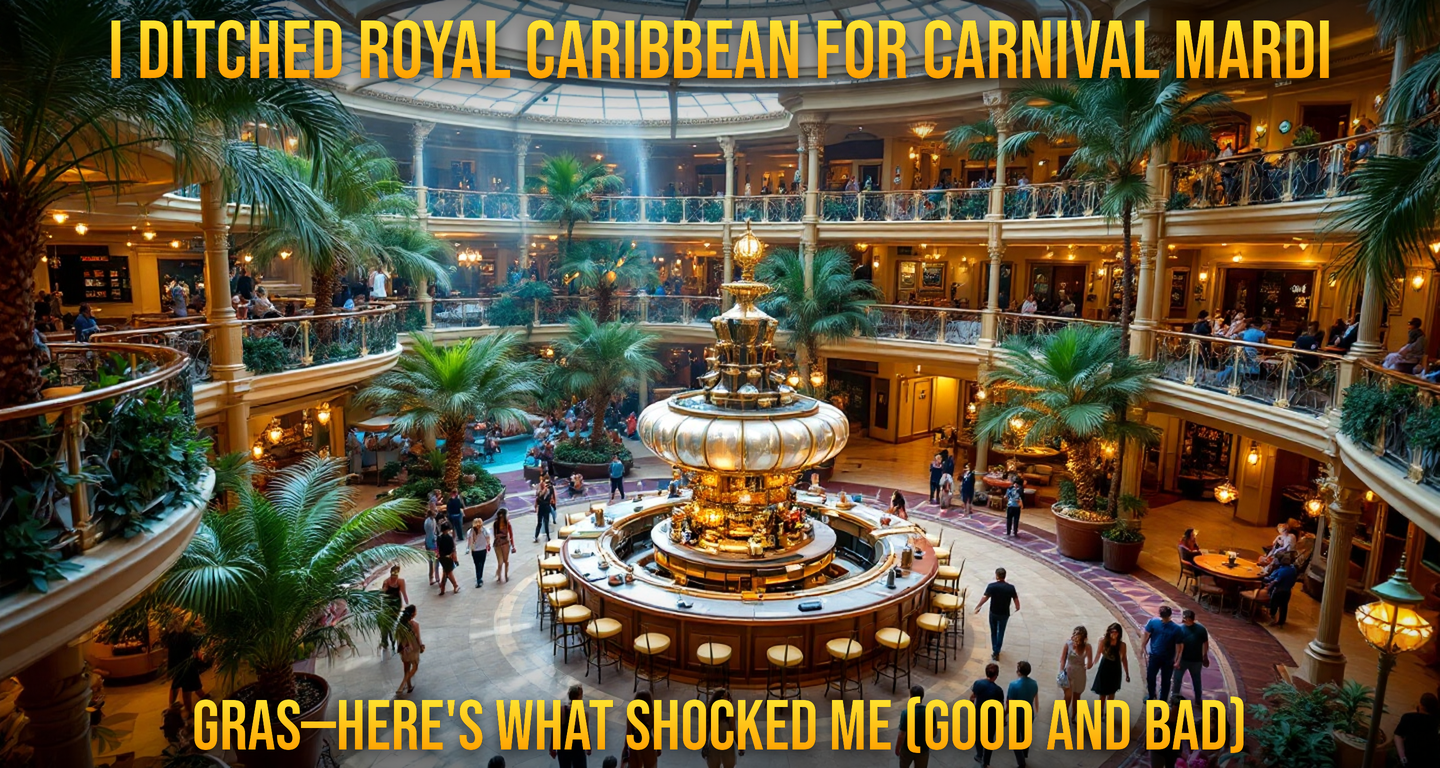
Let's start with the obvious: the Mardi Gras is a new, beautiful ship. Launched in 2020, it's Carnival's flagship, and the moment you step into the main atrium, you feel that newness. The ship is 180,000 tons, carries about 5,200 passengers, and has this open, airy vibe that honestly rivals some of what I've experienced on the Oasis-class ships.
The layout is completely different from Royal Caribbean, though. Where the Oasis goes vertical with multiple neighborhoods stacked on top of each other, the Mardi Gras spreads out horizontally across six distinct zones: French Quarter, Spanish Conquest, Italian Renaissance, German Festive, British Grove, and American Glamour. Each area has its own bar, restaurant, and design aesthetic.
My first reaction? It's clever marketing, but it actually works. You don't feel like you're on a 5,200-person ship because you're sectioned into neighborhoods of roughly 800-900 people each. Compare that to the Icon of the Seas (which I sailed in 2025), where 5,000+ passengers can feel genuinely overwhelming in central areas like the main atrium and promenade.
The con: Unlike Royal Caribbean's neighborhood concept, which connects seamlessly, Carnival's zones feel a bit more isolated. If you want to explore beyond your assigned area, you're doing a lot of walking through corridors. On Oasis, you can flow naturally from one neighborhood to another. Here, it feels more compartmentalized.
Dining: Where Carnival Actually Gets It Right
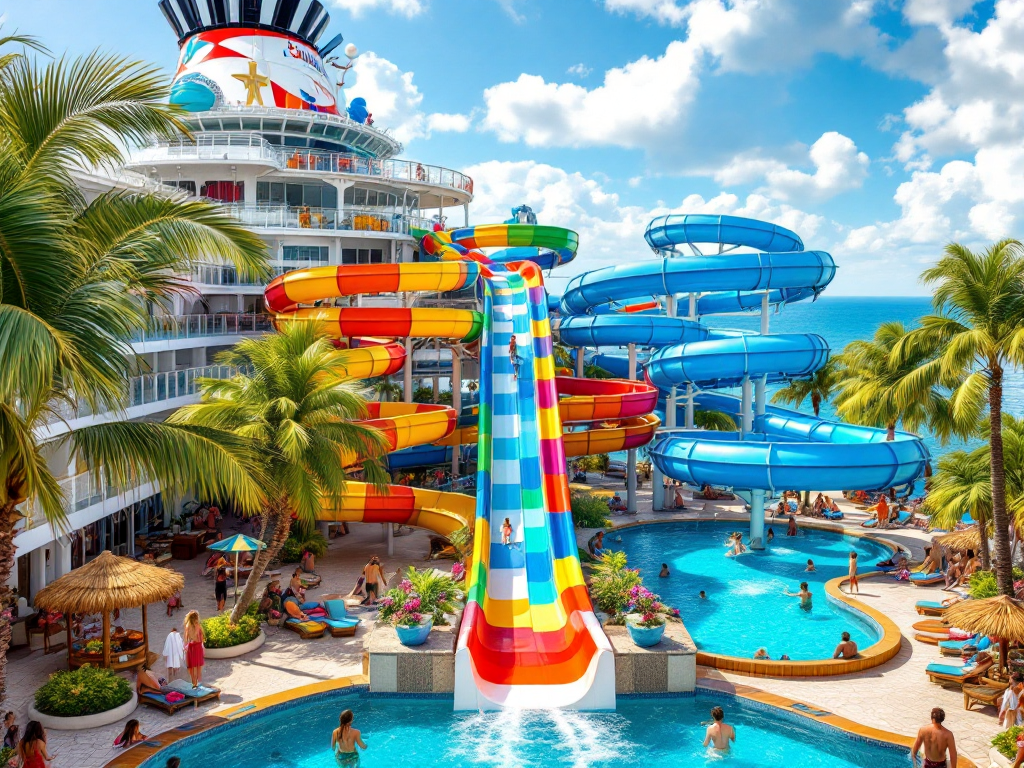
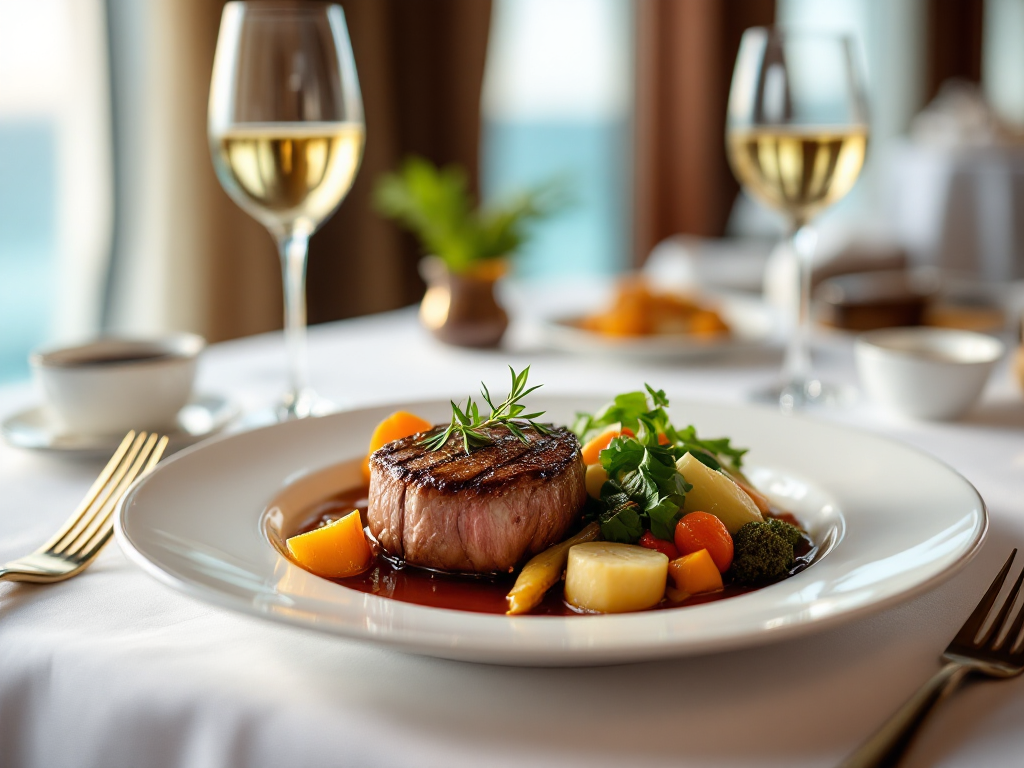
This is where I have to eat crow (pun intended). The main dining room on the Mardi Gras is genuinely excellent. We had assigned seating, and our table was in the aft section with ocean views. The menu rotated daily, offering options like filet mignon, lobster, lamb, and vegetarian dishes that weren't just afterthoughts.
On my seven-day sailing, I went to dinner six nights, and only one meal disappointed me (the pork chop was overcooked). Compare that to my last Oasis-class sailing, where the main dining room felt more pedestrian. Royal Caribbean focuses heavily on specialty dining experiences (which cost extra), while Carnival includes more premium options in your base fare.
That said, the specialty restaurants—like Alchemy Bar + Restaurant and Bonsai Sushi—felt overpriced for the portion sizes. A sushi dinner was $35 per person for what felt like 10 pieces and some edamame. On Royal Caribbean, I'd expect more for that price.
The real shocker: The buffet (now called Marketplace) is way better than I expected. I sailed during the pandemic downsizing on RCCL, so buffets were limited. Carnival's is full-service, no self-service. Staff fills your plate, and the variety was impressive—Southeast Asian station, Mediterranean corner, carving station, pasta bar. I actually ate there more than I thought I would.
Drink Packages: Carnival Wins This Round
This is one area where Carnival's pricing genuinely beats Royal Caribbean. A Carnival beverage package for 2026 runs about $75-85 per person per day (depending on your booking timing), while RCCL's equivalent is $95-110. Both include alcoholic beverages, specialty coffees, and most drinks at bars.
The real difference? Carnival's package is less restrictive. It covers craft cocktails at specialty bars without the upcharge that RCCL sometimes applies. I drank an impressive number of mojitos on the Mardi Gras at no additional cost.
However—and this is important—Royal Caribbean's package feels more consistent across the fleet. On the Mardi Gras, I noticed some bartenders were stricter about what "counts" under the package. One turned down a specialty drink I ordered, saying it wasn't included, when the menu clearly listed it as package-eligible.
Pools and Deck Areas: Carnival Gets Weird (and I Mean That Positively)
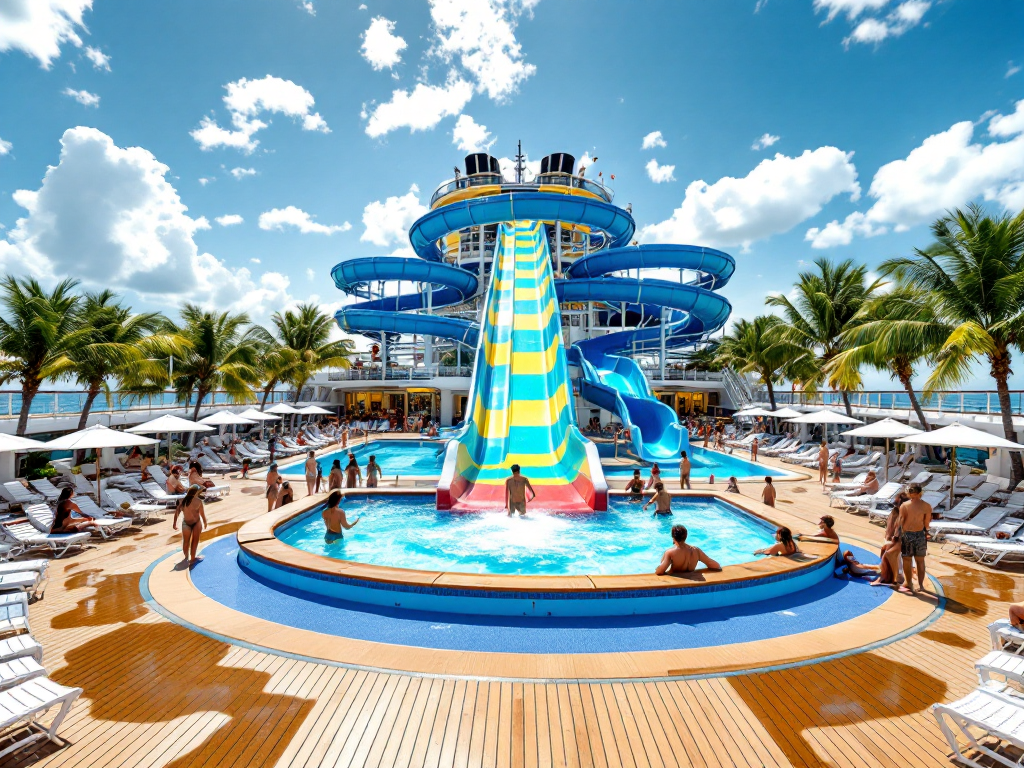
The Mardi Gras has this feature I'd never seen on an RCCL ship: a waterslide that starts on Deck 12 and exits directly into a pool on Deck 9. It's the longest slide at sea (over 150 feet), and it's ridiculous in the best way. My only regret is that I didn't try it on a sea day (it was crowded with families, and I didn't want to be that solo adult waiting in line).
The pools are spread across the ship in each neighborhood zone, which means they're never packed. I found quiet spots to read on Deck 12 without fighting crowds, something I rarely experience on Oasis-class ships where the main pool areas are centralized and chaotic.
But here's the catch: the pools are *small*. Like, genuinely small. Each neighborhood has maybe 300-400 square feet of pool space. On Royal Caribbean, you get fewer but larger pools, which honestly feel more resort-like.
Entertainment: Here's Where Royal Caribbean Wins Decisively
I need to be honest with you: the entertainment difference is noticeable. Royal Caribbean invests heavily in production shows, celebrity performers, and headline-quality acts. The Mardi Gras's main theater production was fun but felt like a solid community theater show—good energy, decent choreography, but not Broadway-caliber.
Carnival does comedy well. I caught two comedy shows that were hilarious, with actual touring comedians. But the production shows, magic shows, and variety acts didn't have the polish I'm accustomed to on RCCL.
One night, there was a show about New Orleans jazz that was genuinely charming and thematically tied to the ship's identity. That's something Carnival does better than RCCL—the themed programming actually connects to the ship's atmosphere.
Fair point though: I was on a 7-day Western Caribbean sailing in March 2026. Entertainment lineups rotate seasonally. You might get different quality depending on when you sail.
Staffing and Service: Surprisingly Attentive
I expected the service to feel rushed or impersonal given the lower price point. Wrong assumption. Our dining room staff was attentive and friendly. Housekeeping actually came twice daily (morning turndown and evening refresh), which I haven't seen consistently on RCCL in recent years.
One morning, I left a water bottle on a lounge chair by the pool at 9 AM. By noon, it was in an envelope with a note at guest services asking if I wanted to claim it. That kind of attention matters.
That said, I did notice longer waits at guest services and bars during peak times. The staff seemed stretched thinner at high-traffic moments, which is typical for Carnival's model of carrying more passengers relative to crew.
Onboard Costs: This Is Where You Need to Be Careful
Here's what caught me off-guard: while the base fare is lower than RCCL, the add-ons add up faster. Specialty dining, internet, beverage packages, photo packages, and shore excursions all felt incrementally more expensive than I anticipated. I'd budgeted $150/day for extras, and I spent closer to $220/day by the time I factored in cocktails, a specialty restaurant night, and photos.
Royal Caribbean upfront prices are higher, but the itemized costs feel more transparent. On the Mardi Gras, I kept discovering charges I didn't know were coming.
Actionable tip: If you're considering Carnival, budget your ancillary costs before you sail. Don't assume the "cheap cruise" stays cheap once onboard.
The Verdict: Would I Switch Permanently?
Honestly? No. But I'd absolutely sail the Mardi Gras again.
Here's why: Royal Caribbean's overall experience—from entertainment quality to crowd management to consistent service across the fleet—still wins for me. The Icon of the Seas and Wonder of the Seas are masterpieces of ship design. But if I'm looking for a specific vibe (Caribbean relaxation rather than activity-packed days), a lower price point, and I'm flexible on entertainment quality, the Mardi Gras delivers.
The Mardi Gras made me realize that Carnival's reputation is partially outdated. This ship, and others in their newer fleet, are genuinely competitive. I won't trade my Diamond status, but I'm no longer dismissing Carnival out of hand.
If you're an RCCL loyalist considering switching lanes, do a 7-day sailing on the Mardi Gras during shoulder season (April or October 2026) when prices dip. You'll quickly know whether Carnival's approach works for your vacation style.
Have you jumped ship from Royal Caribbean or taken the leap into Carnival's newer fleet? Share your real-world experience with other cruisers in the trip reports forum.
Ready to Book Your Own Cruise Adventure?
Whether you're loyal to Royal Caribbean, intrigued by Carnival, or exploring other cruise lines, our AI concierge at CruiseVoices can help you plan and book your perfect cruise—flights, hotels, excursions, and travel insurance all included. Get started today by chatting with our concierge, and join the conversation with 50,000+ cruisers in the trip reports forum to read real sailing experiences and share your own.