

The Hidden Engineering Marvel Behind Your Daily Shower at Sea
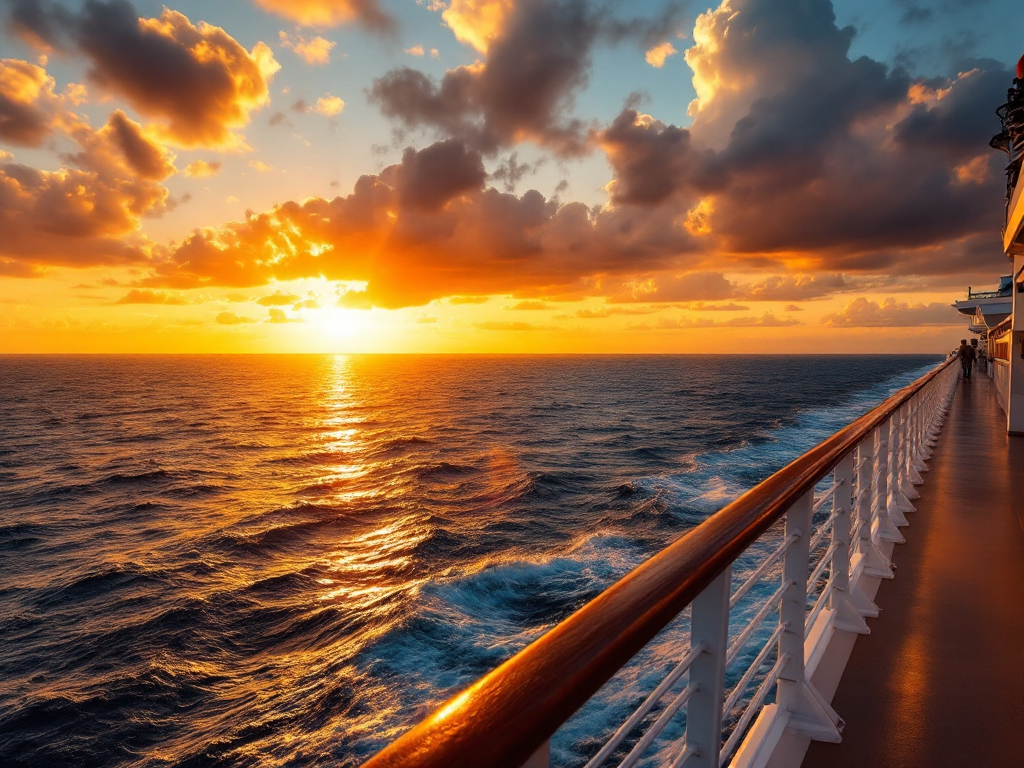
You're standing on the Lido Deck of the Symphony of the Seas at 6 a.m., sipping fresh coffee and watching the sunrise over open ocean. Behind the scenes, one of the most impressive engineering systems on the entire ship is already humming along—and you probably never think about it. I'm talking about the fresh water system that keeps 6,680 passengers and crew supplied with drinking water, shower water, and water for every kitchen, laundry facility, and swimming pool on board.
After 40+ cruises, I've become obsessed with how ships actually work. And the water system? It's genuinely fascinating. Let me walk you through exactly how modern cruise ships create, store, and distribute enough fresh water to fill Olympic swimming pools every single day—all while sailing hundreds of miles from the nearest land.
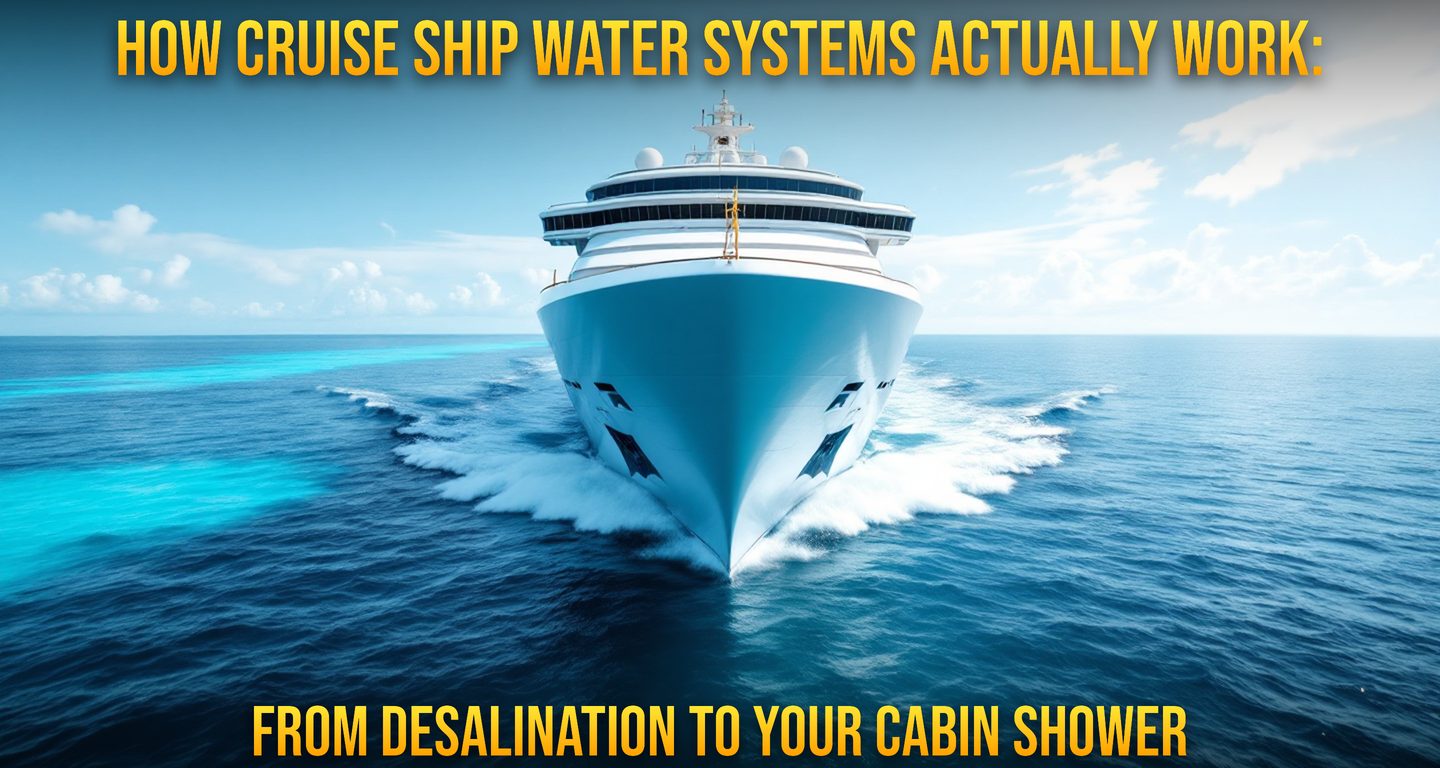
Where Does All That Fresh Water Come From?
Here's the question every first-time cruiser asks: "Isn't the ship surrounded by salt water? So where does the fresh water come from?"
The answer is elegantly simple: cruise ships make their own fresh water.
Modern cruise ships use reverse osmosis desalination plants that convert seawater into drinkable fresh water. Think of it as a giant water purification system that runs 24/7. On a mega-ship like Royal Caribbean's Icon-class or Disney's wish, these desalination plants can produce between 100,000 and 150,000 gallons of fresh water per day. That's enough to fill roughly 225 Olympic swimming pools annually.
Here's how the process actually works:
- Raw seawater intake: The ship draws saltwater from the ocean through massive intake valves below the waterline. These intakes are positioned carefully to avoid pulling in debris, fish, or other materials.
- Pre-filtration: The seawater passes through sediment filters to remove particles, plankton, and anything larger than a few microns. This protects the delicate reverse osmosis membranes from damage.
- Reverse osmosis membrane filtration: Here's where the magic happens. The filtered seawater is forced through semi-permeable membranes under extreme pressure (around 800 PSI on modern ships). The salt molecules are too large to pass through the membrane, so they're left behind. What comes through is pure, fresh water.
- Post-treatment: The fresh water is treated with minerals and adjusted for pH balance to make it taste better and meet international maritime health standards. Some lines add trace minerals to improve flavor.
The saltwater byproduct (called "brine") is simply discharged back into the ocean. It's a completely environmental process—no chemicals or waste products to worry about.
But Wait—Ships Also Collect Rainwater and Recycled Water
Desalination plants are the primary source, but modern ships use multiple water strategies to maximize efficiency. Many cruise lines have supplementary systems:
Rainwater collection: Ships have sophisticated drainage systems built into their deck surfaces. During rainfall (which happens often on Caribbean and Alaska routes), rainwater is captured, filtered, and fed into the fresh water system. It's not a huge percentage of the daily total, but it helps.
Condensation water: The ship's air conditioning and ventilation systems generate massive amounts of condensation. Rather than discard it, modern ships capture and treat this condensed water, which is then used for non-potable purposes like deck washing and laundry.
Greywater recycling: This is where it gets really interesting. Wastewater from sinks, showers, and laundry facilities is treated and recycled for use in toilets and deck cleaning. It's not used for drinking or bathing, but it significantly reduces the freshwater demand on the ship's main system.
I learned this firsthand during a repositioning cruise to Australia on Carnival's Luminosa. The staff explained that greywater systems can reduce fresh water consumption by up to 20% on modern ships. That's a massive environmental win.
How Much Fresh Water Does Your Ship Actually Store?
Here's the practical reality: ships don't rely entirely on fresh water creation "just in time." They also have massive storage capacity.
A typical mega-ship (think Royal Caribbean's Oasis-class like Oasis of the Seas or Wonder of the Seas) carries approximately 300,000 gallons of fresh water in storage tanks at any given time. This water is distributed throughout the ship in multiple tanks—one reason being safety and redundancy, and another being to maintain proper ship balance and weight distribution.
The desalination plants run constantly while the ship is at sea, continuously producing fresh water and replenishing these tanks. When the ship docks at a port, these storage tanks can also be refilled with fresh water from port terminals—though this is far more expensive than producing it onboard, so it's typically only done in emergency situations.
The storage tanks themselves are completely isolated from the saltwater systems. They're built into the ship's hull in multiple compartments, so if one tank develops a leak, it doesn't affect the entire supply.
From Tank to Your Cabin: The Distribution System
Once fresh water is created and stored, it travels through an intricate network of pipes running throughout the entire ship. This is where it gets complicated fast.
The fresh water system is divided into potable (drinking) water lines and non-potable water lines. They're completely separate—color-coded pipes ensure crew members never accidentally cross them.
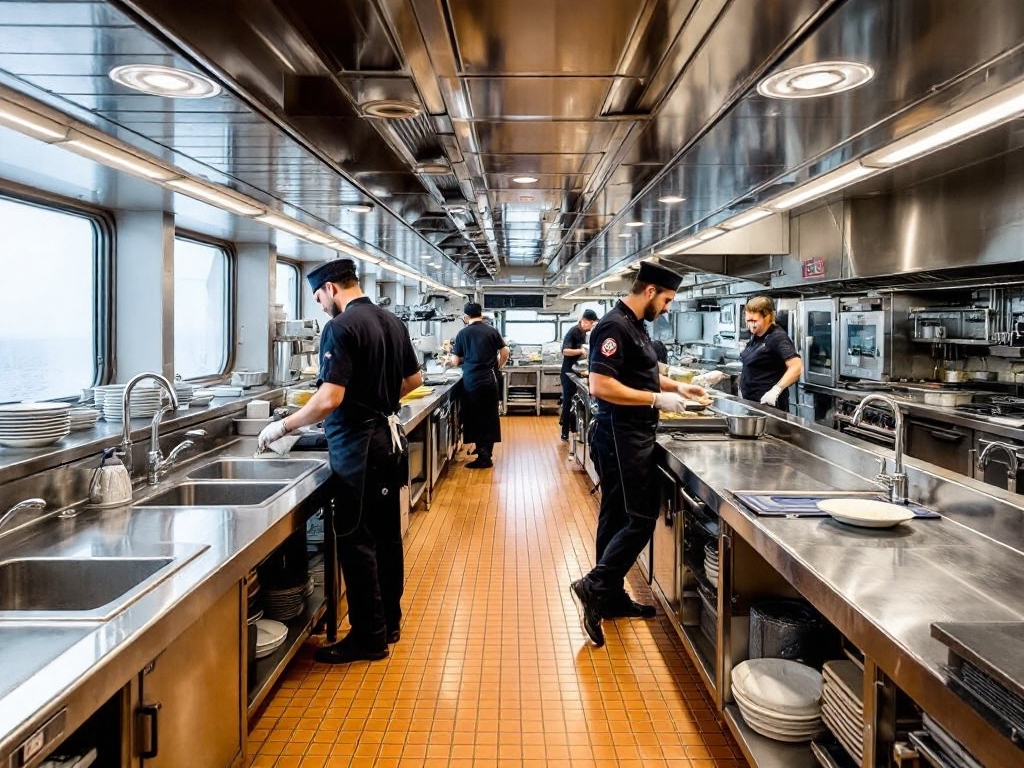
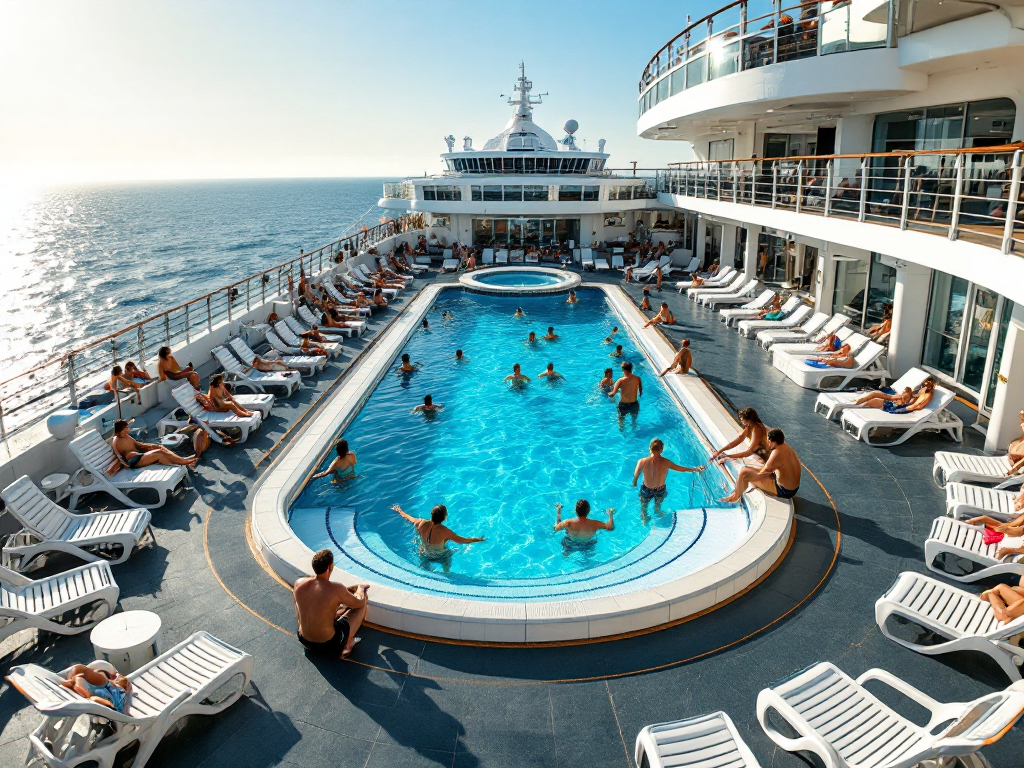
Potable water is the highest-quality fresh water, treated and tested daily to meet international maritime health standards. This is what you drink from your cabin tap, what fills the pools (well, actually pools use non-potable water with chlorine), and what the galleys use for cooking.
Non-potable water is used for toilets, laundry, deck washing, and emergency fire suppression systems. It's fresh water, but not treated to the same drinking standard.
Every night between 10 p.m. and 4 a.m., cruise ship crews conduct hot water flushes through the potable water system. This kills any bacteria that might be growing in the pipes. It's a safety protocol mandated by international maritime law. That's one reason you might notice the water runs slightly warmer than usual during early morning hours.
The Reality Check: Water Quality and Safety
Let me be honest—this is where people get nervous. "Is cruise ship water really safe to drink?"
Yes. Absolutely yes. Cruise ship potable water is actually more regulated and tested than tap water in most U.S. cities.
Every major cruise line conducts daily water quality testing. They check for:
- Bacteria (E. coli, Legionella, etc.)
- Chemical contaminants
- pH balance
- Chlorine/disinfectant levels
- Turbidity (cloudiness)
These results are logged and available for inspection by maritime health authorities at every port. The International Maritime Organization (IMO) sets strict standards, and cruise lines exceed them because a water quality issue on a ship with thousands of passengers is a PR nightmare.
In my 40+ cruises, I've never experienced a water-related illness, and I've never met a fellow cruiser who could blame their seasickness on contaminated water. The system is genuinely that reliable.
My personal tip: I still drink bottled water for the first day or two of a cruise just because my stomach is adjusting to the ship's motion anyway. But after that? I'm drinking straight from the tap. The water on modern cruise ships is that trustworthy.
What About Onboard Water Use—Where Does All That Water Go?
With 6,000+ people showering, flushing toilets, doing laundry, and using water for food service daily, cruise ships handle absolutely massive water throughput.
Here's the breakdown of daily water consumption on a mega-ship:
- Passenger cabins (showers, sinks, toilets): ~40%
- Food service and galleys: ~25%
- Laundry (sheets, towels, crew uniforms): ~20%
- Public areas (pools, fountains, restaurants, bars): ~10%
- Crew facilities and operational use: ~5%
All of that wastewater doesn't disappear—it flows through the wastewater treatment system, which is equally impressive. Ships have sophisticated biological and mechanical treatment plants that clean wastewater before it's discharged into the ocean. Modern cruise ships meet or exceed EPA standards for wastewater discharge.
Pro Tips Based on Real Cruise Experience
Understanding how the water system works has changed how I cruise:
Longer showers aren't a problem. The desalination plants run constantly. The only time water might be restricted is during a genuine emergency (major system failure), which is extraordinarily rare. Take your shower—the system was built for exactly this.
Water pressure is consistent throughout the ship. Whether you're in a penthouse suite or an inside cabin on Deck 2, you'll get the same water pressure. The system is engineered to distribute evenly. If you have weak pressure, it's a cabin-specific plumbing issue, not a ship-wide problem. Report it to your stateroom attendant.
Refill your water bottle anytime. Every dining venue, pool deck bar, and cabin has access to fresh water. You never need to buy bottled water onboard (which costs $5-7 per bottle)—just refill at any tap or ask any crew member. They're trained to provide fresh water on request.
The water system runs regardless of weather. Even in rough seas or storms, the desalination plant continues operating. Your shower works during swells because this system was engineered for exactly those conditions.
Port days don't shut down the system. Even when docked, desalination plants keep running. In fact, they run more aggressively in port because passengers tend to use more water (longer showers, more laundry, etc.).
The Environmental Impact You Should Know About
I'd be remiss not to mention the environmental side of this. Modern reverse osmosis desalination is actually one of the most responsible ways a cruise ship can source fresh water. It produces zero hazardous waste—just clean drinking water and brine that returns to the ocean at the same salinity level it came from.
Compare this to the old days when ships simply took on fresh water at every port, requiring massive supply chains and logistics. Today's closed-loop systems are genuinely more sustainable.
That said, cruise lines are constantly improving. Some newer ships (like Disney Wish) have invested in even more advanced greywater recycling systems that reduce freshwater consumption by 30% compared to older ships.
Final Thoughts
The next time you're standing on your cabin's balcony enjoying a fresh cup of coffee or taking a hot shower in the middle of the Atlantic Ocean, take a moment to appreciate the engineering feat happening below decks. Reverse osmosis membranes, constant filtration, daily testing, and redundant safety systems are all working quietly to keep you comfortable and healthy.
It's one of those aspects of cruising that most passengers never think about—but it's absolutely worth understanding. It's a genuine engineering marvel, and it's a big part of why modern cruise ships are so reliable.
Have questions about cruise ship operations or want to share your own cruise tech discoveries? Head over to the CruiseVoices forums and jump into the conversation. We've got a community of cruise enthusiasts who love diving deep into exactly this kind of stuff.