

The Reality of Feeding Your Family at Sea
Listen—I've watched families board cruise ships with packing lists that include 47 snack options for their kids, and I've seen others arrive completely unprepared for what actually awaits in the dining rooms. After 40+ cruises, mostly with families in tow, I can tell you that cruise ship dining with kids is 100% manageable once you know the system. The trick isn't finding "kid food"—it's understanding that every major cruise line has specific tools, menus, and staff accommodations designed exactly for this challenge.
Here's what most families don't realize: you don't need to white-knuckle through picky eating or pray your child's allergen doesn't get cross-contaminated. The infrastructure exists. You just need the right strategies before you sail.
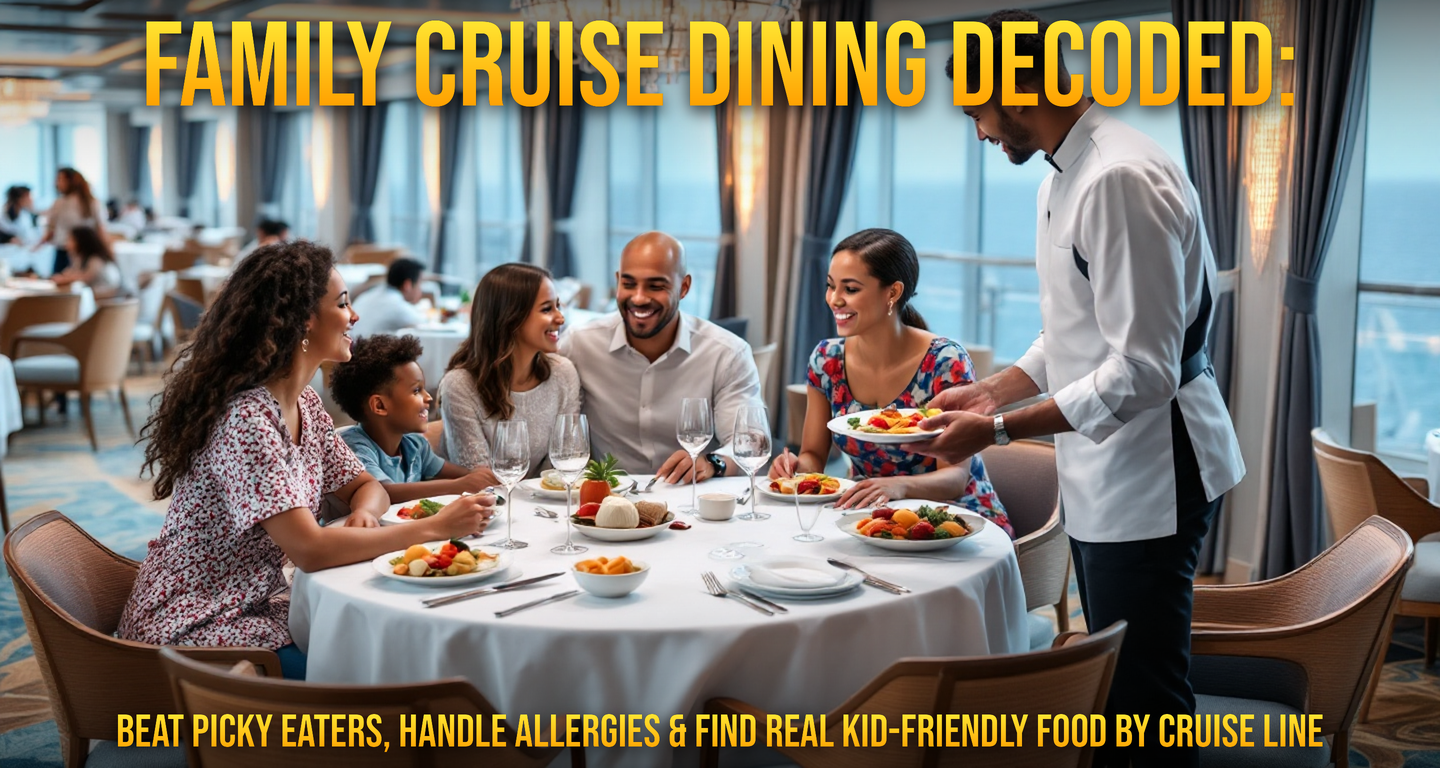
Allergy Accommodations: What Actually Works
Allergies are non-negotiable, and cruise lines know this. All major cruise lines (Royal Caribbean, Carnival, Disney, Norwegian, Princess, MSC, and Holland America) have formal allergy management protocols. Here's what I've learned from real experience:
Before You Board:
Don't wait until embarkation day. Contact your cruise line's special dietary department at least 30 days before sailing. They have dedicated teams—not just the dining manager. With Royal Caribbean, you're calling the Special Dietary Services department. With Carnival, it's the Guest Services line. With Disney, allergy accommodations are handled by their Accessibility Services.
What you need to provide:
- Specific allergen(s) and severity level
- Whether it's a true allergy, intolerance, or preference (cruise lines treat these differently)
- Any cross-contamination concerns
- Your cabin number once assigned
- Your dining room rotation (if you know it) or dining time preference
I've seen families get forms, waivers, and actual medical documentation requests. Yes, they're thorough. This is intentional.
In the Dining Room:
Here's the insider piece: traditional main dining rooms are actually safer for allergies than specialty restaurants. Why? Your server stays the same all week. You build a relationship. By night two, your server knows your child's allergen and walks around the kitchen with the chef before service.
On my last Royal Caribbean Oasis-class sailing, our server brought the head chef to our table on embarkation night—literally. He walked through exactly what he could prepare and what was off-limits. By day three, special meals arrived before everyone else's.
With buffet-style venues (Carnival's RedFrog Pub, Norwegian's restaurants during open seating), the risk increases. Staff turnover is higher. My honest take: stick to table service for allergen-sensitive kids, or eat at specialty restaurants where you order directly from the chef.
Real Allergy Stories from the Community:
Our families in the CruiseVoices family forum have handled everything from shellfish to tree nuts to gluten. One parent brought a laminated allergy card in multiple languages, which worked brilliantly at ports. Another worked directly with Norwegian's culinary team to pre-plan four specialty restaurant meals for her daughter's dairy allergy—all included in the cruise fare, not upsold.
Picky Eaters: Stop Fighting, Start Strategizing
Let me be blunt: cruise ships have chicken tenders, pasta, and pizza on every menu. Your kid won't starve. The question is whether you're going to stress about nutrition, or whether you're going to use the dining system strategically.
The Picky Eater Reality by Cruise Line:
Royal Caribbean: Every main dining room menu includes a "children's menu" with 6-8 options. But here's the secret—you can order anything from the main menu in kids' portions. The Windjammer Marketplace (buffet) on Oasis-class ships is genuinely massive. Your picky eater can find something. What works: Set expectations on embarkation day. Tell your kid, "You get to pick three breakfast items, three lunch items, and try one new dinner thing." Control the chaos with boundaries.
Disney Cruise Line: This is where picky eaters actually thrive. Disney has a dedicated kids' menu that includes character-themed options. More importantly, Disney's dining philosophy is "we know your kid won't eat fish, and that's fine." The kids' menu rotates daily and includes everything from mac and cheese to sliders to pizza. Disney also has the most permissive room service policy—kids can order from the kids' menu 24/7 at no extra charge. I watched a four-year-old order mac and cheese at 10 PM with zero judgment from staff.
Carnival: The Guys Burger Joint on Carnival ships is a game-changer for picky eaters. It's free, always open, and serves what kids actually want. The main dining room has a basic kids' menu, but Carnival's real strength is redundancy—there are enough specialty restaurants and buffet stations that your picky kid can literally eat pizza for every meal if that's what happens.
Norwegian Cruise Line: Norwegian pioneered flexible dining, which is perfect for families. You're not locked into a time. On sea days, you can eat breakfast at 6 AM and lunch at 1 PM if your kid's appetite dictates it. The Garden Cafe (buffet) is open sunrise to midnight. My experience: picky eaters thrive with Norwegian's flexibility. But you'll pay more for specialty restaurants ($15-$25 per person per meal), so it's a budget calculation.
Princess Cruises: The kids' menu is solid—eight main options plus sides. Princess also allows "no-charge modifications," meaning you can ask for pasta plain, proteins without sauce, or vegetables steamed with no seasoning. The policy is explicitly on their website. What works: Princess is straightforward. No hidden strategies needed.
Holland America & MSC: Both have kids' menus and standard buffet options. Neither is exceptional for picky eaters, but neither is problematic. You'll manage fine with a basic strategy: fruit for breakfast, pasta for lunch, choose-your-protein at dinner.
Real Strategy That Works:
- Talk to dining staff on day one. "My daughter eats plain pasta, plain chicken, and fruit. What are you comfortable making every night?" The answer is always "yes, no problem."
- Download the menu app before sailing. Royal Caribbean, Disney, Carnival, and others publish menus in advance. Show your kid what's available. Remove the surprise anxiety.
- Use specialty restaurants strategically. If your kid loves pizza, go to the pizza place instead of the main dining room. You're not fighting against a buffet.
- Set realistic expectations about trying new foods. A cruise isn't the time to force adventurous eating. It's the time to let your kid enjoy what he loves in a fun environment.
- Embrace room service for breakfast. Most cruise lines offer free room service breakfast. French toast, eggs, cereal, fruit—order it the night before. Your kid eats while you sleep in.
Cruise-Line-Specific Dining Advantages
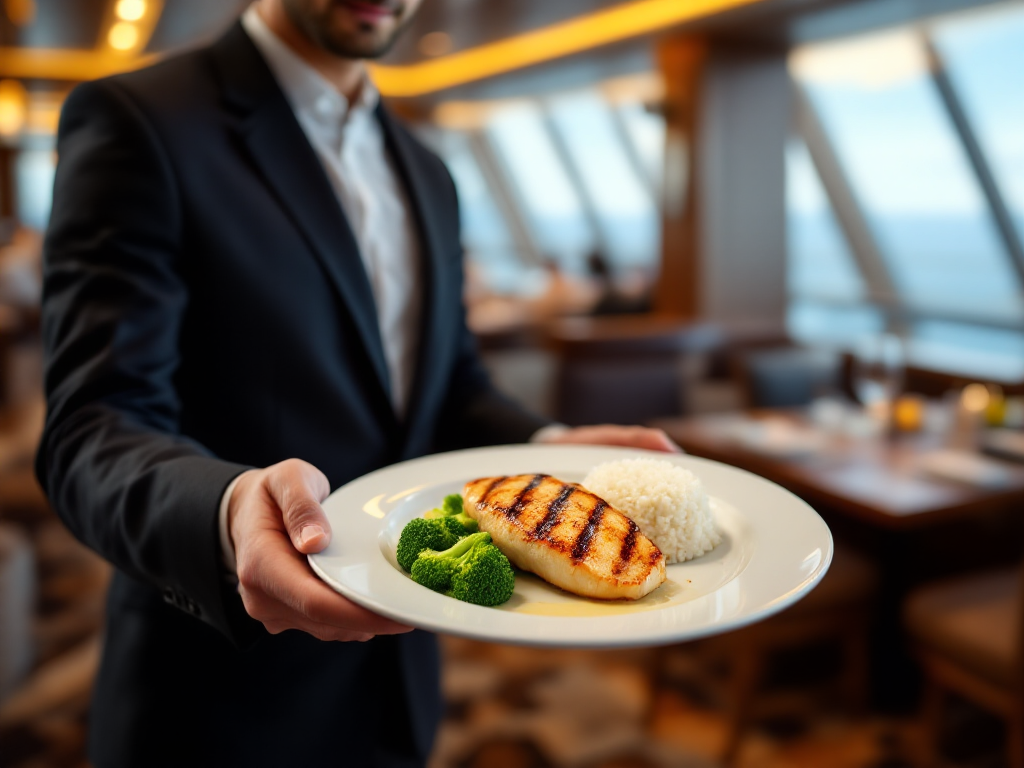
Disney Cruise Line wins for: Pure kid-friendliness and allergy protocols. Disney has been accommodating allergies since the early 2000s, and it shows. Every server is trained. Every kitchen has an allergy-dedicated prep area. The kids' menu is genuinely appealing (not an afterthought). If you're cruising with a severe allergy, Disney is worth the premium price.
Royal Caribbean wins for: Flexibility and variety. The kids' menu is good, but the real advantage is the sheer number of dining venues. Windjammer Buffet alone has stations for pasta, carving, pizza, Asian, and sides. Your picky eater won't feel restricted. Also, Royal Caribbean's "Dining Flexibility" program (available on newer ships) lets you choose your dining room time. If your kid's hungry at 5:15 PM, you're not waiting for 5:45 PM seating.
Carnival wins for: Value and casual atmosphere. Carnival doesn't pretend kids need fancy food. The ship's vibe is relaxed, which removes pressure. Guys Burger Joint is genius for picky eaters. Specialty restaurants are cheaper than competitors (around $15 per person instead of $35+). For families on a budget, Carnival's dining is genuinely better.
Norwegian wins for: Timing flexibility and casual venues. Flexible dining means you eat when your kid is hungry, not when a schedule dictates. No assigned dining room, no assigned time. The downside: specialty restaurants are pricy. But if your family wants zero stress about mealtimes, Norwegian's model is superior.
Princess, Holland America & MSC: All are solid middle-ground options. No special advantages for picky eaters or allergies, but no disadvantages either. They're reliable and straightforward.
Practical Strategies That Actually Work
Strategy 1: Pre-communicate everything
Before sailing, email your cruise line's Guest Services with:
- Your child's name and cabin number
- Any allergies with severity
- Top 5 foods your child will eat
- Foods to absolutely avoid
- Your dining time preference
Include a subject line: "Special Dining Request - [Child's Name] - [Sailing Date]." They will document this. Your server will see it.
Strategy 2: Meet with the dining manager on embarkation day
Don't wait for dinner. Find the dining manager during embarkation afternoon. Takes 10 minutes. Say: "My daughter has a peanut allergy. I want to make sure we're set up for success this week."
This conversation changes everything. The dining manager connects you with your server. Your server connects you with the chef. By dinner, staff knows your kid.
Strategy 3: Always order from the main menu if buffet anxiety is high
Yes, there's a buffet. Yes, it's free. But if your kid has anxiety about choices or allergies, just order from the table service menu. It takes 60 seconds. The chef will prepare a clean plate, clean utensils, and separate prep area if needed.
Strategy 4: Room service is your friend
Most cruise lines include room service breakfast. Some include lunch and dinner too (Disney does). Order the night before. Food arrives when you want it. Your stressed kid can eat in pajamas. This is not a failure—it's a legitimate strategy.
Strategy 5: Use specialty restaurants strategically
Specialty restaurants often have more control over prep (smaller kitchens, single chef, fewer diners). If your kid has a severe allergy, a $15 specialty restaurant charge might be worth the peace of mind. Conversely, if your kid loves something specific (sushi, tapas, Italian), booking a specialty restaurant removes the daily negotiation.
Strategy 6: Build a snack arsenal in your cabin
Yes, most cruise lines allow you to bring non-perishable snacks. Check your cruise line's specific policy, but generally: granola bars, crackers, peanut butter packets, dried fruit, and nuts are fine. Some families pack a small cooler of dry snacks. This isn't cheating. This is smart parenting. If your kid gets hungry between meals and you don't trust the snack bar, you have a backup.
Honest Pros and Cons by Age Group
Toddlers (ages 2-4):
Pros: Simple palate means fewer complications. Room service is abundant. Kids eat free at most cruise lines (age-dependent). Dining staff are genuinely patient with toddlers.
Cons: High chairs at sea are awkward. Buffet accessibility is challenging (you're carrying a kid and balancing a plate). Toddlers get bored during longer dining events.
Pro tip: Disney and Norwegian offer free kids' clubs during dining times. Book your kid into the club, have an adult-only dinner, and reconnect after. Yes, your toddler eats chicken nuggets in the club. But you get a break.
Kids (ages 5-10):
Pros: Old enough to have food opinions, young enough to be excited about novelty. Kids' menus are designed for this age. Specialty restaurants often love kids.
Cons: Picky eating peaks in this age range. They're not patient with long meals. Sea days mean they're on the ship for three meals—fatigue sets in.
Pro tip: Pre-show the menu. Let them pick what they want the night before. Remove the decision anxiety.
Teens (ages 11-17):
Pros: Adventurous palate possible. They can navigate buffets. Willing to try specialty restaurants. Can eat independently in teen clubs during some sailing times.
Cons: May refuse to dress up for formal dining. May want to eat with friends, not family. Specialty restaurant costs add up fast.
Pro tip: Let them pick a specialty restaurant they're excited about. Include it in your budget. The autonomy matters at this age.
Bottom Line: You've Got This
Cruise ship dining with kids isn't complicated. It's just different. The infrastructure exists. The staff are trained. The menus account for picky eaters. The allergy protocols work—if you communicate clearly.
Your job is three things: communicate early, set expectations, and embrace the system instead of fighting it.
Talk to your cruise line before sailing. Meet the dining manager on day one. Let your kid eat what he wants (even if it's pasta every night). Trust that your server will take care of allergies. And remember—a cruising kid who eats chicken tenders and is happy is infinitely better than a gourmet kid who's miserable.
If you're navigating allergies or picky eaters, jump into the CruiseVoices family forum. Share your cruise line, your challenges, and your strategies. Our community has solved literally every dining scenario at sea.
Ready to book a family cruise that actually works for your family's eating styles? Our AI concierge can help you find the right ship and dining package—then handle all your dining requests before you sail.