

Marina_Cole
Moderator
Why Your Phone Might Be Your Best Camera Onboard
Here's something I've learned from 40+ cruises: the best camera is the one you have with you. I've watched cruisers obsess over expensive DSLR setups while missing golden-hour moments because their gear was locked in the cabin. Your smartphone in 2026 is genuinely fantastic for cruise photography—and it costs you nothing extra.
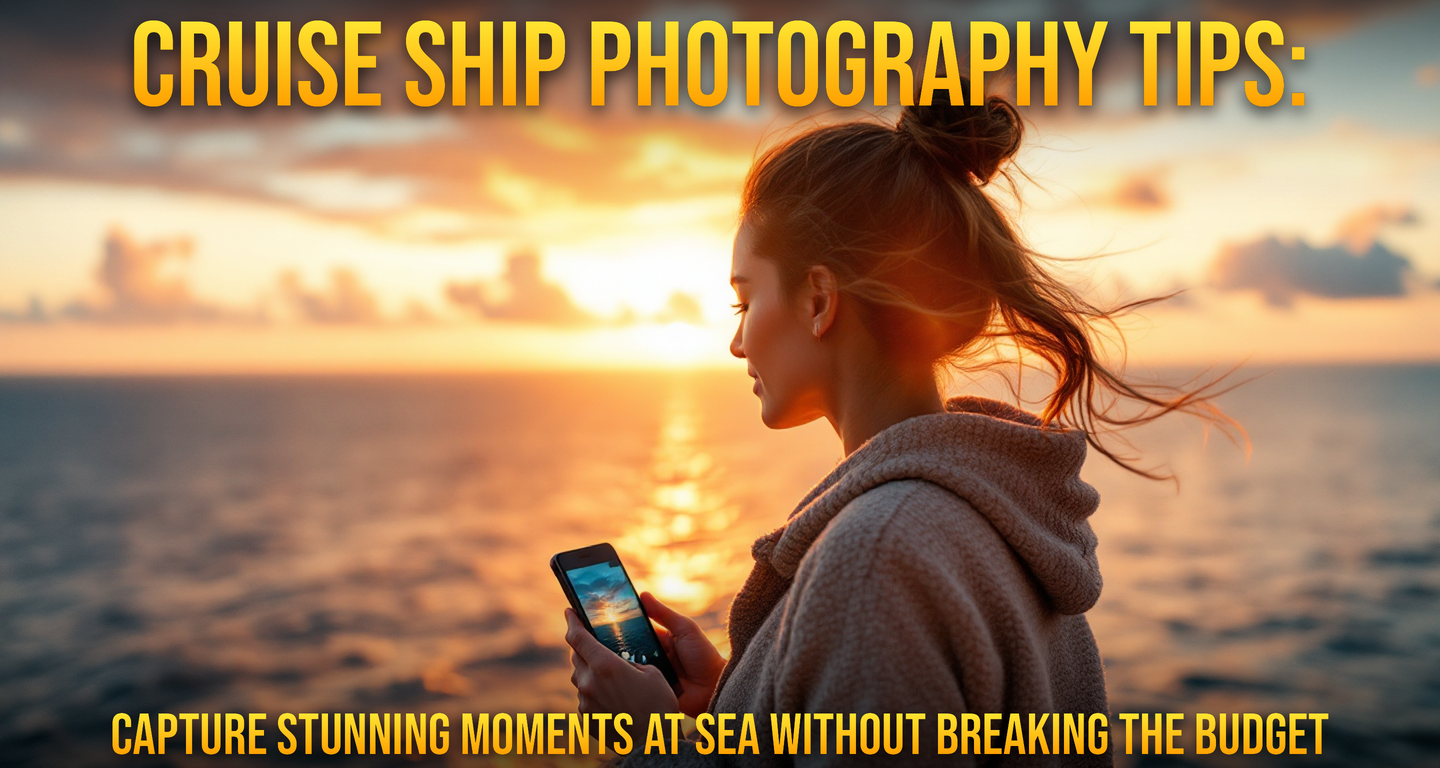
Modern phone cameras have computational photography built in, which means they're doing the heavy lifting for you. Low light? The phone brightens it intelligently. Movement? It's stabilizing in real-time. You get professional-looking shots without the learning curve of manual settings.
The real secret isn't the equipment—it's knowing where to stand and when to shoot. That's what separates the forgettable snaps from the photos you'll actually want to print or share.
Timing Is Everything: Master the Golden Hours
If you remember nothing else from this article, remember this: shoot during golden hour and blue hour. These are the only times you genuinely need to think about lighting.
Golden hour is the first hour after sunrise and the last hour before sunset. The light is warm, directional, and forgiving. On the Harmony of the Seas, I've watched the entire ship turn amber during these windows. Passengers on the aft deck become silhouettes. The ocean glows. It's automatic magic.
Blue hour happens in that 20-minute window right after sunset or right before sunrise. The sky is deep blue, and city lights (if you're in port) just start popping. This is when Cozumel's coast looks mysterious. When Miami's skyline looks like a postcard.
Check your ship's sunset time before each sea day. Most cruise lines post it in your app. Plan to be outside 30 minutes before. Bring a light jacket—those deck winds are real.
Composition Beats Equipment Every Single Time
I've sailed with people who spent $3,000 on mirrorless cameras and took mediocre photos. I've sailed with people using iPhone 12s from 2020 who took jaw-dropping images. The difference wasn't the gear—it was composition.
Think of your frame in thirds. Imagine two horizontal lines and two vertical lines dividing your screen into nine rectangles. Put interesting things on those lines, not in the center. This is called the rule of thirds, and it's the single biggest difference between snapshots and photographs.
When you're shooting the bow of the ship cutting through ocean, don't center the horizon. Put it on the lower third line. Let the sky dominate. It feels more dramatic, more dynamic.
When you're photographing someone at a port (say, your partner in front of colorful buildings in Barbados), position them on the right or left third line, not dead center. Your eyes travel more interestingly through the frame.
Foreground, subject, background: Always give your photo depth. If you're shooting the ship at sea, include something in the foreground—a railing, another passenger, a drink on a table. If you're shooting a port city, include the water in the foreground. This creates layering that makes photos feel less flat.
Specific Shots That Actually Work (And Where to Get Them)
- The bow wave shot: Head to Deck 12 or 13 forward on any Royal Caribbean ship, or Deck 10 on Carnival. Arrive 15 minutes before golden hour. Shoot down and slightly forward at the bow cutting through water. The wake is textured, the light hits it perfectly, and it screams "I'm on a cruise."
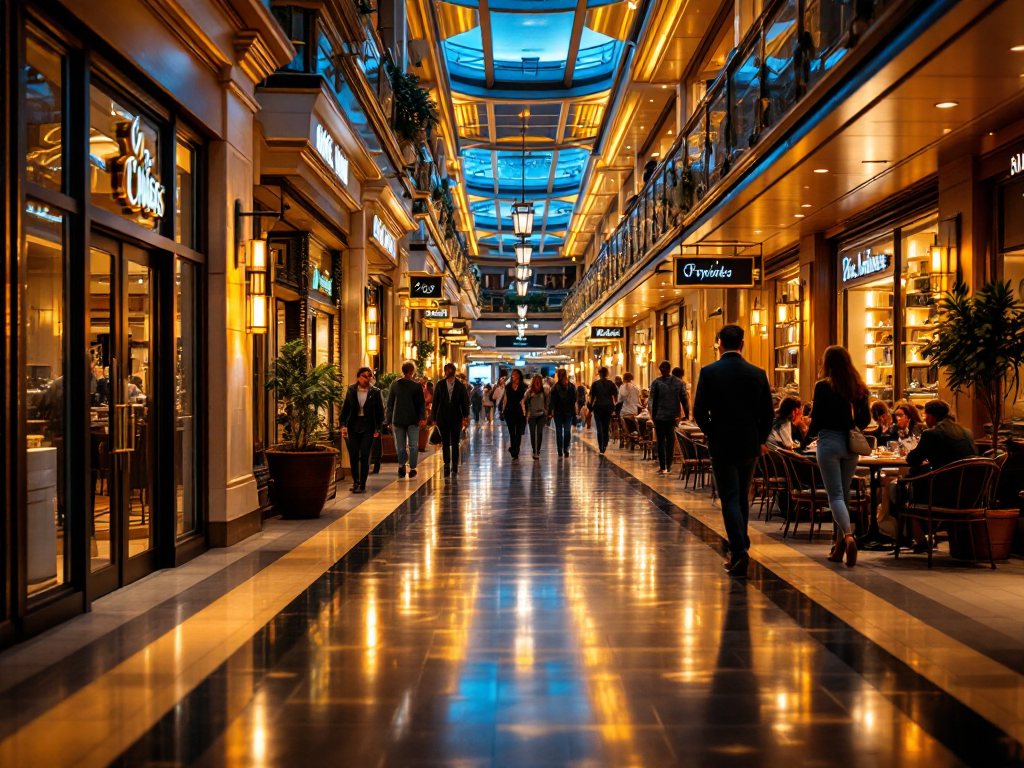
- The evening promenade: Inside the ship on the main pedestrian deck (Deck 5 on most ships), shoot toward evening when string lights are on but it's not pitch dark. People are dressed up, the deck has motion, and you capture the actual cruise experience—not just scenery.
- Sunset from the stern: The aft of the ship is almost always empty at sunset. Walk back there. Shoot the sun hitting the wake behind you. This is perspective-shifting—you're literally watching your ship's trail disappear into the horizon.
- Port cities from the water: Don't wait until you're docked. Shoot as you approach port from the ocean. The city rises from the water in a way that looks almost cinematic. Cozumel's coral buildings against turquoise water. St. Thomas' hillside pastel homes. These shots are free and stunning.
- The black-and-white moment: Find a spot with strong shadows and highlights—the contrast on a ship's superstructure, a person walking through bright light into shadow. Convert to black and white. This removes color distraction and emphasizes texture and form.
Your Phone Camera Settings (The Non-Negotiable Stuff)
You don't need to understand aperture or shutter speed. But you need three settings:
1. Turn off the flash. Seriously. Onboard flash creates harsh, unflattering shadows and often washes out colors. Your phone's computational photography is smarter than flash. Let it work.
2. Use HDR (High Dynamic Range). This takes multiple exposures and blends them, so bright skies stay detailed and shadows stay visible. It's the single biggest upgrade in phone photography. Leave it on by default. (It's usually on already.)
3. Clean your lens. This is the unglamorous tip that actually matters. Your phone lens collects salt spray, fingerprints, and sunscreen. Wipe it on your shirt before you shoot. Seriously. I cannot overstate how much clearer your photos become.
Video: The Equipment Trap
I see cruisers with action cameras mounted on helmets, gimbal stabilizers, and external microphones. They're trying to create YouTube content and stressing themselves into misery.
Your phone's video is stabilized (meaning it won't look shaky), automatically exposed (meaning it won't be too dark or too bright), and absolutely sufficient.
Shoot 30-second clips, not 5-minute videos. Capture texture—people laughing at dinner, the ship's horn at departure, waves hitting the bow, the gangway lowering at port. These 30-second moments edit together into compelling cruise memories.
One insider tip: shoot during golden hour and your video automatically looks like a professional travel film. The light does the work.
Storage and Backup (Don't Lose Your Memories)
Cruise ship wifi is notoriously slow (I wrote about this in detail in our community forums). Uploading hundreds of photos won't work.
Solution: Bring a portable hard drive. They're $50–$80, weigh nothing, and let you back up your photos every night in your cabin without waiting for internet.
Alternatively, use offline cloud backup apps like Amazon Photos or Google One that queue uploads when wifi finally cooperates. Don't rely on ship wifi for backup—it's unreliable.
The One Piece of Equipment Actually Worth Buying
If you want one upgrade beyond your phone, get a neutral density (ND) filter kit for your phone lens. These are $15–$25 and clip onto your phone's camera. They reduce light intensity, which lets you shoot longer exposures even in bright daylight.
Why does this matter? On a sunny sea day, you can smooth out water texture, blur crowds at ports, or capture motion in a way phone cameras can't naturally do. It's genuinely the only accessory that fundamentally changes what your phone can capture.
Don't buy a gimbal. Don't buy an external mic unless you're seriously into vlogging. Don't buy clip-on lenses—they're gimmicks. An ND filter kit is the single upgrade that actually improves your creative options.
Composition Techniques That Transform Your Feed
Symmetry: Cruise ships are geometrically interesting. Hallways, stairwells, rows of deck chairs—look for symmetrical compositions. Center them. It's visually satisfying.
Framing: Look for natural frames within your scene. An archway in a port building. A cabin porthole with ocean beyond. A railing with the horizon behind it. Frames draw the viewer's eye inward and create depth.
Leading lines: Railings, wake patterns, coastlines, rows of lounge chairs—use these lines to guide the viewer's eye through your photo toward the subject. It's a subtle but powerful technique.
Repetition: The repeated balconies of a ship's side. The uniform deck chairs. The pattern of stacked lifeboats. Repetition is visually compelling and uniquely cruise-specific.
The Post-Processing Reality Check
Here's what I'll be honest about: most "amazing" travel photos you see online have been edited. Not heavily—but edited. Saturation bumped. Contrast increased. Shadows lifted slightly.
You don't need Lightroom or Photoshop. Your phone's built-in editing tools are genuinely sufficient. After shooting, spend 30 seconds adjusting:
- Brightness (if it's too dark)
- Contrast (to make colors pop)
- Saturation (slightly—don't overdo it or it looks fake)
- Shadows (to pull detail out of dark areas)
Don't make photos look artificial. The goal is to make them look like what your eye actually saw—because your phone's camera often underexposed or undersaturated compared to what was in front of you.
What Not to Do (Real Mistakes I've Seen)
Shooting into the sun: Your subject becomes a silhouette. (Unless that's intentional and dramatic—sometimes it is.) Usually, it just looks like an accident.
Shooting with the sun directly behind the camera: You get harsh shadows and unflattering light on people's faces. Move to the side.
Centering everything: It's technically correct but visually boring. Use the rule of thirds.
Ignoring the distracting background: Before you shoot, scan the entire frame. Is there a trash can? Another passenger's arm? A crowd? Reposition yourself or wait for them to move.
Shooting too much: You don't need 47 photos of the same sunset. Take 5–10, choose the best one. Your phone storage (and your photo album viewers) will thank you.
The Real Secret
After 40+ cruises, I've learned this: the best cruise photographs come from being present. Not constantly shooting. Not obsessing over settings. Just being outside during good light with your phone ready, noticing moments as they happen.
The sunset you almost missed because you were in the buffet? That's the one people will ask about. The candid laugh at dinner? That's the photo you'll cherish. The moment your ship passed another vessel at sea? That's the one that made you feel small and connected to something bigger.
Your phone camera is ready. The settings are already configured for you. All you need to do is show up at the right time, compose thoughtfully, and notice the light.
The rest is just being on a ship with the people you love.
Share your best cruise photography moments with the CruiseVoices community!