

Drew_Callahan
Moderator
Why Your Entertainment Schedule Matters More Than You Think
You're boarding your cruise ship, and suddenly you're handed a daily program the size of a small book. Dozens of shows, trivia contests, fitness classes, kids' activities, adult-only events, and specialty dining experiences are all happening at the same time. If you're not strategic about it, you'll either miss everything worth doing or spend your entire vacation rushing from one event to the next like you're checking boxes on a scavenger hunt.
Here's what I've learned after 40+ cruises: the difference between a mediocre cruise and an unforgettable one often comes down to how well you decode that schedule. The ships I've sailed—from Royal Caribbean's Oasis-class giants to intimate Regent Seven Seas vessels—all print their schedules in paper form and post them on cabin TVs. But most first-timers don't know how to read them strategically.
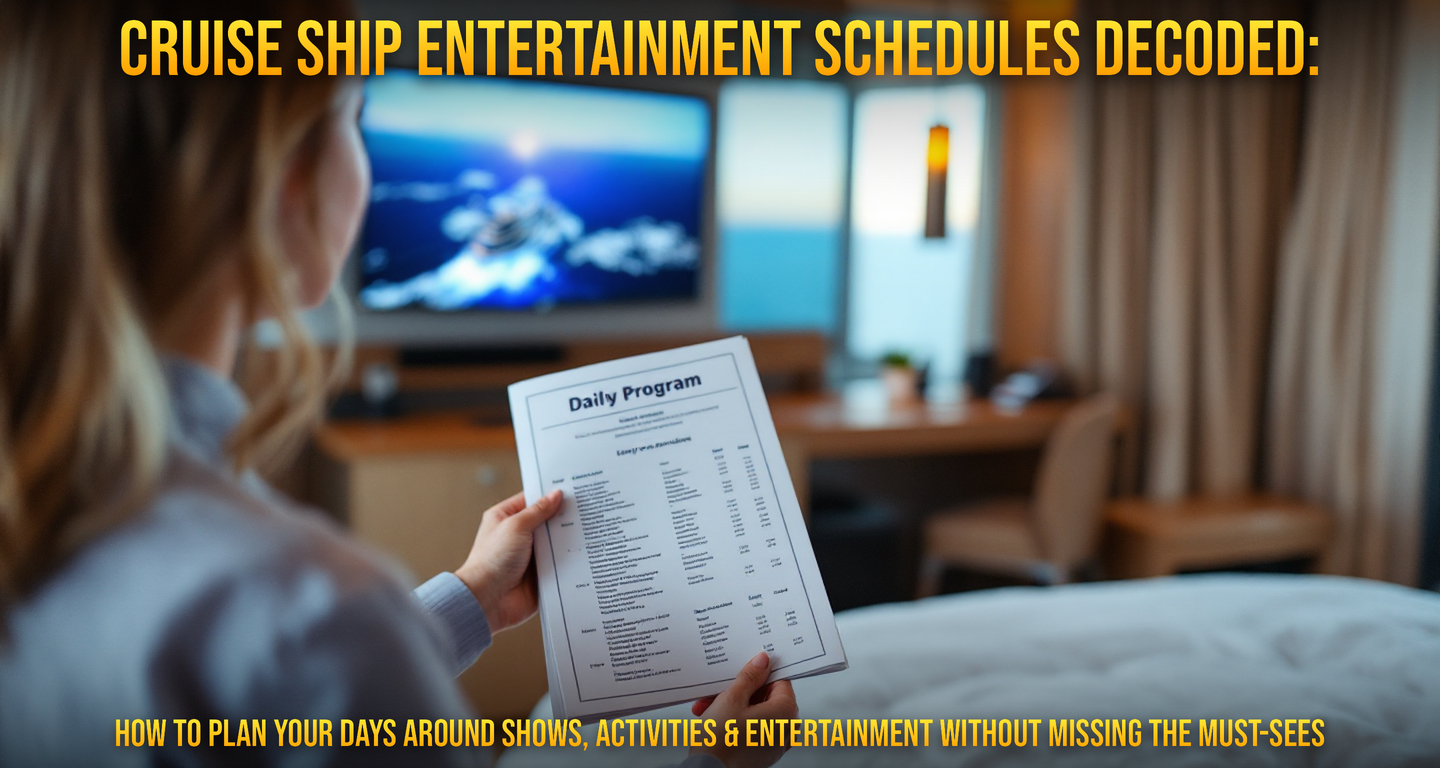
Let me walk you through exactly how to plan your days so you catch the shows and experiences that matter to you, avoid the tourist-trap activities, and still have plenty of downtime to actually relax.
The First Rule: Print and Review Your Schedule the Night Before
When you board, grab multiple copies of the daily program. Seriously. Grab at least three. One stays in your cabin, one goes in your day bag, and one gets marked up as your personal planning document.
On the night before each sea day, spend 15 minutes reviewing the next day's schedule. This isn't busy work—it's the difference between discovering a 2 p.m. cooking demonstration with the executive chef and accidentally sleeping through it.
Here's what you're scanning for:
- Showtime showtimes (yes, really). Most ships have two or three theater productions nightly. Main theater shows on Royal Caribbean's Wonder of the Seas run at 6 p.m. and 8:30 p.m., for example. Dinner seatings matter here—if you're at the second dinner seating at 8:15 p.m., you'll likely miss the 8:30 p.m. show. Plan accordingly.
- Specialty activities that require advance booking. Cooking classes, wine tastings, and anything in specialty venues often cap at 50-100 people and fill fast. Check what's available and sign up right then if it interests you.
- Time-limited experiences. Some cruise lines offer midnight deck parties, sunrise yoga on the top deck, or port-specific activities (like a "Cozumel beach day briefing") that happen once and only once.
- When kids' clubs operate. If you're traveling with children, know exactly when Camp Ocean or Club O2 are open, when meals are served, and when evening childcare (so you can enjoy adult entertainment) is available.
- Production show rehearsal times and tech rehearsals. Some cruise lines actually invite passengers to watch rehearsals. It's a behind-the-scenes gem most people miss.
Understanding the Daily Program: What Each Section Actually Means
The paper schedule looks chaotic, but it's organized in a way that makes sense once you understand the code. Let me break down what you're actually looking at.
The morning section (typically 7 a.m. to noon) is dominated by fitness classes, trivia contests, and activities designed for early risers. If you're someone who wakes up naturally at 6:30 a.m., this is gold. Trivia competitions on sea days are genuine fun—I once won a bottle of wine at a Disney Cruise Line movie trivia contest just by knowing obscure facts from the 1950s.
But here's an insider tip: morning activities are drastically less crowded than evening ones. If you want a relaxed experience at a poolside activity or want to actually interact with the activity staff, do it in the morning.
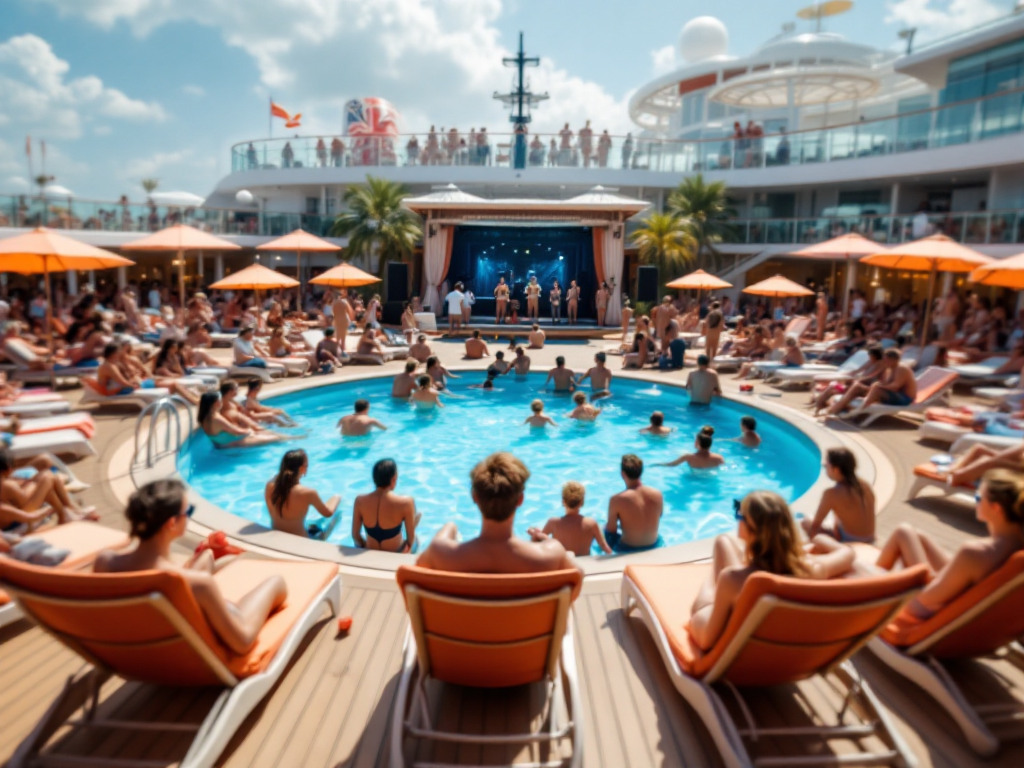
Afternoon programming (noon to 5 p.m.) mixes casual activities with specialty bookings. This is when you'll see dance classes, singles mixers (if you're traveling solo), adult-only activities like hairy chest contests or belly-flop competitions, and deck parties by the pool. The afternoon is also your prime window for booking excursions at the shore excursion desk if you haven't already booked them online.
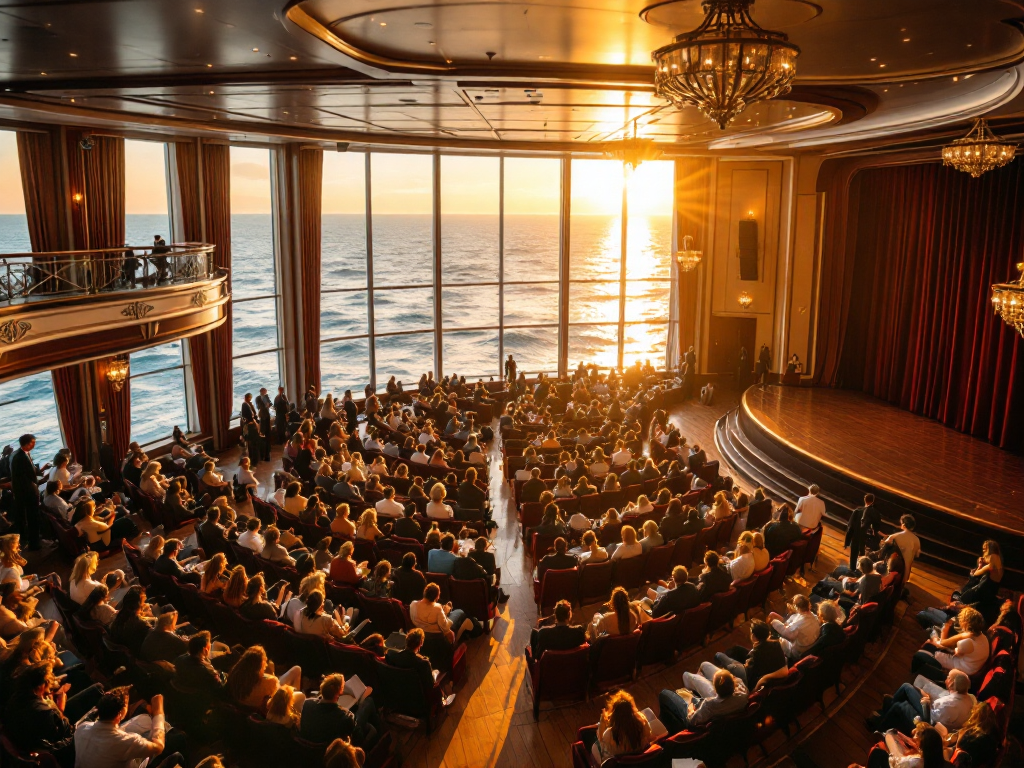
Evening entertainment (6 p.m. onward) is when the ship transforms. You've got dinner service, the main theater shows, comedy clubs (on lines like Royal Caribbean and Carnival), live music in multiple venues, and adult-only clubs. This is where cruise lines invest their biggest production budgets, and it shows.
Late-night programming (after 10 p.m.) is your secret weapon for avoiding crowds while still experiencing the ship. Karaoke bars, adult lounges, and deck parties that start at midnight exist for a reason—fewer people means more interactive fun.
The Theater Show Strategy: How to Catch the Must-Sees Without Arriving Two Hours Early
Here's what most cruise passengers don't know: you don't need to arrive at the main theater 90 minutes before showtime. That's what the cruise line wants you to think, but it's not necessary.
On Royal Caribbean's Oasis-class ships, the Broadway-level production shows (like "Hairspray" or "We Will Rock You") run with assigned seating in the main theater. Your dining time slot actually determines your show time. If you're at the first dinner seating (typically 5:45 p.m.), your show time is 6 p.m. If you're at the second seating (typically 8:15 p.m.), your show time is 8:30 p.m.
But here's the game-changer: you can switch your dining time through the concierge desk if you want a specific show time. This is valuable knowledge if you have strong preferences.
For specialty shows—comedy clubs, adult-oriented performances, or intimate music venues—these operate on a first-come, first-served basis. Arrive 15-20 minutes early for these. The venues are smaller (50-200 capacity), and they do fill up.
My personal strategy for shows:
- On sea days, do one "big" main theater show and one specialty venue show. That's it.
- Arrive 15 minutes early (not 90).
- Skip the very first night show—it's inevitably crowded because everyone's still boarding.
- The final night show is often less crowded because people are packing or sleeping off their last night's indulgences.
- Check if your cruise line offers repeat showings. Most do. If you missed tonight's comedy show, it might repeat tomorrow at 4 p.m.
Activity Selection: The Difference Between Tourist Traps and Genuine Experiences
Not all activities are created equal. After 40+ cruises, I've learned which activities are worth your time and which are just filler programming designed to keep you occupied and spending money.
Activities worth blocking time for:
- Chef's table dining or cooking demonstrations. You're learning from actual culinary professionals, and the food is exceptional. On Celebrity Cruises, the cooking classes in the Qsine theater are interactive and genuinely fun. Cost typically runs $30-60 per person.
- Wine tastings or spirits masterclasses. These are educational, small-group experiences, and the staff who lead them are passionate. Expect $25-40.
- Trivia contests with prizes. Low-pressure, high-fun. Plus, you might actually win something.
- Port-specific briefings. Before your ship docks at a complex port like Venice or Istanbul, cruise lines often host informational sessions. These are gold if you're doing independent shore excursions. Free, and incredibly helpful.
- Sports tournaments. Anything from darts to shuffleboard to mini golf. These are genuinely social and fun, especially on sea days.
Activities you can safely skip:
- Introductory scuba lessons in the pool. You're in a tiny pool on a moving ship, cramped with 20 other people. If you want to learn scuba, do it on shore in clear Caribbean water.
- "Sell you an upgrade" seminars disguised as lifestyle talks. If it involves sitting in a theater while someone pitches you jewelry, a timeshare pitch disguised as a real estate seminar, or casino lessons—these are revenue generators for the cruise line, not genuine entertainment.
- Repeat fitness classes. One yoga class or spin class is great. But if you attend the same class daily, you're treating your cruise like a gym when you could be exploring the ship or relaxing.
- Long product demonstrations. If it takes 45 minutes, it's a sales pitch. If it sounds interesting, watch a 15-minute version instead.
Specialized Programming You Didn't Know Existed[/B]
Cruise lines publish activities for everyone, but some programming is genuinely hidden in the fine print.
Solo traveler meetups. Traveling alone? Look for the solo traveler welcome event. These happen on the first or second day, usually in a lounge at 4 p.m. Real people, real conversations, no obligation to hang out the entire cruise if the group isn't your vibe.
LGBTQ+ events. Most cruise lines now host LGBTQ+ social gatherings. These aren't explicitly advertised everywhere, but they're in the daily program if you look carefully (look for "Proud" programming on Royal Caribbean, for example).
Officer meet-and-greets. The captain, hotel director, and other officers often host casual meet-and-greets in lounges. These are free, genuinely interesting, and rarely crowded. You'll learn how the ship actually operates.
Behind-the-scenes tours. Some cruise lines offer galley tours, engine room tours (on smaller ships), or bridge tours. These require advance booking and sometimes a small fee ($10-25), but they're absolutely fascinating. I've done galley tours on five different ships, and each one showed me how 3,000 passengers get fed three meals a day plus snacks.
Branching activities by port. The daily schedule changes at each port. You might have a "port day briefing" at 8 a.m., a "local culture presentation" at 2 p.m., or a "shopping tips for [location]" session at 3 p.m. These are genuinely useful if you're not booking through the cruise line.
The Dinner Timing Decision: It's About More Than Food
Your dinner seating actually controls a huge part of your evening entertainment schedule, and most passengers don't realize this until it's too late.
On Royal Caribbean's Oasis-class and Vision-class ships, you get either the early seating (5:45 p.m.) or the late seating (8:15 p.m.). This determines your main theater show time, your dining room assignment, and your available evening activities.
Early seating (5:45 p.m. dinner, 6 p.m. show) works best if:
- You have young children
- You want to enjoy multiple shows or late-night activities after dinner
- You're an early riser and enjoy morning activities
- You want to finish dinner and hit the deck parties or nightclubs while energy is highest
Late seating (8:15 p.m. dinner, 8:30 p.m. show) works best if:
- You want to spend afternoon hours lounging, at port, or doing activities instead of rushing to dinner
- You prefer sleeping in
- You enjoy a more relaxed evening pace
- You don't mind missing the midnight deck parties (by 10:30 p.m., you're still eating)
Honest take: early seating is objectively better if you want to maximize entertainment. You finish dinner by 7 p.m., catch the 8:30 p.m. show if you want, and still have the entire night open. With late seating, you're stuck at dinner until 9 p.m., meaning you miss earlier activities and have limited time before evening wears down.
Sea Days vs. Port Days: Where to Invest Your Entertainment
Your entertainment strategy should completely flip depending on whether you're docked or at sea.
On sea days, the entire ship is present and programming is at maximum volume. This is when you actually experience the shows, classes, and activities. Block out time for:
- At least one main theater show
- One specialty activity or class that genuinely interests you
- Casual poolside entertainment (usually live music or comedy)
- One evening entertainment venue of your choice (nightclub, piano bar, comedy club)
On port days, ship entertainment becomes background noise because most passengers are off exploring. Unless you're spending the day on the ship, don't stress about missing scheduled activities. The activities that repeat during the cruise usually repeat on sea days too.
If you are staying aboard on a port day (bad weather, wanting a quiet day, or visiting an undesirable port), that's actually when you experience the ship alone. Pools are empty, restaurants are peaceful, and you can try activities without any crowds. This is secretly the best day of many cruises.
The One Planning Tool Every Cruiser Should Use
Here's my personal system, and I've used it on every cruise for the past decade:
- Get a highlighter. Grab a yellow highlighter and mark every activity you're remotely interested in on your daily program copy.
- Circle your non-negotiables. Use a pen to circle the 3-5 activities you absolutely don't want to miss. For me, this is usually one main show, one specialty dining experience, and one unique activity I haven't tried before.
- Check timing conflicts. Before you commit to anything, verify it doesn't overlap with your dinner time or other must-see events.
- Build in buffer time. Don't schedule back-to-back activities. Plan 15-30 minutes of walking/transition time between events.
- Book specialty activities immediately. If it requires advance booking (cooking class, wine tasting, behind-the-scenes tour), sign up the same day you see it. These fill fast, and "I'll do it tomorrow" usually means you miss it.
Advanced Strategy: Booking Entertainment Through CruiseVoices
Once you've decoded your schedule and know what experiences matter most to you, it's time to actually book your entire cruise strategically. That's where our AI concierge comes in.
When you're planning a cruise through CruiseVoices' Trip Planner, you can book your cruise, flights, hotels, pre-cruise dining experiences, and shore excursions all in one place. This means you can actually coordinate your entire trip around the entertainment schedule you care about.
For example, if you want to maximize your time aboard and experience every show, you can use our platform to book flights that get you to the ship earlier for day-of-sailing activities, or hotels that sync with your cruise departure. If you're doing independent shore excursions (which we can book for you), you can plan around the ship's most desirable entertainment—hitting a specialty cooking class on a sea day while avoiding crowds.
Our AI concierge can also help you book any specialty entertainment that requires a credit card in advance, ensuring you don't miss those must-see experiences.
Your Entertainment Planning Checklist
Before your cruise, use this checklist to set yourself up for maximum enjoyment:
- ☐ Know your dinner seating time and how it impacts your show time
- ☐ Identify 3-5 "must-see" entertainment experiences
- ☐ Check which activities require advance booking and sign up immediately upon boarding
- ☐ Review the schedule each night for the next day's standout activities
- ☐ Skip the obvious tourist-trap activities (product pitches, overly crowded daytime events)
- ☐ Prioritize at least one behind-the-scenes or unique activity you've never done before
- ☐ Plan heavy entertainment days on sea days, lighter days on port days
- ☐ Build buffer time between activities
- ☐ Attend at least one specialty dining experience (cooking class, wine tasting, etc.)
- ☐ Try one evening entertainment venue (comedy club, adult show, specialized lounge) that interests you
The Real Secret
After 40+ cruises, the truth is simple: the "best" entertainment is whatever genuinely excites you. If you hate comedy shows, you don't need to see one. If trivia bores you, skip it. If you'd rather spend your evening watching the sunset from a quiet deck chair, that's equally valid.
The daily program is a menu, not a mandate. Your job is to decode it, identify what matters to you, and ignore everything else. That's how you go from feeling rushed and overwhelmed to genuinely enjoying your cruise.
Share your favorite hidden entertainment discoveries with the community—we'd love to hear which shows, activities, and experiences made your cruise unforgettable. Head over to the CruiseVoices Shows & Entertainment forum and let us know what you found!