

After 40+ cruises and thousands of photos across everything from Alaska's glaciers to Caribbean sunsets, I've learned the hard way what camera gear works at sea—and what's just marketing hype that'll drain your wallet. The constant motion, salt spray, and unique lighting conditions on ships demand specific equipment choices that most photography guides completely ignore.
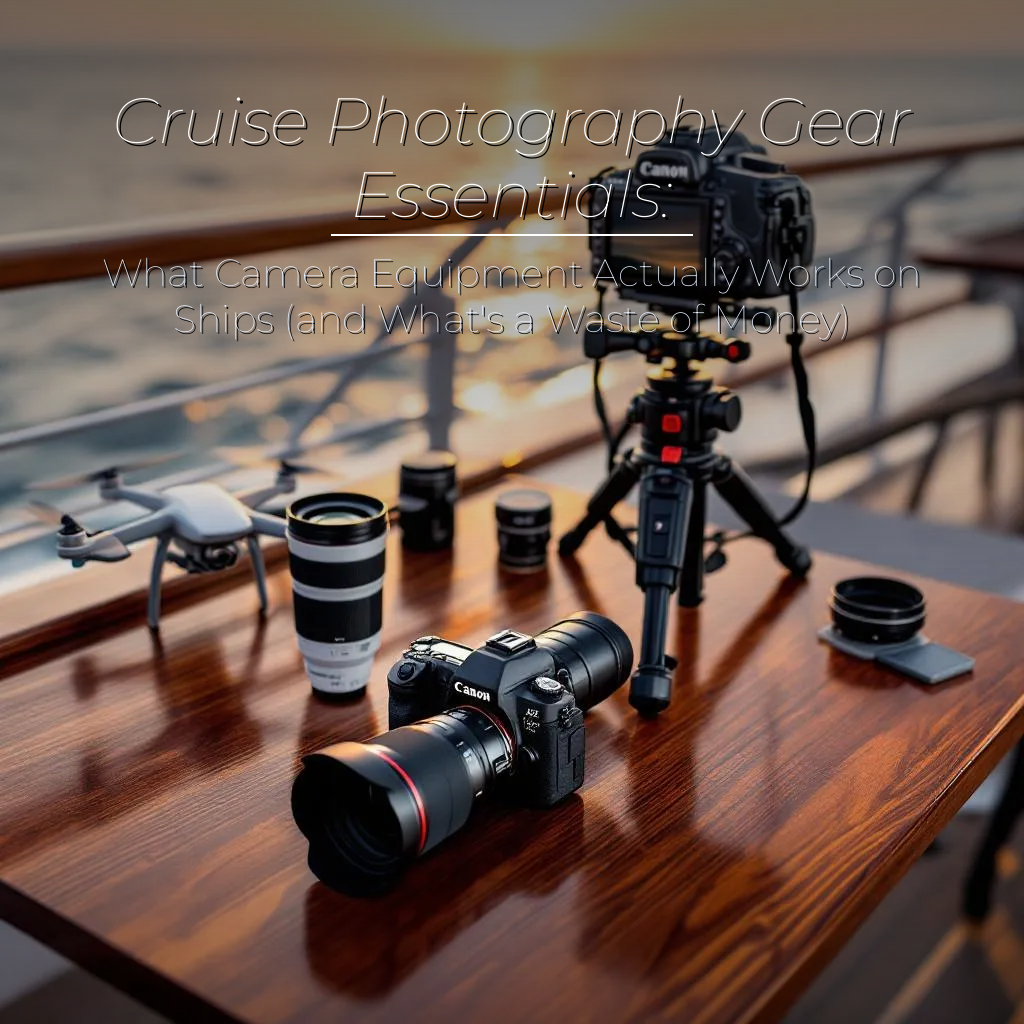
Here's what no one tells you: cruise ships present photography challenges you won't face anywhere else. You're dealing with constant vibration (even on massive ships like Royal Caribbean's Wonder of the Seas), reflective surfaces everywhere, and lighting that changes dramatically from the dark interior corridors to blazing deck 12 sun.
I've watched countless passengers struggle with gear that works perfectly on land but fails miserably at sea. The couple next to me on Norwegian Viva's observation deck spent 20 minutes trying to get sharp shots with a cheap tripod that couldn't handle the ship's movement. Meanwhile, I was getting crystal-clear shots handheld with the right stabilization.
The biggest mistake? Thinking you need professional-level gear. Some of my favorite cruise photos were taken with equipment that cost under $800 total.
Share your photography wins and fails in our CruiseVoices forums!
Mirrorless Wins Every Time
After testing everything from DSLRs to point-and-shoots across dozens of ships, mirrorless cameras dominate cruise photography. The built-in stabilization handles ship movement better than any optical system I've tried.
My top picks based on real cruise testing:
What to avoid: Full-frame DSLRs like the Canon 5D series. They're heavy, battery-hungry, and the mirror slap actually makes ship vibration worse. I learned this the expensive way on a 14-day transatlantic crossing.
Point-and-shoot reality: The Sony RX100 VII ($1,198) is the only compact I'd recommend for serious cruise photography. Everything cheaper struggles in low light conditions you'll face constantly.
Ship photography demands versatility above everything else. You might go from photographing dinner at Teppanyaki on MSC Seashore to capturing Santorini's cliffs an hour later.
The two-lens solution that works:
Lens mistakes that cost money:
Budget alternative: The kit lens that comes with most cameras (usually 24-70mm equivalent) plus a 55-250mm telephoto covers 90% of cruise photography needs for under $300 total.
Discover more gear recommendations in our photography community!
Essential Accessories (in order of importance):
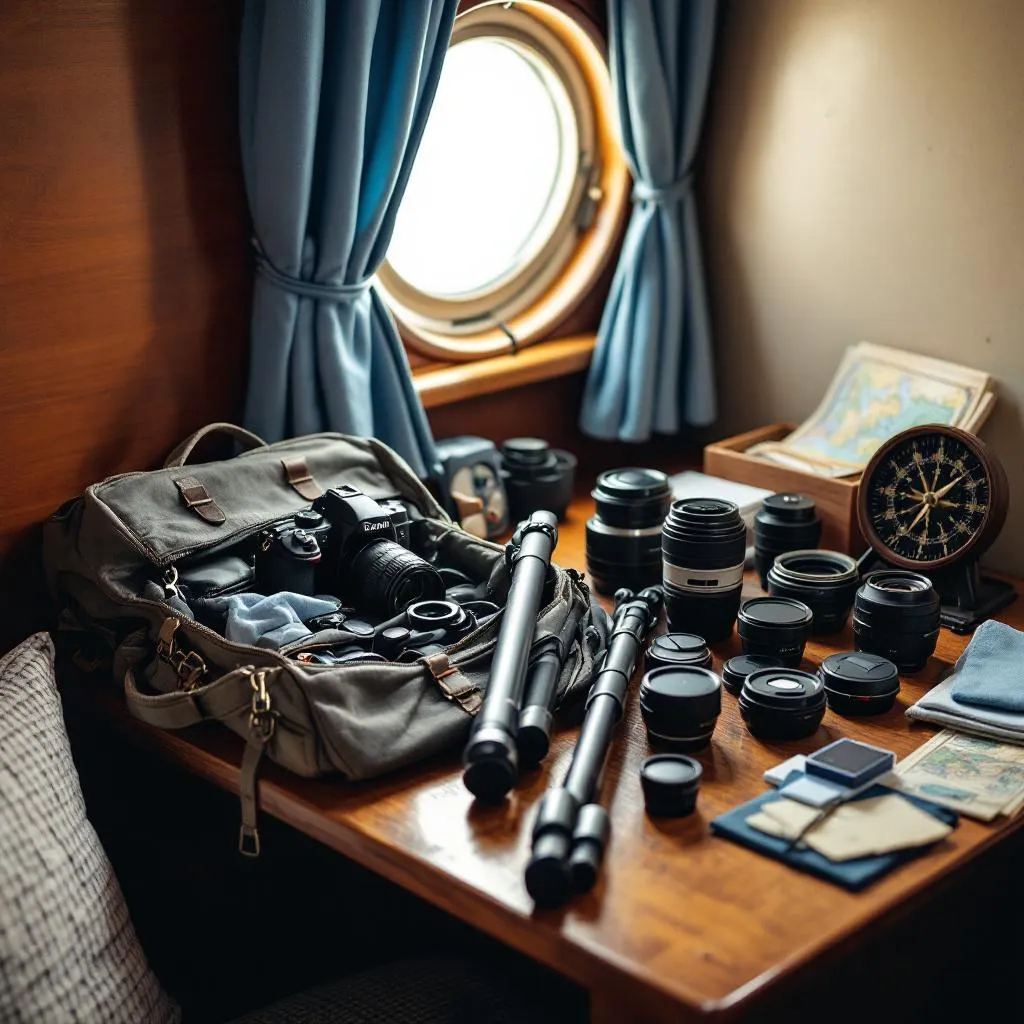
Complete Waste of Money on Cruises:
The gray area - handheld stabilizers: DJI gimbals work great for video, but they're bulky for cruise travel and most modern cameras have sufficient stabilization built-in.
Budget Setup ($800 total):
Enthusiast Setup ($2,500 total):
Professional Setup ($4,500 total):
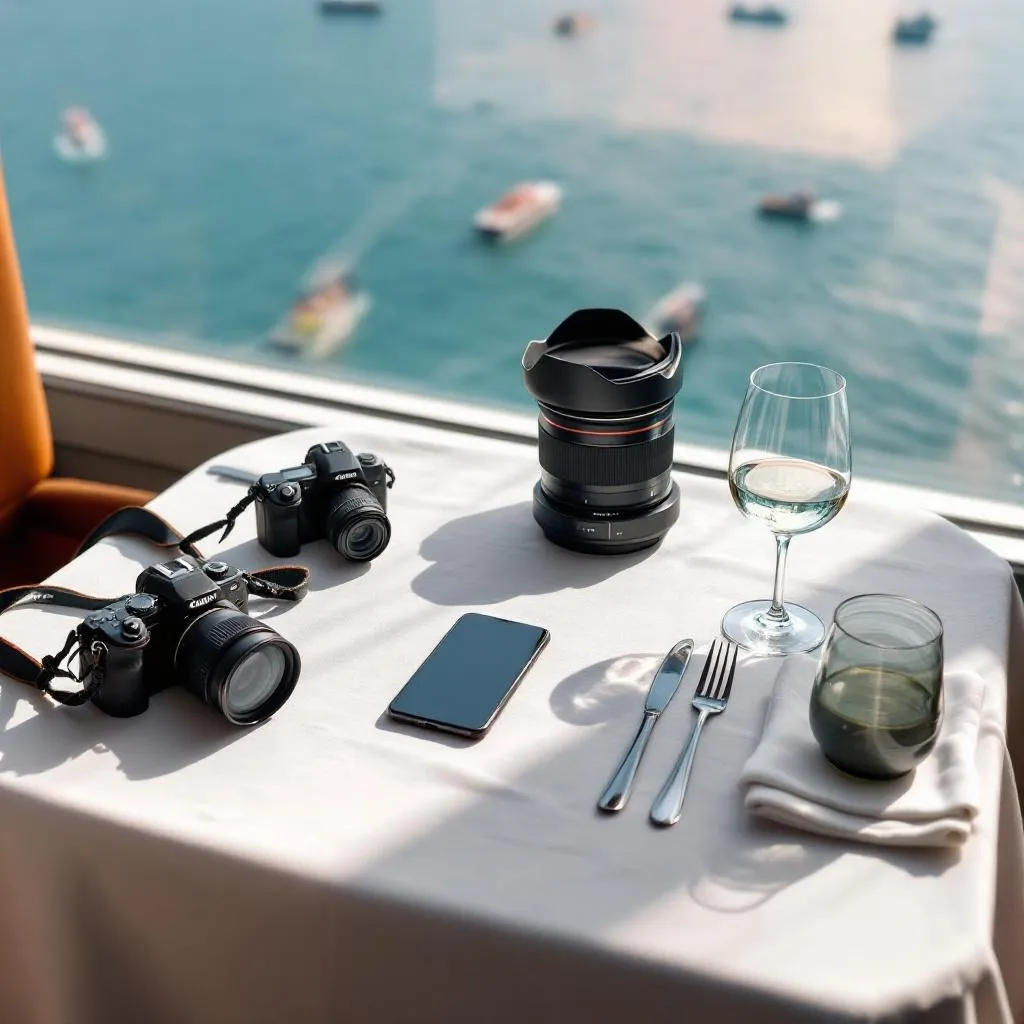
Honest truth: I've used all three setups extensively. The budget setup captures 95% of the same shots as the professional gear. The main difference is low-light performance and how much you can crop photos later.
Royal Caribbean: Their newer ships (Icon and Oasis classes) have incredible photography opportunities but strict rules about commercial photography. Keep gear low-key.
Norwegian: Most photo-friendly policies. The Haven deck on ships like Norwegian Viva offers incredible sunrise/sunset shooting positions.
Celebrity: Their Edge-class ships have amazing outdoor spaces, but wind on deck 15 can damage equipment. Secure everything.
MSC: European itineraries mean lots of architectural photography. Bring that telephoto lens.
Disney: Family-focused means lots of activity shots. Fast autofocus is crucial.
Most shore excursions move fast and involve walking. That professional setup becomes a burden quickly. I've seen passengers miss incredible shots in Cozumel because they were juggling too much gear.
My shore day setup:
That's it. Everything fits in a small sling bag that doesn't scream "expensive camera equipment" in port areas.
After 40+ cruises and testing everything from $500 point-and-shoots to $10,000 professional setups, here's what I know for sure: the best cruise camera is the one you'll actually use consistently.
I've seen passengers with $5,000 setups who took fewer photos than families with basic cameras because the gear was too complicated or heavy. The couple on Carnival Celebration with an older Canon Rebel and kit lens captured more genuine moments than the guy with professional Sony gear who spent more time adjusting settings than enjoying his vacation.
Start with basics, upgrade based on actual experience. Buy the budget setup first. After 2-3 cruises, you'll know exactly what limitations frustrate you and can upgrade strategically.
The goal isn't perfect technical photos—it's capturing memories of an incredible vacation. Some of my favorite cruise shots were taken with my phone because I had it ready when the perfect moment happened.
Share your cruise photography gear experiences and see what fellow cruisers recommend in our photography forums!
The Reality Check: Why Ships Break Normal Photography Rules
Here's what no one tells you: cruise ships present photography challenges you won't face anywhere else. You're dealing with constant vibration (even on massive ships like Royal Caribbean's Wonder of the Seas), reflective surfaces everywhere, and lighting that changes dramatically from the dark interior corridors to blazing deck 12 sun.
I've watched countless passengers struggle with gear that works perfectly on land but fails miserably at sea. The couple next to me on Norwegian Viva's observation deck spent 20 minutes trying to get sharp shots with a cheap tripod that couldn't handle the ship's movement. Meanwhile, I was getting crystal-clear shots handheld with the right stabilization.
The biggest mistake? Thinking you need professional-level gear. Some of my favorite cruise photos were taken with equipment that cost under $800 total.
Share your photography wins and fails in our CruiseVoices forums!
Cameras That Actually Work at Sea (Tested on Real Ships)
Mirrorless Wins Every Time
After testing everything from DSLRs to point-and-shoots across dozens of ships, mirrorless cameras dominate cruise photography. The built-in stabilization handles ship movement better than any optical system I've tried.
My top picks based on real cruise testing:
- Sony A7 IV ($2,498): The gold standard. Shot incredible northern lights photos from Celebrity Edge's deck 15 with zero tripod
- Fujifilm X-T5 ($1,699): Perfect middle ground. Weather-sealed enough for Alaskan mist, compact enough for shore excursions
- Sony A6700 ($1,398): My actual go-to for most cruises. Fits in a small bag, battery lasts all day exploring ports
- Canon R10 ($979): Budget winner that still delivers. Great for families who want quality without breaking the bank
What to avoid: Full-frame DSLRs like the Canon 5D series. They're heavy, battery-hungry, and the mirror slap actually makes ship vibration worse. I learned this the expensive way on a 14-day transatlantic crossing.
Point-and-shoot reality: The Sony RX100 VII ($1,198) is the only compact I'd recommend for serious cruise photography. Everything cheaper struggles in low light conditions you'll face constantly.
Lenses: The Make-or-Break Decision
Ship photography demands versatility above everything else. You might go from photographing dinner at Teppanyaki on MSC Seashore to capturing Santorini's cliffs an hour later.
The two-lens solution that works:
- 24-70mm f/2.8 equivalent: Your workhorse for 80% of cruise shots. I use the Sony 24-70mm GM ($2,198) or Fuji 16-55mm f/2.8 ($1,199)
- 70-200mm f/4 equivalent: Essential for wildlife in Alaska, architectural details in European ports, and those Instagram-worthy shots of other ships at sea
Lens mistakes that cost money:
- Ultra-wide lenses (14-24mm): Useless on ships due to constant distortion from ship movement
- Prime lenses: Too limiting when you can't move around freely (like during lifeboat drills or crowded port days)
- Anything slower than f/4: You'll miss too many shots in low light
Budget alternative: The kit lens that comes with most cameras (usually 24-70mm equivalent) plus a 55-250mm telephoto covers 90% of cruise photography needs for under $300 total.
Discover more gear recommendations in our photography community!
Accessories That Actually Matter (Skip the Rest)
Essential Accessories (in order of importance):
- Extra batteries ($50-80 each): Cold weather drains them fast. I pack 4 batteries minimum for Alaska cruises
- UV filters for each lens ($25-50 each): Salt spray protection. Replace these, not your expensive lens
- Microfiber cloths (pack of 6, $15): You'll clean your lens 20+ times per day
- Camera strap with quick-release ($40): Peak Design makes the best ones for cruise photography
- Waterproof camera bag ($80-120): For tender boats and unexpected weather
Complete Waste of Money on Cruises:
- Traditional tripods: Ship movement makes them useless. I see passengers fighting with these every cruise
- External flash units: Banned in most ship restaurants and awkward in close quarters
- Lens filters beyond UV: Polarizers and NDs don't work well with constantly changing ship angles
- Camera cleaning kits: Basic cloths handle everything you need
The gray area - handheld stabilizers: DJI gimbals work great for video, but they're bulky for cruise travel and most modern cameras have sufficient stabilization built-in.
Real-World Budget Breakdowns (What I Actually Recommend)
Budget Setup ($800 total):
- Canon R10 body: $979
- 18-150mm kit lens (comes bundled): included
- Extra battery: $79
- UV filter: $35
- Camera bag: $60
Enthusiast Setup ($2,500 total):
- Sony A6700 body: $1,398
- Sony 16-70mm f/4: $498
- Sony 70-350mm f/4.5-6.3: $548
- 2 extra batteries: $158
- UV filters: $70
- Peak Design strap: $45
- Waterproof bag: $89
Professional Setup ($4,500 total):
- Sony A7 IV body: $2,498
- Sony 24-70mm f/2.8 GM: $2,198
- Everything else from enthusiast setup: $500
Honest truth: I've used all three setups extensively. The budget setup captures 95% of the same shots as the professional gear. The main difference is low-light performance and how much you can crop photos later.
Cruise Line Specific Considerations
Royal Caribbean: Their newer ships (Icon and Oasis classes) have incredible photography opportunities but strict rules about commercial photography. Keep gear low-key.
Norwegian: Most photo-friendly policies. The Haven deck on ships like Norwegian Viva offers incredible sunrise/sunset shooting positions.
Celebrity: Their Edge-class ships have amazing outdoor spaces, but wind on deck 15 can damage equipment. Secure everything.
MSC: European itineraries mean lots of architectural photography. Bring that telephoto lens.
Disney: Family-focused means lots of activity shots. Fast autofocus is crucial.
Shore Excursion Photography Reality
Most shore excursions move fast and involve walking. That professional setup becomes a burden quickly. I've seen passengers miss incredible shots in Cozumel because they were juggling too much gear.
My shore day setup:
- One camera body
- One versatile lens (24-70mm equivalent)
- One extra battery
- Waterproof phone case as backup
That's it. Everything fits in a small sling bag that doesn't scream "expensive camera equipment" in port areas.
The Bottom Line: What Actually Matters
After 40+ cruises and testing everything from $500 point-and-shoots to $10,000 professional setups, here's what I know for sure: the best cruise camera is the one you'll actually use consistently.
I've seen passengers with $5,000 setups who took fewer photos than families with basic cameras because the gear was too complicated or heavy. The couple on Carnival Celebration with an older Canon Rebel and kit lens captured more genuine moments than the guy with professional Sony gear who spent more time adjusting settings than enjoying his vacation.
Start with basics, upgrade based on actual experience. Buy the budget setup first. After 2-3 cruises, you'll know exactly what limitations frustrate you and can upgrade strategically.
The goal isn't perfect technical photos—it's capturing memories of an incredible vacation. Some of my favorite cruise shots were taken with my phone because I had it ready when the perfect moment happened.
Share your cruise photography gear experiences and see what fellow cruisers recommend in our photography forums!
Last edited: