

After 40+ cruises and countless hours battling ship motion, harsh lighting, and tight cabin spaces, I've learned the hard way which camera gear actually delivers at sea and which just takes up precious luggage space. Let me save you from the expensive mistakes I've made.
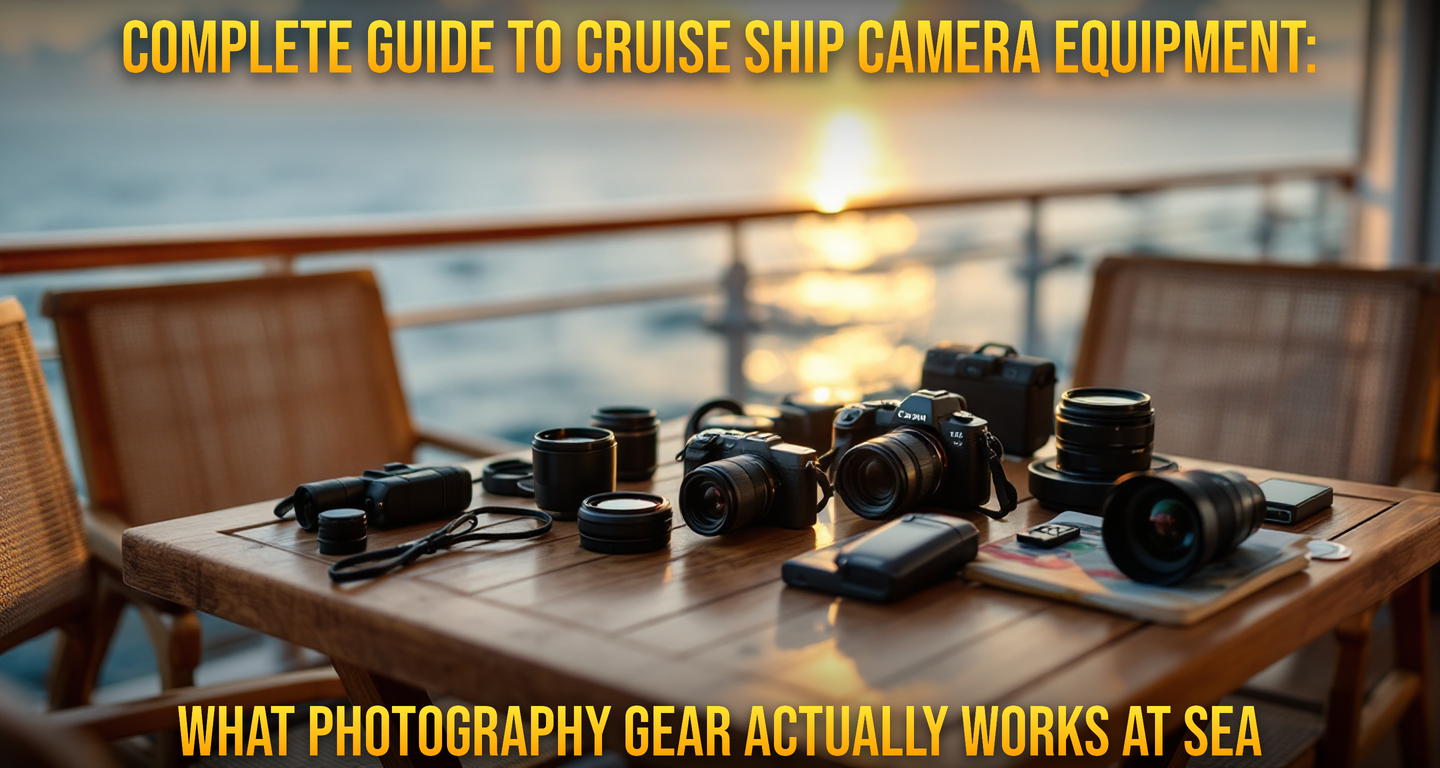
You need to completely rethink photography when you're cruising. That heavy DSLR that takes stunning landscapes? It becomes a liability when you're trying to capture a Caribbean sunset while the ship rolls. That macro lens perfect for flowers? Useless when you're shooting whales from Deck 12 of Wonder of the Seas.
I learned this lesson the expensive way during my first Alaska cruise on Celebrity Solstice. I packed a full camera bag with multiple lenses, only to find myself reaching for my compact camera 90% of the time. The combination of limited cabin storage, constant movement, and unpredictable weather makes cruise photography its own unique challenge.
The three biggest factors that will make or break your cruise photography: stabilization, versatility, and weather protection. Everything else is secondary.
Share your gear recommendations in our cruise photography forum where photographers swap real-world tips!
Forget the gear reviews written by photographers who've never left dry land. Here's what actually performs when you're shooting from a moving platform:
Mirrorless Wins Every Time
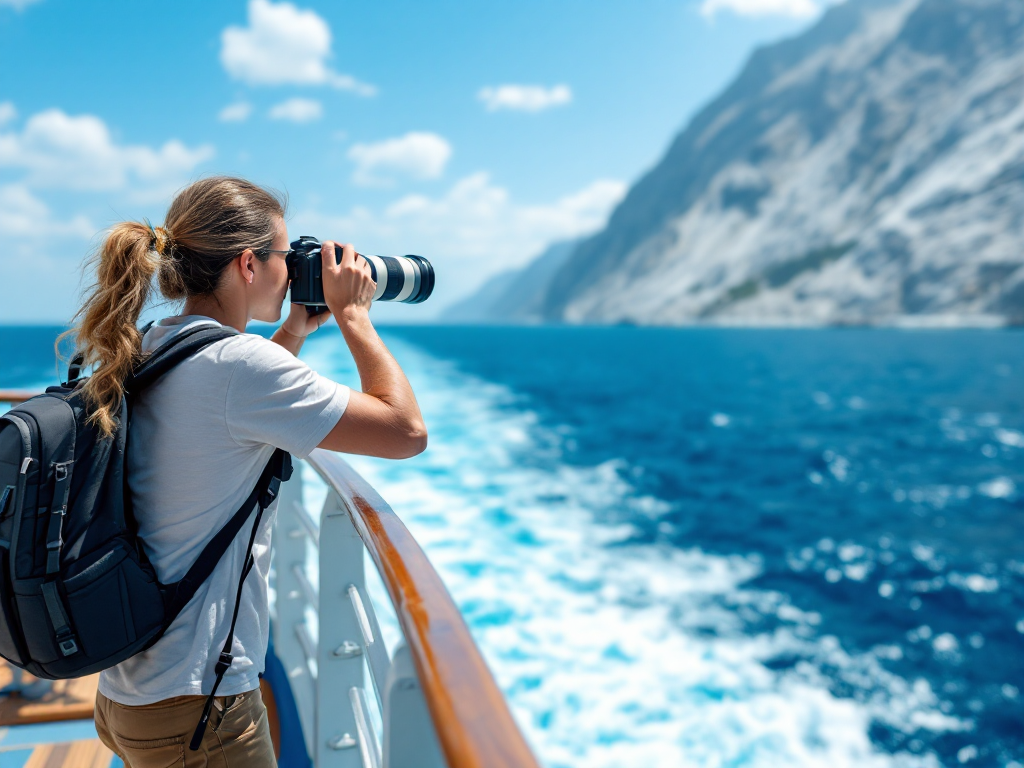
After testing DSLRs, mirrorless, and compact cameras across dozens of cruises, mirrorless cameras consistently deliver the best results. The Sony A7 IV and Canon R6 Mark II have in-body image stabilization that actually compensates for ship movement. I've gotten sharp shots of Santorini's blue domes from the top deck of Celebrity Edge in moderate seas - something that would have been impossible with my old Canon 5D.
Full Frame vs APS-C: The Cruise Reality
Full frame sensors perform better in the challenging lighting conditions you'll face - those gorgeous golden hour shots from your balcony, dim indoor dining rooms, or Northern Lights viewing from deck (yes, I've shot aurora from Norwegian Breakaway's top deck). The Sony A7C is my current go-to for its compact size and excellent low-light performance.
But here's the honest truth: APS-C cameras like the Fuji X-T5 or Sony A6700 are often more practical. They're lighter, take up less cabin space, and the smaller lenses are easier to handle in windy deck conditions.
Compact Cameras: Don't Dismiss Them
The Sony RX100 VII lives in my day bag on every cruise. When you're island hopping in the Caribbean and want to travel light for shore excursions, this tiny powerhouse delivers images that rival much larger setups. The 24-200mm equivalent zoom covers 90% of cruise photography needs.
Discuss camera body recommendations with fellow cruise photographers in our photography community!
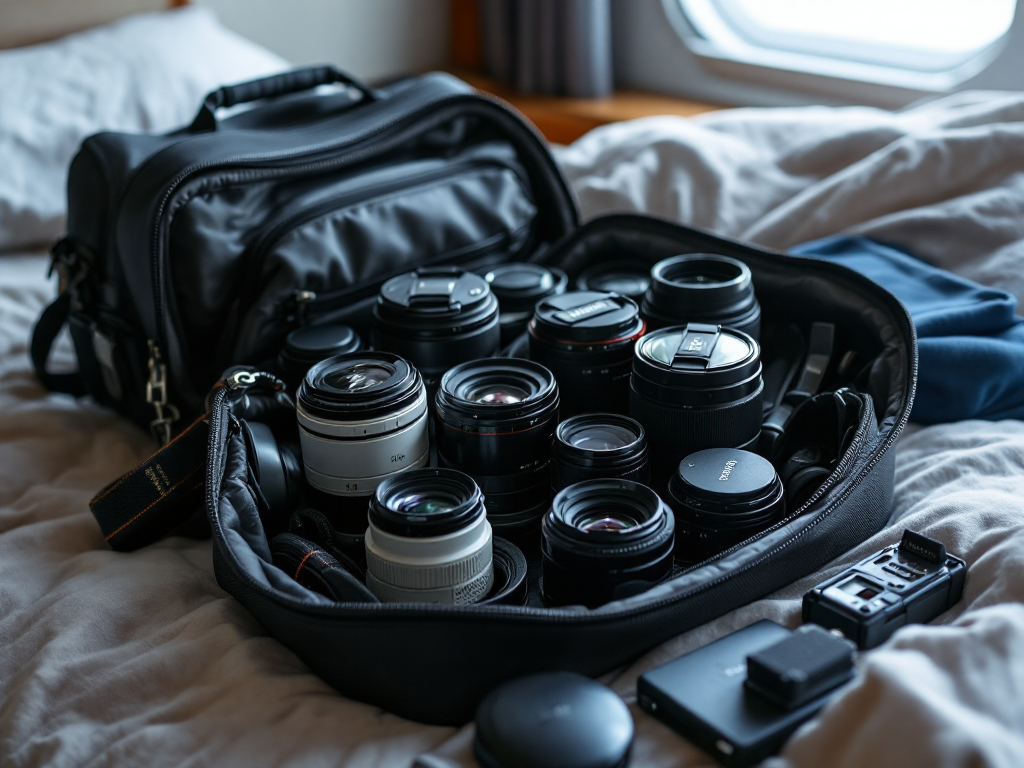
This is where most cruise photographers go wrong. You don't need a bag full of prime lenses when you're dealing with limited storage and constantly changing shooting conditions.
The One Lens That Changes Everything
A high-quality 24-70mm f/2.8 zoom is the single most important lens investment you'll make for cruising. I use the Sony 24-70 GM II on 80% of my shots. It handles everything from wide-angle ship deck scenes to portrait-length shots of fellow passengers at the pool.
Here's why this focal length is crucial: you often can't move closer to your subject (think photographing glaciers from the ship rail) or step back for a wider shot (tight cabin interiors). The zoom flexibility is essential.
Telephoto: Your Wildlife and Port Photography Hero
For Alaska wildlife, Mediterranean coastal towns, or capturing details on massive ships like Icon of the Seas, you need reach. The 70-200mm f/2.8 is the gold standard, but it's heavy and expensive. Excellent alternatives include:
I've used all three extensively, and the Tamron punches well above its $1,200 price point. I captured stunning shots of polar bears from Seabourn Venture using this lens - images that rival those from lenses costing twice as much.
Wide-Angle: Ship Photography Essential
For those impressive ship atriums, crowded pool decks, and port cityscapes, you need something wider than 24mm. The 16-35mm range is perfect. I particularly love the Sony 16-35mm f/2.8 GM for its consistent performance and weather sealing.
Pro tip from the trenches: Skip ultra-wide lenses (14mm and wider). The distortion becomes problematic for ship architecture shots, and you'll rarely use the extreme width.
Memory Cards: More Critical Than You Think
Ship WiFi is expensive and slow - don't plan on backing up photos online daily. I bring a minimum of 128GB across multiple cards. The SanDisk Extreme Pro cards have never failed me, even in harsh conditions during Arctic expeditions on Le Commandant Charcot.
Bring a card reader too. Ship WiFi is often too slow for photo uploads, but you might want to back up to a tablet or laptop.
Batteries: The Hidden Challenge
Cold weather drains batteries faster, and you'll shoot more than you expect. I learned this lesson during a Norwegian Fjords cruise when my camera died just as we approached Geiranger. Now I carry minimum four batteries for my main camera.
The Ravpower external chargers work great for keeping everything topped off in your cabin. Just remember most cruise cabins have limited outlets.
Tripods: Compact Carbon Fiber Only
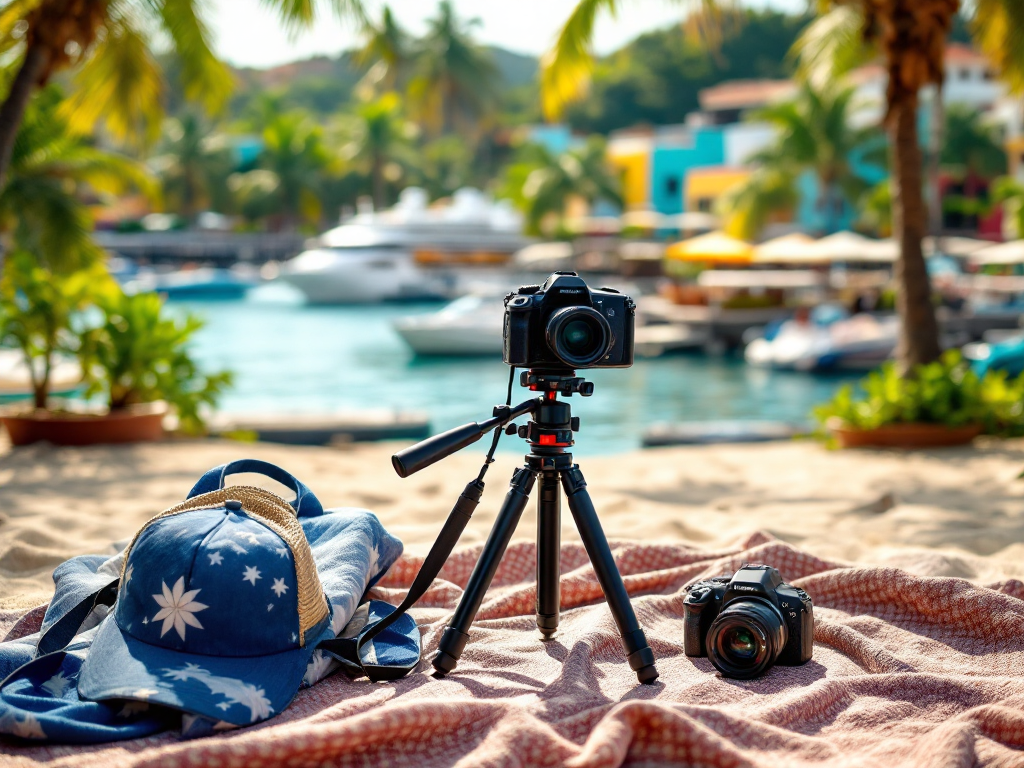
Forget heavy aluminum tripods. The Gitzo Traveler series or Peak Design Travel Tripod are worth the investment. You'll use them for:
I use the Peak Design Travel Tripod on every cruise. It fits in most carry-on bags and has never let me down.
Camera Bags: Rethink Everything
Your regular camera bag won't work. Cabin space is limited, and you need something that transitions from ship to shore excursion. The Peak Design Everyday Backpack works brilliantly - it holds camera gear, doubles as a day pack for excursions, and fits in cabin storage.
For day shooting, a simple sling bag like the Peak Design Everyday Sling keeps your camera accessible while leaving hands free for ship railings.
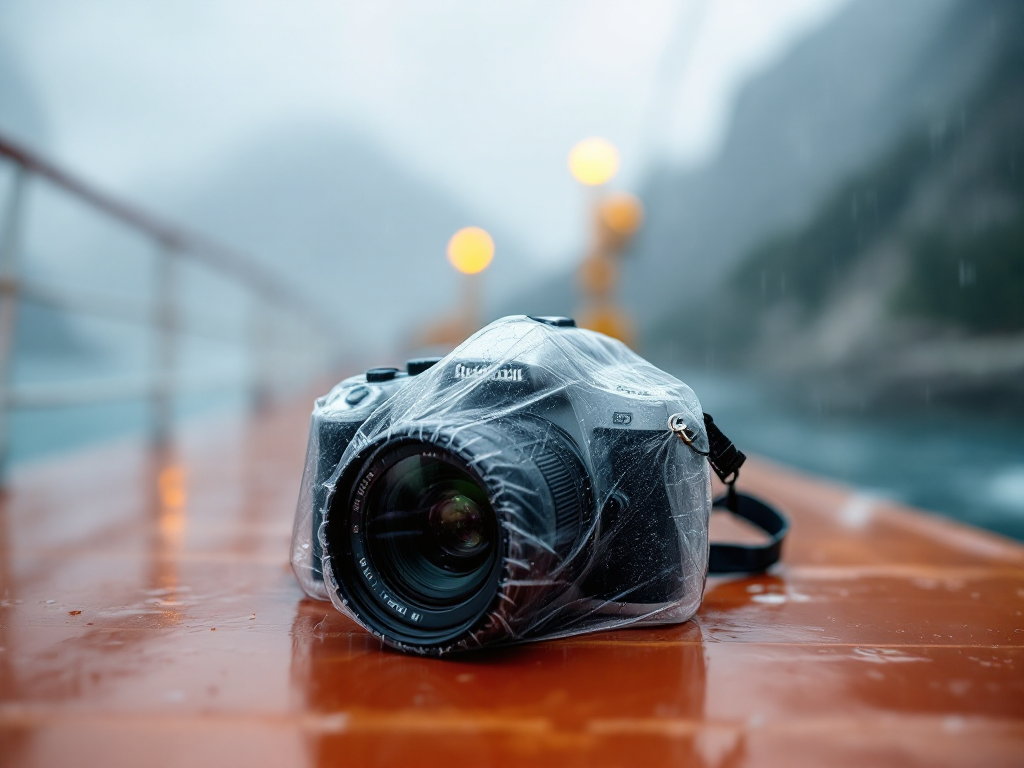
I've shot in North Sea storms, Caribbean downpours, and Arctic snow. Weather protection isn't optional - it's survival gear for your equipment.
Rain Covers That Actually Work
Think Tank Photo Hydrophobia rain covers have saved my gear countless times. During a particularly rough crossing on Norwegian Breakaway, sea spray was constant on the upper decks. The rain cover allowed me to keep shooting while other passengers gave up.
For lighter protection, the simple Op/Tech rain sleeves work well and pack tiny.
Lens Filters: Your First Line of Defense
A quality UV filter protects your expensive lens from salt spray. I use B+W UV filters on all my lenses - they've saved me from costly repairs multiple times.
Polarizing filters are crucial for water shots, reducing glare from the ocean and making those tropical waters pop. The circular polarizer from B+W or Hoya works beautifully.
Connect with other cruise photographers about weather protection strategies in our photography forum!
Splurge Categories
Save Money Categories
The $1,500 Cruise Photography Kit
If you're starting from scratch and want excellent results without breaking the bank:
This setup will handle 95% of cruise photography situations brilliantly.
Carry-On Strategy
Never check camera gear. Ever. I've seen too many horror stories of checked bags with thousands in camera equipment going missing. The Peak Design Everyday Backpack fits most airline carry-on requirements while holding a surprising amount of gear.
TSA is generally fine with camera equipment, but remove cameras and large lenses from bags during security screening. I've never had issues with dozens of flights carrying extensive gear.
International Considerations
Some countries have restrictions on professional-looking camera equipment. Research your ports if you're carrying large telephoto lenses. I've had questions in certain Caribbean ports about my 70-200mm lens but never serious issues.
Bring purchase receipts for expensive gear when cruising internationally. It speeds up any customs questions.
After four decades of cruises and thousands of photos, here's what actually matters: stabilization beats resolution, versatility beats specialty lenses, and weather protection beats everything.
The photographer who brings a weather-sealed camera with one excellent zoom lens and actually uses it will get better results than someone with $10,000 of gear they're afraid to take out in challenging conditions.
Start with the basics, learn what you actually use, then gradually add specialty items. Your future self (and your luggage allowance) will thank you.
Join our community of cruise photographers to share gear reviews, troubleshoot equipment issues, and see inspiring images from fellow cruisers in our cruise photography forum!
The Reality Check: Why Your Land Photography Rules Don't Apply at Sea
You need to completely rethink photography when you're cruising. That heavy DSLR that takes stunning landscapes? It becomes a liability when you're trying to capture a Caribbean sunset while the ship rolls. That macro lens perfect for flowers? Useless when you're shooting whales from Deck 12 of Wonder of the Seas.
I learned this lesson the expensive way during my first Alaska cruise on Celebrity Solstice. I packed a full camera bag with multiple lenses, only to find myself reaching for my compact camera 90% of the time. The combination of limited cabin storage, constant movement, and unpredictable weather makes cruise photography its own unique challenge.
The three biggest factors that will make or break your cruise photography: stabilization, versatility, and weather protection. Everything else is secondary.
Share your gear recommendations in our cruise photography forum where photographers swap real-world tips!
Camera Bodies: What Actually Works in Ship Motion
Forget the gear reviews written by photographers who've never left dry land. Here's what actually performs when you're shooting from a moving platform:
Mirrorless Wins Every Time
After testing DSLRs, mirrorless, and compact cameras across dozens of cruises, mirrorless cameras consistently deliver the best results. The Sony A7 IV and Canon R6 Mark II have in-body image stabilization that actually compensates for ship movement. I've gotten sharp shots of Santorini's blue domes from the top deck of Celebrity Edge in moderate seas - something that would have been impossible with my old Canon 5D.
Full Frame vs APS-C: The Cruise Reality
Full frame sensors perform better in the challenging lighting conditions you'll face - those gorgeous golden hour shots from your balcony, dim indoor dining rooms, or Northern Lights viewing from deck (yes, I've shot aurora from Norwegian Breakaway's top deck). The Sony A7C is my current go-to for its compact size and excellent low-light performance.
But here's the honest truth: APS-C cameras like the Fuji X-T5 or Sony A6700 are often more practical. They're lighter, take up less cabin space, and the smaller lenses are easier to handle in windy deck conditions.
Compact Cameras: Don't Dismiss Them
The Sony RX100 VII lives in my day bag on every cruise. When you're island hopping in the Caribbean and want to travel light for shore excursions, this tiny powerhouse delivers images that rival much larger setups. The 24-200mm equivalent zoom covers 90% of cruise photography needs.
Discuss camera body recommendations with fellow cruise photographers in our photography community!
Lenses: The Make-or-Break Decisions
This is where most cruise photographers go wrong. You don't need a bag full of prime lenses when you're dealing with limited storage and constantly changing shooting conditions.
The One Lens That Changes Everything
A high-quality 24-70mm f/2.8 zoom is the single most important lens investment you'll make for cruising. I use the Sony 24-70 GM II on 80% of my shots. It handles everything from wide-angle ship deck scenes to portrait-length shots of fellow passengers at the pool.
Here's why this focal length is crucial: you often can't move closer to your subject (think photographing glaciers from the ship rail) or step back for a wider shot (tight cabin interiors). The zoom flexibility is essential.
Telephoto: Your Wildlife and Port Photography Hero
For Alaska wildlife, Mediterranean coastal towns, or capturing details on massive ships like Icon of the Seas, you need reach. The 70-200mm f/2.8 is the gold standard, but it's heavy and expensive. Excellent alternatives include:
- Sony 70-200mm f/4 G OSS (lighter, still sharp)
- Canon RF 70-200mm f/4L (weather-sealed, compact)
- Tamron 70-180mm f/2.8 (budget-friendly, excellent image quality)
I've used all three extensively, and the Tamron punches well above its $1,200 price point. I captured stunning shots of polar bears from Seabourn Venture using this lens - images that rival those from lenses costing twice as much.
Wide-Angle: Ship Photography Essential
For those impressive ship atriums, crowded pool decks, and port cityscapes, you need something wider than 24mm. The 16-35mm range is perfect. I particularly love the Sony 16-35mm f/2.8 GM for its consistent performance and weather sealing.
Pro tip from the trenches: Skip ultra-wide lenses (14mm and wider). The distortion becomes problematic for ship architecture shots, and you'll rarely use the extreme width.
Essential Accessories That Actually Matter at Sea
Memory Cards: More Critical Than You Think
Ship WiFi is expensive and slow - don't plan on backing up photos online daily. I bring a minimum of 128GB across multiple cards. The SanDisk Extreme Pro cards have never failed me, even in harsh conditions during Arctic expeditions on Le Commandant Charcot.
Bring a card reader too. Ship WiFi is often too slow for photo uploads, but you might want to back up to a tablet or laptop.
Batteries: The Hidden Challenge
Cold weather drains batteries faster, and you'll shoot more than you expect. I learned this lesson during a Norwegian Fjords cruise when my camera died just as we approached Geiranger. Now I carry minimum four batteries for my main camera.
The Ravpower external chargers work great for keeping everything topped off in your cabin. Just remember most cruise cabins have limited outlets.
Tripods: Compact Carbon Fiber Only
Forget heavy aluminum tripods. The Gitzo Traveler series or Peak Design Travel Tripod are worth the investment. You'll use them for:
- Northern Lights photography (essential for 15-30 second exposures)
- Ship departure shots with smooth water
- Interior cabin shots when space is tight
- Self-portraits at scenic ports
I use the Peak Design Travel Tripod on every cruise. It fits in most carry-on bags and has never let me down.
Camera Bags: Rethink Everything
Your regular camera bag won't work. Cabin space is limited, and you need something that transitions from ship to shore excursion. The Peak Design Everyday Backpack works brilliantly - it holds camera gear, doubles as a day pack for excursions, and fits in cabin storage.
For day shooting, a simple sling bag like the Peak Design Everyday Sling keeps your camera accessible while leaving hands free for ship railings.
Weather Protection: Lessons from Rough Seas
I've shot in North Sea storms, Caribbean downpours, and Arctic snow. Weather protection isn't optional - it's survival gear for your equipment.
Rain Covers That Actually Work
Think Tank Photo Hydrophobia rain covers have saved my gear countless times. During a particularly rough crossing on Norwegian Breakaway, sea spray was constant on the upper decks. The rain cover allowed me to keep shooting while other passengers gave up.
For lighter protection, the simple Op/Tech rain sleeves work well and pack tiny.
Lens Filters: Your First Line of Defense
A quality UV filter protects your expensive lens from salt spray. I use B+W UV filters on all my lenses - they've saved me from costly repairs multiple times.
Polarizing filters are crucial for water shots, reducing glare from the ocean and making those tropical waters pop. The circular polarizer from B+W or Hoya works beautifully.
Connect with other cruise photographers about weather protection strategies in our photography forum!
Budget-Smart Buying: What's Worth the Investment
Splurge Categories
- Camera body with excellent image stabilization ($2,000-3,500)
- One high-quality zoom lens, preferably 24-70mm f/2.8 ($2,000-2,800)
- Weather protection gear ($200-400)
- Carbon fiber tripod ($400-600)
Save Money Categories
- Memory cards (SanDisk Ultra vs Extreme Pro - minimal real-world difference)
- Third-party batteries (Wasabi Power batteries work great at 1/3 the cost)
- Basic camera bags (you need functionality, not brand names)
- Lens filters (Hoya performs nearly as well as B+W at half the price)
The $1,500 Cruise Photography Kit
If you're starting from scratch and want excellent results without breaking the bank:
- Sony A6700 body ($1,400)
- Sony 16-50mm kit lens (often bundled)
- Tamron 70-180mm f/2.8 ($1,200)
- Peak Design Everyday Sling ($150)
- Extra batteries and 64GB memory cards ($100)
- Basic rain protection ($50)
This setup will handle 95% of cruise photography situations brilliantly.
Packing and TSA: The Practical Reality
Carry-On Strategy
Never check camera gear. Ever. I've seen too many horror stories of checked bags with thousands in camera equipment going missing. The Peak Design Everyday Backpack fits most airline carry-on requirements while holding a surprising amount of gear.
TSA is generally fine with camera equipment, but remove cameras and large lenses from bags during security screening. I've never had issues with dozens of flights carrying extensive gear.
International Considerations
Some countries have restrictions on professional-looking camera equipment. Research your ports if you're carrying large telephoto lenses. I've had questions in certain Caribbean ports about my 70-200mm lens but never serious issues.
Bring purchase receipts for expensive gear when cruising internationally. It speeds up any customs questions.
The Bottom Line: What Really Matters
After four decades of cruises and thousands of photos, here's what actually matters: stabilization beats resolution, versatility beats specialty lenses, and weather protection beats everything.
The photographer who brings a weather-sealed camera with one excellent zoom lens and actually uses it will get better results than someone with $10,000 of gear they're afraid to take out in challenging conditions.
Start with the basics, learn what you actually use, then gradually add specialty items. Your future self (and your luggage allowance) will thank you.
Join our community of cruise photographers to share gear reviews, troubleshoot equipment issues, and see inspiring images from fellow cruisers in our cruise photography forum!