

Marina_Cole
Moderator
The Basics: Understanding Port Day Timing
Let me be straight with you: one of the most confusing parts of your first cruise is figuring out exactly when you're allowed to leave the ship at port. I've watched first-timers panic at 8 AM because they thought they had to be back by 10 AM, or worse—they nearly missed the ship entirely because they didn't understand tender procedures.
The truth is, your timing depends on three things: your specific cruise line, the port itself, and whether you're on an organized excursion or going solo. Let me break down everything you need to know so you don't waste precious port time or—heaven forbid—get left behind.
Standard All-Aboard Times Explained
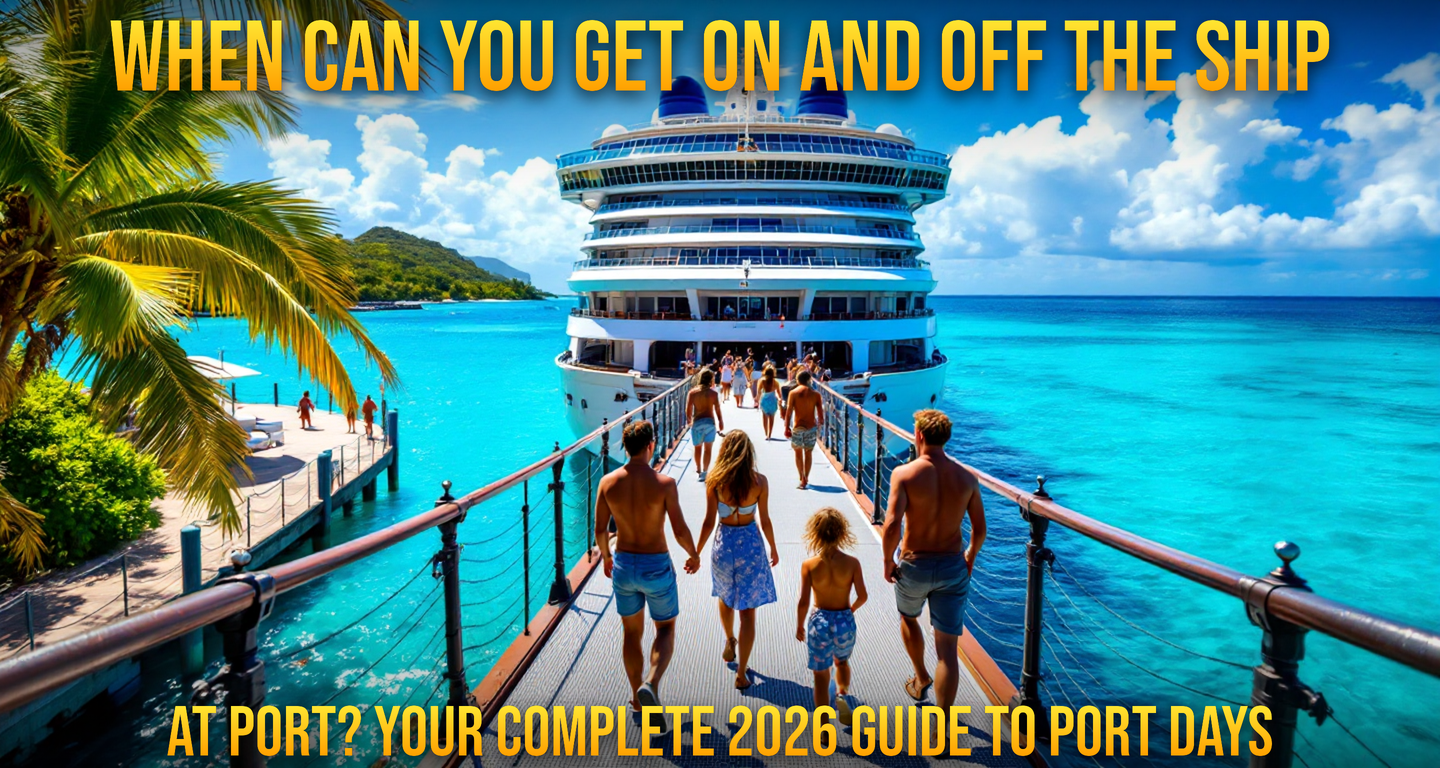
Every cruise line publishes an "all-aboard" time for each port stop. This is the absolute deadline when you must be back on the ship. But here's what most first-timers miss: you can't just wander off whenever you want.
On most cruise lines, disembarkation (getting off the ship) doesn't happen immediately after the ship docks. Here's the typical timeline:
- Docking and mooring: The ship secures itself to the dock or anchors. This can take 30-60 minutes depending on the port.
- Health and security checks: Port officials board and inspect the vessel. This usually takes 30-90 minutes.
- Tender tenders (if applicable): If the ship can't dock at a pier, smaller boats ferry passengers to shore. These can take 1-3 hours to get everyone off.
- Disembarkation begins: Cruise lines release passengers in waves—usually starting with excursion passengers, then volunteers, then all-aboard time.
On Royal Caribbean Oasis-class ships docking in ports like Cozumel or Falmouth, you might not get off until 9:30 AM even if the ship docked at 8 AM. On Norwegian Cruise Line ships using tenders in places like Half Moon Cay, the first tender might not leave until 9 AM.
The All-Aboard Time: Your Hard Deadline
Let's say your all-aboard time is 5:00 PM. Here's what that actually means:
- You must be physically back on the ship by 5:00 PM.
- Most cruise lines stop letting passengers board around 4:45 PM.
- If you're not back by then, the ship leaves without you (yes, really).
- You're responsible for getting yourself to the next port at your own expense.
I've seen it happen. In 2026, I watched a couple from Tampa miss their Royal Caribbean ship in Nassau because they lost track of time at a beach bar. The ship did leave without them. Their all-aboard was 4:00 PM; they showed up at 4:15 PM. It cost them nearly $2,000 to fly to the next port.
Excursion Passengers Get Priority (But With Strings Attached)
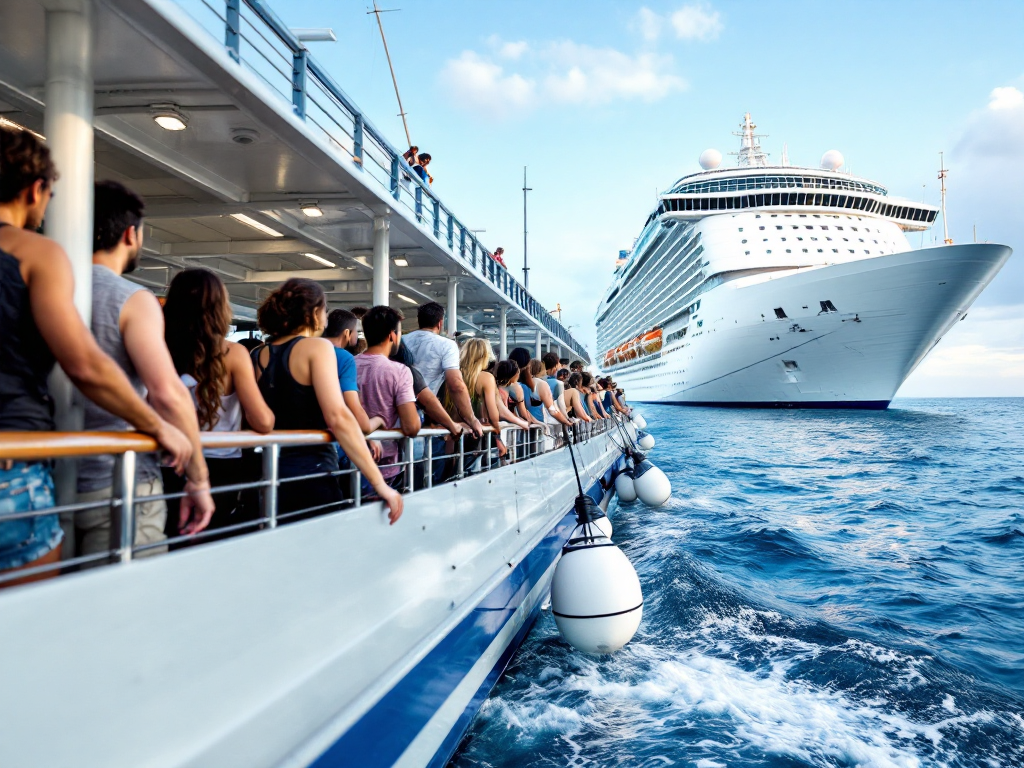
If you book a shore excursion through your cruise line, you get special treatment:
- You disembark first or in a priority wave.
- The cruise line waits for organized excursion groups to return before departure.
- If your excursion runs late, the ship will typically wait (up to a point).
- You get a wristband or card identifying you as an excursion passenger.
But—and this is important—if you go on an independent shore excursion booked through a local operator (not your cruise line), you get zero protection. The ship won't wait. The all-aboard time is absolute.
When I cruised out of Galveston to Cozumel, I booked a cenote dive with a local operator for $120. Best decision I made. But my travel buddy booked the same activity through Carnival at $189. When the dive ran 20 minutes over, Carnival's concierge radioed the boat operator, and they radioed the ship to delay departure by 10 minutes. He made it back with 5 minutes to spare. The ship would have left without him otherwise.
How Different Cruise Lines Handle Disembarkation
Royal Caribbean
Royal Caribbean typically uses an "open disembarkation" system on most ports. You can start leaving the ship once it's cleared by port authorities and security—usually 30-90 minutes after docking.
Pro tip: If you're not on an excursion, volunteer to disembark early. You'll beat the crowds and have extra port time. You just have to commit to being back by a specific time (usually 2-3 hours before all-aboard).
Carnival[/B]
Carnival operates differently depending on the ship and port. Some ports have staggered disembarkation; others are open. Check your Cruise Compass (the daily newsletter in your cabin) for exact timing. Carnival's all-aboard times are usually strict—I've never seen them wait more than 5 minutes for stragglers.
Norwegian Cruise Line
Norwegian uses a "flexible open-return" system on many ports. This means you can usually come and go between roughly 10 AM and the all-aboard time without signing out. However, on tending ports (where small boats ferry you to shore), tender operations have strict schedules.
On my Norwegian cruise to Cozumel, tenders ran every 15-20 minutes, but the last tender back was at 4:15 PM for a 5:00 PM all-aboard. Missing that tender meant missing the ship.
Disney Cruise Line
Disney is extremely family-friendly and very clear about timing. They announce all-aboard times in your cabin before each port, and cast members actually staff the gangway to remind passengers as the time approaches. That said, the all-aboard time is still final. Disney has never delayed departure for a late passenger in my experience.
Princess Cruises
Princess typically allows open disembarkation on most Caribbean ports, with clear all-aboard announcements starting 2 hours before departure. They're known for being generous with the timeline if you're on an organized excursion, but strict if you're independently exploring.
Tendering Ports: A Completely Different Timeline
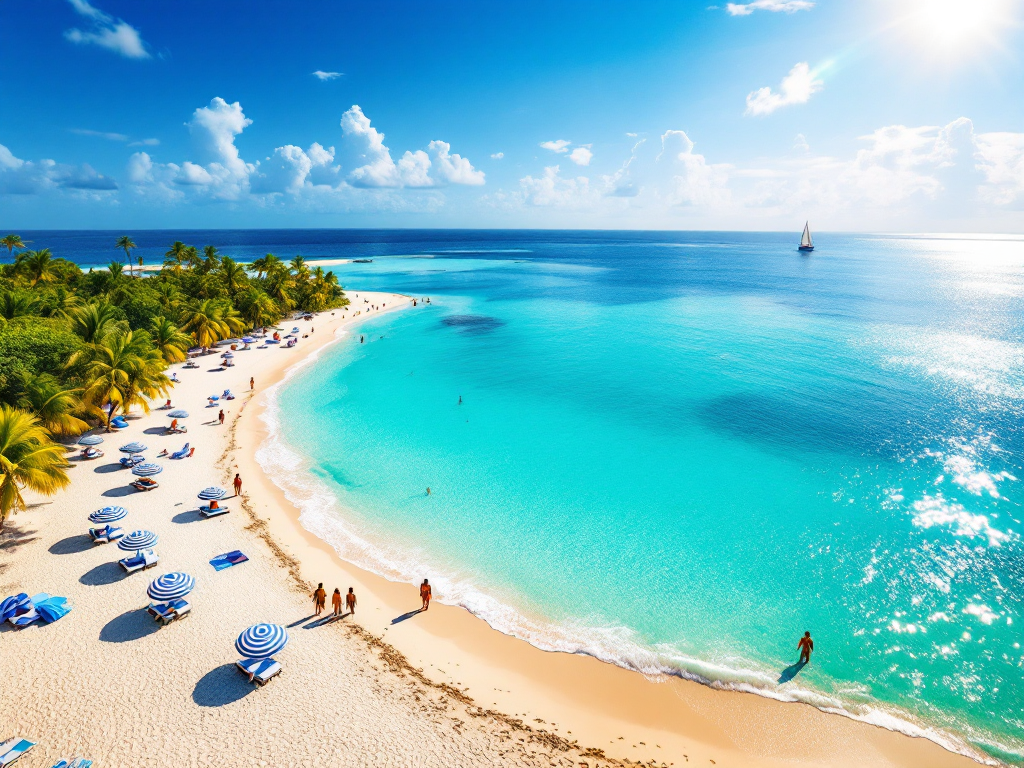
Some ports don't have cruise ship docks. Instead, the ship anchors offshore, and smaller boats (called tenders) ferry you to the beach or a dock. This changes everything.
On a tendering port like Cozumel or Half Moon Cay, here's what to expect:
- Tenders start running anywhere from 8 AM to 10 AM, depending on the cruise line and conditions.
- The last tender back to the ship typically runs 45 minutes to 1 hour before all-aboard.
- If you miss the last tender, you're swimming (literally) against the clock.
- Tender capacity is limited—during busy times, you might wait 20-45 minutes just to get a tender ride back.
I learned this the hard way on my first Norwegian cruise to Half Moon Cay. I thought I had until 4:00 PM (all-aboard), so at 3:15 PM I strolled back to the tender dock. There was a 30-minute wait. By the time I boarded the tender, it was 3:50 PM. The tender ride took 10 minutes. I got back at 4:00 PM—literally as the crew was closing the gangway. A woman behind me didn't make it. She paid $400 to fly to the next port.
Always aim to be back at the tender dock at least 1 hour before all-aboard on a tendering port.
Private Island Ports Have Special Rules
Royal Caribbean's Coco Cay, Norwegian's Great Stirrup Cay, and Disney's Castaway Cay are private islands where the cruise line controls everything. Here's how they differ from regular ports:
- Disembarkation is usually extremely organized. You simply walk off the ship onto the beach or dock.
- All-aboard times are strictly enforced because the ship controls tender operations.
- There's typically one last beach boat or tender back to the ship 30-45 minutes before all-aboard.
- Getting left behind is rare because cruise lines manage passenger flow tightly.
On my Coco Cay visit, the all-aboard was 3:30 PM. The crew started announcing "30 minutes until all-aboard" at 3:00 PM, then "15 minutes" at 3:15 PM. By 3:25 PM, they were actively herding people onto tenders. No one got left behind.
Time Zone Changes: A Sneaky Problem
Here's something that catches people off guard: the ship's clocks change as you sail.
If you're cruising east (like from Florida to the Caribbean), the ship moves forward one hour per sea day. If you're cruising west (like Alaska or Hawaii), it moves back. This changes your all-aboard time relative to real world time.
Example: Your all-aboard is 4:00 PM ship's time. But if the ship's clocks are one hour behind local port time, your actual all-aboard in local time is 5:00 PM. Many cruise passengers miss this, especially those who rely on their phones (which automatically update to local time).
Always check the all-aboard time in ship's time, not your phone's local time. Your daily Cruise Compass will clarify this.
What Happens If You Miss the Ship
Let's be real: what happens if you actually miss the ship?
- The ship leaves without you. This is non-negotiable. Your cruise line has legal obligations to other passengers.
- You're responsible for all costs to rejoin the ship at the next port or return home.
- No refund on your cruise fare.
- Travel insurance might cover you—if you have it and it includes missed port coverage.
- Cruise line assistance is minimal. They might provide a phone number for flights, but that's it.
I've met exactly two people in my 40+ cruises who missed their ship, and both had to shell out $1,000+ in airfare to catch up. One missed the ship in Jamaica and flew to Grand Cayman at a cost of $1,400. The other missed in Cozumel and drove (yes, drove) to Tampa, paying for a rental car and gas.
Pro Tips for Perfect Port Day Timing
- Set a phone alarm for 2 hours before all-aboard. Yes, really. You'd be surprised how easy it is to lose track of time exploring a beach or market.
- Book your shore excursion through the cruise line if you want protection. Yes, it costs more, but the security is worth it.
- Ask crew members what time the last tender leaves, not just the all-aboard time. On tendering ports, that's the real deadline.
- Download the cruise line's app (Carnival Hub, Royal iQ, Norwegian's mobile app). These apps show real-time all-aboard times and updates.
- Return early on your first port day. This builds confidence and lets you explore later ports more aggressively.
- Never trust your phone's time on a cruise. Use the ship's time displayed in your cabin or on public screens.
- Budget extra money for taxis or transportation. If you're running 10 minutes late and tenders are 30 minutes away, a $25 water taxi might save your cruise.
The Bottom Line
Here's what you absolutely need to remember:
The all-aboard time is absolute. The ship will leave without you. No exceptions, no refunds, no mercy.
But you have more flexibility than you think. As long as you understand your cruise line's disembarkation process, account for tender times on the ports you're visiting, and give yourself a 1-hour buffer before all-aboard, you'll have a fantastic port day without stress.
Want to share your port day experiences or get advice from other cruisers about tendering ports and timing challenges? Head over to the shore excursions community at CruiseVoices—we've all got stories, and the community loves helping first-timers avoid the mistakes we made.
Happy cruising!