

Jake_Harmon
Moderator
The Wellness Cruise Wave Is Here — and It's Nothing Like Traditional Spa Days
I've been on 40+ cruises, and I'm telling you: the wellness cruise movement in 2026 isn't just spas slapped onto regular ships. This is a complete reimagining of what a cruise vacation can be. We're talking integrated wellness programs, medical-grade treatments, expert-led fitness classes, and itineraries specifically designed around rest and rejuvenation — not casino floors and dance marathons.
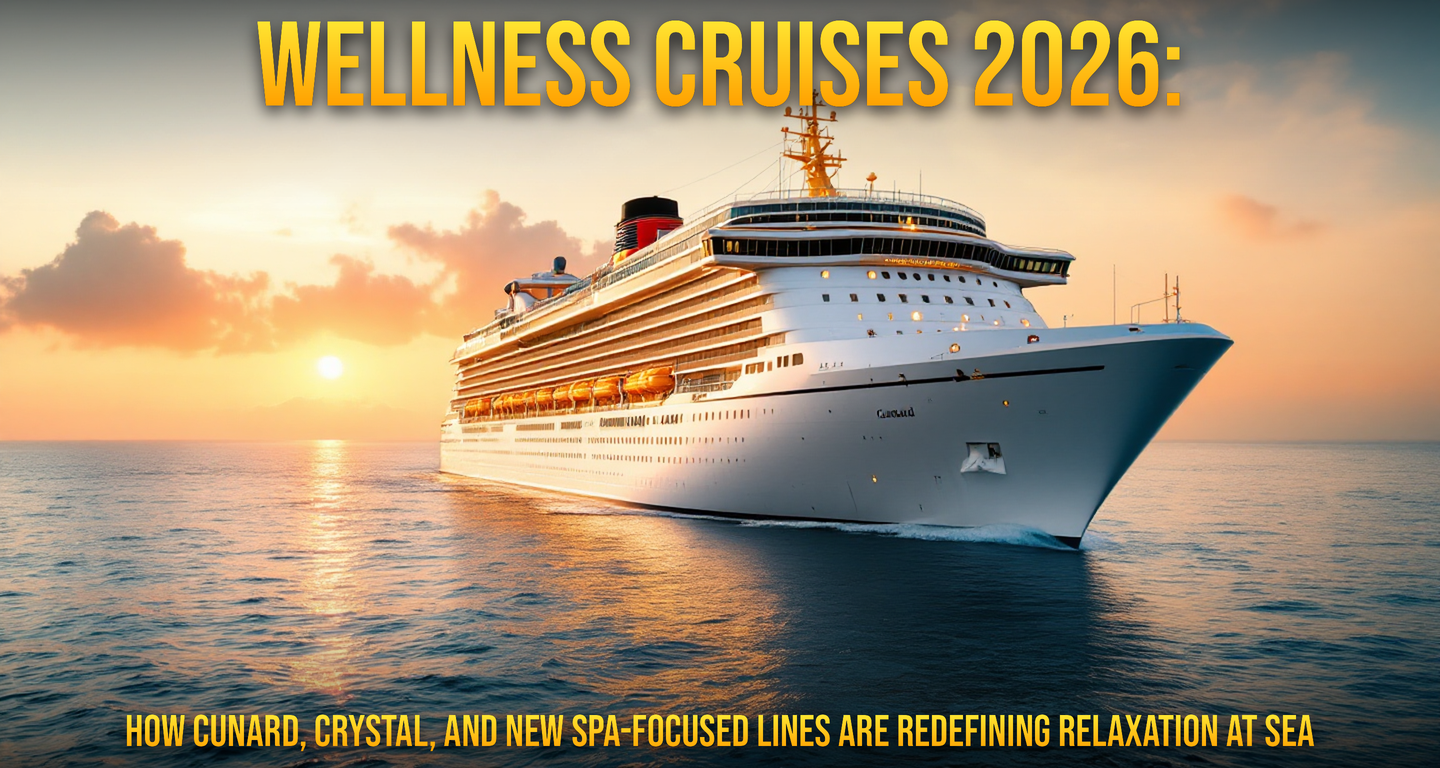
If you've ever felt overstimulated by a typical cruise experience — too many people, too much noise, too many late-night parties — wellness cruises might be exactly what you've been craving. The good news? There are now legitimate options beyond traditional luxury lines. Let me walk you through what's actually available in 2026.
Cunard's Wellness Strategy: Tradition Meets Modern Health
Cunard has quietly become one of the most thoughtful operators in the wellness space. The Queen Mary 2, Queen Elizabeth, and Queen Anne all feature dedicated wellness programming, but here's what makes it different from your standard cruise line spa package:
- Medical-grade facilities: Cunard partnered with Elemis for their spa programs, but more importantly, they've added actual wellness centers with health practitioners, not just massage therapists. You can book consultations with nutritionists and fitness specialists.
- Age-forward wellness: Cunard's demographic skews older (average age mid-60s), so their wellness programs are designed for guests dealing with real health concerns — joint issues, arthritis management, circulation problems. This is not CrossFit-style boot camps.
- Holistic itineraries: Their wellness-themed sailings (typically 10-14 days, priced $3,200-$6,500 per person) include shore excursions built around wellness — think forest bathing in Norway, thermal baths in Iceland, or spa village visits in the Mediterranean.
- Quiet spaces that actually work: Cunard ships have fewer passengers per square foot than mega-ships. Queen Mary 2 carries 2,620 passengers across 1,132 cabins — you're not fighting crowds at the spa reception.
Real talk: Cunard isn't cheap. A 12-night transatlantic wellness cruise in spring 2026 runs $4,200-$7,800 per person in an inside cabin. But you're paying for actual tranquility, not just a heated pool.

Crystal: The Luxury Wellness Pioneer Nobody's Talking About
Crystal Cruises returned to service in 2023 and has aggressively positioned themselves as the wellness-first luxury operator. Their fleet (Crystal Serenity, Crystal Symphony, and the new Crystal Endeavor) are substantially smaller — under 1,000 passengers — which changes everything about the experience.
Here's what sets Crystal apart:
- All-inclusive wellness: Unlike most lines where spa treatments are à la carte ($200-$400 for a 50-minute massage), Crystal includes complimentary fitness classes, wellness seminars, and access to their thermal suite on all sailings. You're not getting nickel-and-dimed for wellness.
- Integrated health itineraries: Crystal offers specific "Wellness Journeys" to Costa Rica, the Galápagos, and the Mediterranean (10-14 days, $6,800-$12,500 per person). These include onboard lectures from actual doctors and wellness experts, not just yoga instructors.
- Smaller ship = less stress: Crystal's ships have a maximum of 900-1,000 passengers. That translates to short restaurant lines, spacious decks, and a community-oriented atmosphere instead of anonymity. The spa experience is personalized.
- Medical concierge: Crystal employs a full medical team, not just basic first aid. If you have health concerns during your cruise, you're dealing with actual physicians.
The catch: Crystal is expensive. Expect $6,500-$13,000+ per person for a wellness-focused sailing. But everything is included except bar beverages (wine and spirits packages are available). The pricing is transparent, and there's no "optional" nickel-and-diming.
The New Players: Specialized Wellness Cruise Lines Emerging in 2026
Beyond traditional cruise lines, 2026 is seeing the rise of dedicated wellness cruise operators. These are smaller, sometimes chartered ships, specifically built around wellness itineraries:
- Wellness & Yoga Cruises: Multiple operators now charter smaller ships (500-800 passengers) for wellness-focused sailings. These include daily yoga, meditation, nutrition workshops, and shore excursions at wellness retreats. Expect $3,500-$6,000 per person for a week, everything included.
- Medical Tourism Cruises: Yes, these exist. Some European-based operators combine cruising with access to medical professionals and wellness consultations. Popular in Northern Europe and the Mediterranean.
- Fitness-Forward Cruises: Not gym obsession — more like active vacation cruises with hiking excursions, kayaking, paddle boarding, and fitness-focused shore experiences. These tend to be cheaper ($2,500-$4,500 per person) because they're using standard cruise ships with enhanced activity programming.
The challenge with these specialized lines: they're fragmented. Some are fantastic, some are overcrowded versions of standard cruises with yoga slapped on. This is exactly where having expert guidance matters.
Royal Caribbean and Norwegian: The Mainstream Wellness Pivot
Don't assume the big cruise lines are ignoring wellness. They're not.
Royal Caribbean has upgraded their "wellness at sea" offerings across the Oasis and Wonder-class ships. They've expanded their fitness programs, added meditation spaces (look for the "Serenity" adult-only thermal suites), and partnered with wellness brands for their spa treatments. Icon of the Seas and Wonder of the Seas both feature these enhancements. That said, these ships carry 5,000-6,500 passengers. You're getting wellness programming, not a wellness-focused vacation.
Norwegian Cruise Line launched their "Wellness Spa Packages" in 2025 and expanded them in 2026. You can now book specialty wellness itineraries on Prima-class ships with enhanced fitness programming, spa credits, and wellness seminars included. Pricing is mid-range: $2,800-$4,500 per person for a week.
Why the mainstream lines are less ideal for true wellness: They're still optimized for volume. Lines at the spa reception, crowds at fitness classes, noise from nightclubs until 2 AM. Wellness programming is an add-on, not the core experience.

What I Actually Recommend (Real Talk)
After 40+ cruises, here's my honest framework for choosing a wellness cruise in 2026:
If you're on a modest budget ($2,000-$4,000 per person for a week):
Book a Norwegian or Royal Caribbean wellness-themed sailing. You'll get genuine wellness programming without the ultra-premium price tag. Manage expectations: you'll see other passengers partying, but your experience will be wellness-focused if you stick to the scheduled activities.
If you can spend $4,000-$7,000 per person:
Cunard is your sweet spot. The Queen Elizabeth or Queen Anne offer legitimate wellness experiences, sophisticated itineraries, and actual quietude. You're paying for atmosphere and age-appropriate programming, not just spa treatments.
If budget isn't your primary concern ($7,000+ per person):
Crystal Cruises. You get true luxury, smaller ships, integrated wellness at every level, and transparent all-inclusive pricing. The experience is genuinely different.
If you want hardcore wellness focus (yoga, meditation, holistic health):
Book through a specialized wellness cruise operator. Yes, they're harder to find and more fragmented, but the experience is purpose-built. These ships don't have casinos, and your fellow passengers chose the cruise specifically for wellness — not as a party destination with yoga as a bonus.
Critical Questions to Ask Before Booking
When evaluating any wellness cruise — whether it's Cunard, Crystal, or a specialty operator — ask these specific questions:
- Is "wellness programming" actually included or is it extra? Crystal includes it. Most mainstream lines charge à la carte ($15-$40 per class). Know what you're paying for.
- What's the passenger demographic? If you're 35 and everyone else is 70, you might feel out of place — and vice versa. Ask the cruise line directly.
- How big is the ship? Under 1,200 passengers = genuinely quieter. Over 3,000 = you're managing crowds even on a "wellness" cruise.
- What's actually included vs. "optional charges"? Read the fine print. Some cruise lines call a basic yoga class "free" but charge for specialty classes or spa treatments.
- Who's leading the wellness programming? Are these actual certified instructors, or are they crew members with a weekend yoga certification? It matters.

The Bottom Line
The wellness cruise market in 2026 is genuinely robust — and genuinely varied. You can spend $2,500 per person on a Norwegian cruise with enhanced fitness programming, or $12,000 on a Crystal luxury wellness voyage. Both can be wonderful experiences; they're just different.
The key is knowing what you're paying for. "Wellness cruise" means wildly different things depending on the operator. A true wellness experience requires intentionality: smaller ships, transparent pricing, integrated programming, and an atmosphere built for rest, not stimulation.
Whatever you choose, don't just book based on a marketing brochure. Talk to people who've actually done it. Get real advice from experienced cruisers who understand the difference between a cruise with spa access and an actual wellness vacation at sea.
Join our community at the Health, Accessibility & Special Needs forum — many members are exploring wellness-focused sailings, and they'll give you honest insights about which lines deliver real value. Share your wellness cruise plans, ask specific questions, and learn from cruisers who've tested these experiences.
Happy cruising — and happy unwinding.