

The Day-of-Departure Gamble: What You're Really Risking
I've been on 40+ cruises, and I can tell you that one of the most stressful decisions cruisers make isn't about which ship or itinerary to book—it's whether to fly in the morning of their cruise departure. On the surface, it seems smart: save a night's hotel cost, maximize your vacation time, show up at the terminal by noon. But after watching friends miss ships, spending hours in airport delays, and hearing countless stories in the CruiseVoices community, I can tell you the math doesn't work in your favor.

Let me be blunt: flying in the day of departure is the cruise industry's version of playing Russian roulette. You're betting that every single thing in a complex chain of events will go perfectly—your flight leaves on time, traffic flows smoothly, your luggage doesn't get delayed, airport security moves fast, your rental car or rideshare shows up instantly, and you arrive at the terminal with hours to spare. Miss just one link in that chain, and you're watching your cruise ship pull away without you.
The Math: What Actually Happens When Flights Delay
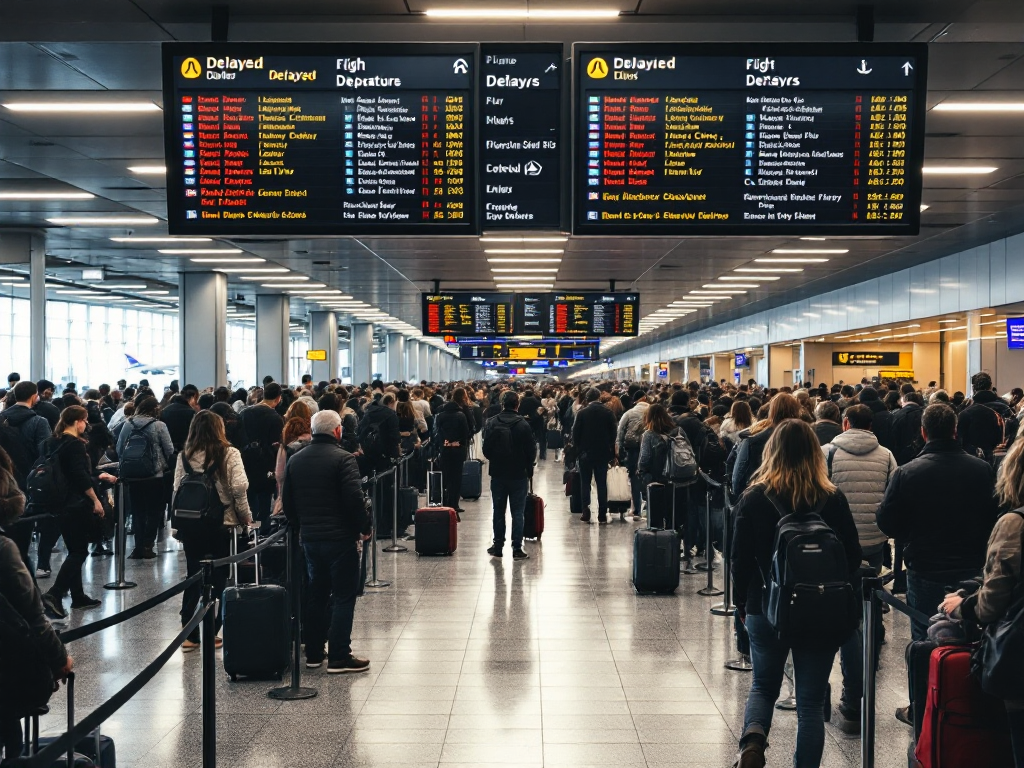
Here's the reality: in 2026, the average flight delay in the U.S. is running about 25-30% of all flights experiencing some form of delay. That's not a worst-case scenario—that's the baseline. When I say "delay," I don't just mean 30 minutes late. I mean mechanical issues that ground planes for hours. I mean weather systems that weren't in the forecast yesterday. I mean tarmac delays that eat up two hours before you even leave the gate.
Most cruise ships depart at 4:00 PM or 5:00 PM. The cruise line requires you to be on board by 2:00-3:00 PM at the latest. If you're flying in that morning, you're catching a flight that probably leaves between 6:00 AM and 9:00 AM. That gives you a window of about 5-6 hours from takeoff to boarding cutoff.
Now subtract:
- Flight time (typically 1.5-3 hours depending on distance)
- Customs/immigration (15-45 minutes if international)
- Baggage claim (10-20 minutes)
- Ground transportation to port (15-60 minutes depending on port location)
- Port parking or rental car return (5-10 minutes)
- Port security and check-in (15-30 minutes)
You're left with almost zero buffer. A 30-minute flight delay means you're arriving at the port with 15-20 minutes to spare. A mechanical issue on the tarmac? You're missing your cruise.
The Real Costs Nobody Talks About
Here's what I've learned from 40+ cruises and talking to hundreds of other cruisers: the "savings" from skipping a hotel night often don't exist when you factor in hidden costs.
Flight Costs
Yes, you'll find cheaper morning flights that day-of. But last-minute flights are notoriously expensive. If you need to book that flight two weeks before your cruise (which you should), you're looking at premium pricing. A typical morning flight to a major cruise port (Miami, Port Canaveral, Galveston) runs $150-250 per person when booked in advance. A flight booked weeks earlier, with a hotel night included in your package, might actually be cheaper overall.
The Missed Ship Cost
This is the one that keeps me up at night. The cruise line's policy is crystal clear: if you miss the ship, you don't get a refund, and you're responsible for getting to the next port. We're talking about potentially flying to the next port (which might be 2-3 days away), paying for hotels along the way, and losing the entire value of your cruise. I've seen this happen to cruisers who were one hour late. The ship left on schedule, and they lost $3,000-$8,000 with zero recourse.
Cruise lines don't care if your flight was delayed. That's not their problem. You signed the paperwork.

Peace of Mind (or Lack Thereof)
The stress of flying in the morning of departure is real. You're not relaxing. You're tracking your flight on your phone, checking the weather, calculating drive time. Meanwhile, cruisers who arrived the day before are already at their hotel, walking the ship, grabbing specialty restaurant reservations, and actually enjoying the start of their vacation.
The Better Strategy: Arrive the Day Before
After 40+ cruises, here's what I recommend: arrive the evening before your cruise, even if it costs a bit more.
Yes, you'll spend $100-200 on a hotel night. But here's what you gain:
- Zero stress. Your flight can be delayed four hours, and you still make your cruise.
- Time to explore the port. Many cruise ports are in interesting cities. Spend the evening walking around, getting dinner, enjoying the area.
- An early start on the ship. You board earlier, get better dining reservations, enjoy the ship in the evening when crowds are lighter.
- Travel insurance that actually covers you. If something goes wrong, you've got a cushion.
- Luggage buffer. If your bag doesn't make the flight, you have time to track it down and get it to the ship before departure.
The math changes instantly. A $120 hotel night is nothing compared to the risk of losing a $4,000 cruise.
Real Scenarios: When Day-of Arrivals Go Wrong
I want to give you specific examples from the CruiseVoices community because these aren't hypotheticals:
Scenario 1: The Mechanical Issue
A cruiser booked a flight from Chicago to Miami departing at 7:00 AM for a 5:00 PM departure. Reasonable timeline, right? The plane had a hydraulic issue discovered during preflight. The flight was cancelled. The next available flight to Miami didn't leave until 2:00 PM—after boarding cutoff. The ship left without them. They lost $5,200 for a family of four. The airline gave them a travel credit, but that doesn't help you when your cruise is gone.
Scenario 2: The Traffic Nightmare
A family of three drove from Houston to Galveston (about 45 minutes in normal traffic). They flew in from Denver at 8:30 AM, landed at 10:15 AM, grabbed their rental car by 10:45 AM. A major accident on I-45 created a 90-minute backup. They arrived at the port at 1:45 PM. Boarding had already closed. Ship departed at 5:00 PM without them.
Scenario 3: The Delayed Luggage
A cruiser from Atlanta flew in to Port Canaveral on the morning of departure. Everything went perfectly—flight on time, through security fast. But her luggage was left behind in Atlanta due to a connection error. She made the ship, but her luggage didn't arrive until two days later in Nassau. She missed the first port and spent two days in cabin clothes.

The Exception: Direct Flights with Huge Buffers
There is one scenario where day-of arrival is more defensible: if you're flying a direct flight and arriving at least 4-5 hours before departure.
Example: Flying from Los Angeles on a direct flight to San Diego (1-hour flight) that leaves at 7:00 AM, arriving by 8:00 AM for a 5:00 PM departure. That gives you 9 hours—enough buffer to handle most delays. But even then, I wouldn't recommend it. A two-hour mechanical delay still puts you uncomfortably close.
For most cruisers flying from a different city or taking connecting flights? Day-of arrival is not worth the risk.
Travel Insurance and Day-of Arrivals[/B]
Here's something cruise lines never mention: most travel insurance policies will not cover you if you miss your cruise due to a flight delay when you booked a same-day arrival. Insurance assumes you made a poor travel decision. They cover unforeseen emergencies, but not the foreseeable consequences of tight scheduling.
If you choose to fly in the morning of departure anyway, travel insurance becomes almost useless. You're uninsured for the most likely disaster scenario.
What to Actually Do: The Pro Strategy
Here's my tested approach after 40+ cruises:
- Book your flight for the evening before departure. Arrive between 3:00 PM and 8:00 PM. This gives you a full night to rest and transition.
- Book a hotel near the cruise port. Use hotels.com or your credit card rewards. Many are $80-120 per night. This is worth it.
- Skip airport hotels if possible. Cruise ports usually have better hotel options nearby. In Miami, Port Canaveral, and Galveston, you'll find nice hotels at reasonable rates within 10-15 minutes of the terminal.
- Wake up early and enjoy the port city. You're already there. Walk around, get breakfast, explore. You might find restaurants or attractions you'll want to visit in the future.
- Get to the port 2-3 hours before departure. Board early, explore the ship, make specialty restaurant reservations, settle in.
- Get travel insurance that covers day-of changes. If your flight delays and you miss the ship (unlikely with this plan), insurance covers rebooking costs.
Yes, this costs $100-150 more than flying day-of. But it's the cheapest insurance policy you'll ever buy against losing your entire cruise.
The Bottom Line
After 40+ cruises and countless conversations with other cruisers, here's my honest take: flying in the day of your cruise departure is a bet you shouldn't make. The upside is a one-night hotel savings of $100-150. The downside is losing thousands on a missed cruise. That's not a smart risk-reward ratio.
Cruising is supposed to be relaxing. Starting your vacation stressed, watching the clock, and calculating whether you'll make it to your ship is the opposite of that. Spend the extra night before. Get good sleep. Wake up calm. Board early. Your vacation starts the moment you arrive at the port, not when the ship leaves the dock.
Share your flight and arrival experiences in the CruiseVoices general cruise discussion forum—especially if you've had a flight delay story or discovered a great pre-cruise hotel near your home port!