

Drew_Callahan
Moderator
MSC Ships Dining and Drinking Guide: Ship-Specific Menus, Specialty Restaurants, and Beverage Packages by Ship Class
If you're planning an MSC cruise in 2026, you're in for a treat — and I mean that literally. MSC has quietly become one of the best-kept secrets in cruise dining, with ship-specific restaurants, Italian-inspired menus that actually taste like Italy, and beverage packages that finally make financial sense. After multiple sailings on different MSC ships, I'm here to break down exactly what you're getting on each class, where to splurge, where to save, and which dining packages are worth your money.
Here's the thing: MSC's dining strategy varies significantly by ship class and age. A meal on MSC Seashore (Seaside-class) plays very differently than one on MSC Meraviglia (Meraviglia-class), and knowing those differences before you board can save you hundreds of dollars and a lot of disappointment.
The MSC Dining Philosophy: What Sets Them Apart
Let me be straight with you: MSC isn't trying to be Norwegian (casual, trendy) or Royal Caribbean (Broadway-scale production). They're leaning hard into their Italian heritage and European elegance. You'll notice this immediately in the main dining room — the service is formal but warm, the wine list emphasizes Italian and Spanish selections, and even the buffet has an unmistakable Mediterranean focus.
MSC's main dining rooms operate on a traditional assigned seating model (unless you pay for flexible dining), which means you're seeing the same server and tablemates most nights. This creates a genuine, old-school cruise experience that some people love and others find restrictive. I personally enjoy it — by day three, you're having real conversations at dinner.
The real differentiation happens with their specialty restaurants, which aren't all created equal depending on your ship class.
- Italian restaurants vary in quality and concept by class
- Buffets range from adequate to genuinely impressive depending on the ship
- Main dining rooms use different menus on newer vs. older ships
- Beverage packages have multiple tiers with real price differences
Meraviglia-Class Dining (MSC Meraviglia, MSC Bellissima, MSC Grandiosa)
If you're sailing on one of MSC's flagship Meraviglia-class ships, your dining experience is noticeably elevated compared to older classes. These ships have more specialty restaurants, newer galleys, and menus designed specifically for the ultra-modern ships.
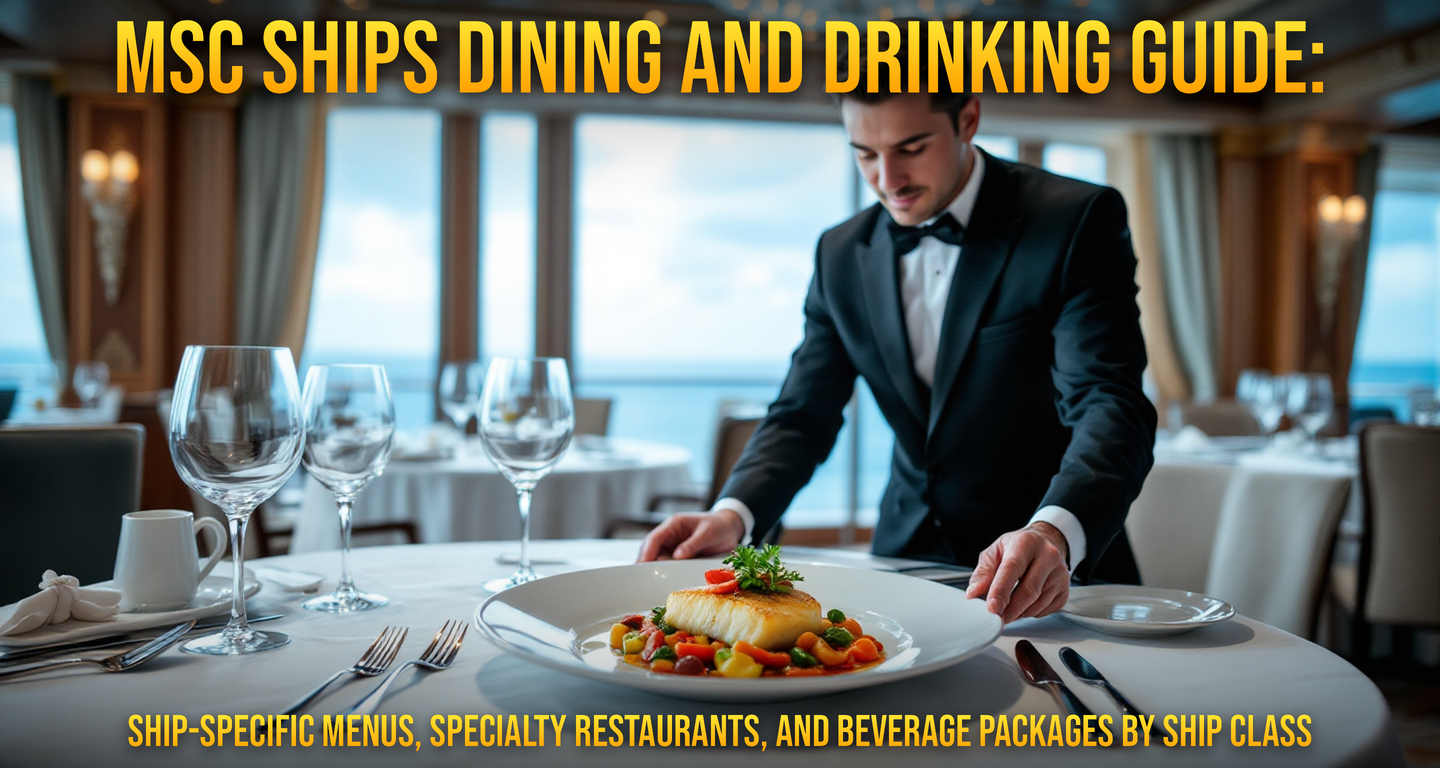
Main Dining Room: The Galleria Main Dining Room spans two decks on these ships and features a menu that rotates every night with five courses. You'll get options like pan-seared sea bass with Mediterranean vegetables, Italian beef ragu, or vegetarian risotto. The execution is solid — not Michelin-star territory, but genuinely well-prepared. Service is European-style (unhurried, formal), and wine pairings are available.
Specialty Restaurants Worth Paying For:
- MSC Yacht Club Italian Restaurant (Exclusive to Yacht Club guests): If you're in a Yacht Club cabin, this is included and honestly one of the best values on MSC. Five courses, tableside preparations, sommelier service. $0 extra.
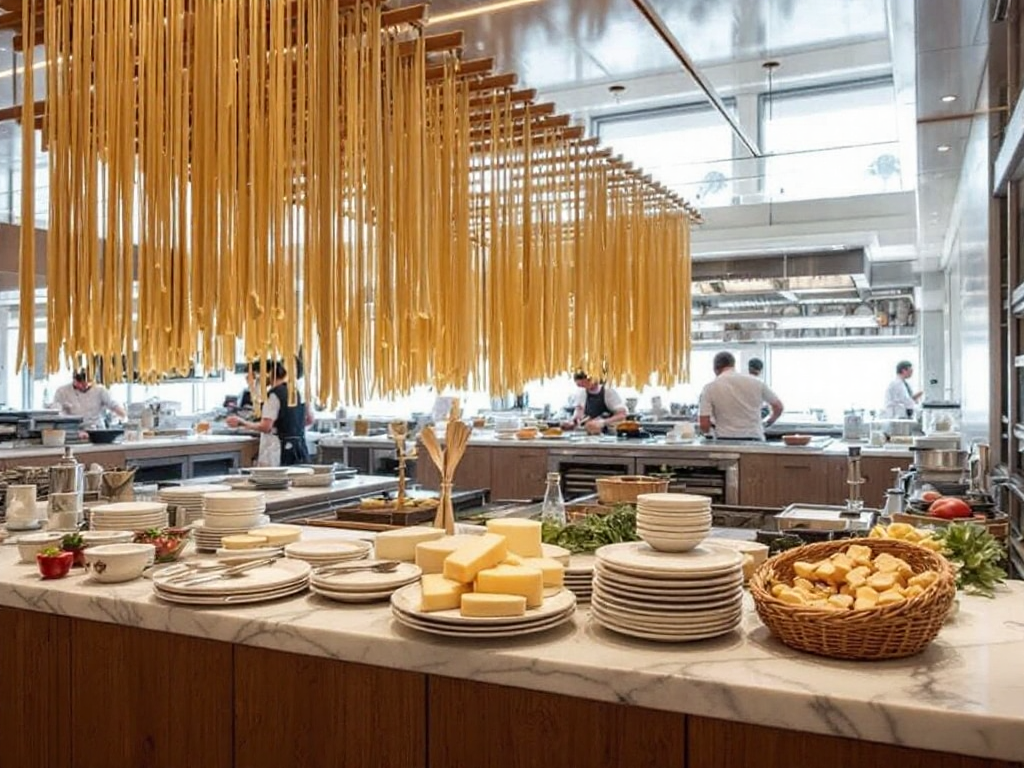
- Eataly (@sea): This Italian marketplace-themed restaurant is your best bet for specialty dining. Three courses run $20-30 per person. You get handmade pasta (actually made onboard), Italian cheeses, Parmigiano-Reggiano aged in-house. I've eaten here on four separate sailings and it's consistently excellent.
- Butcher's Cut: MSC's steakhouse concept. $25-35 per person for steak, seafood, and sides. Portions are generous. The ribeye is good, though it's not going to blow away steakhouse veterans. Save this for a special occasion if you must, but honestly, the Italian restaurants offer better value.
- Kaito Sushi & Teppanyaki: Sushi is hit-or-miss on cruise ships, and this is no exception. Quality varies depending on which Meraviglia-class ship you're on. Skip it unless you're sushi-obsessed.
Buffet (Buffet Verde): The buffet on Meraviglia-class ships is legitimately one of the better ones at sea. Dedicated sections for Italian (pasta, risotto), Mediterranean (grilled fish, vegetables), and international options. Dessert station is actually creative — I've seen sfogliatelle, tiramisu actually worth eating, and gelato that's surprisingly good. Lines can be brutal at peak times (6:30-7:30 PM), so aim for 5:45 PM or after 8:00 PM.
Seaside-Class Dining (MSC Seashore, MSC Seascape, MSC Seashore Nova)
Seaside-class is MSC's newer small-ship (around 5,000 passengers) concept, and it's a different animal entirely. These ships are more intimate, and the dining reflects that — fewer massive buffets, more focus on à la carte and specialty restaurants.
Main Dining Room (The Promenade): More modern, casual vibe than Meraviglia. Four-course menus rotate nightly. Quality is comparable to Meraviglia, but the atmosphere is noticeably more relaxed. You'll see more families eating earlier, fewer formal jackets. Service is still attentive.
Specialty Restaurants:
- Eataly (@sea): Yes, it's on Seaside-class too, and it's identical in quality. $20-30 per person.
- Butcher's Cut Steakhouse: Smaller iteration than Meraviglia, but same $25-35 pricing. Better suited to the ship's more casual vibe.
- Asian Fusion / Wok's Up: Noodle bar and wok station. $12-18 per person. Quality is actually solid here — I had a fantastic shrimp pad thai on MSC Seashore.
- Poolside Grill (BBQ & Casual): This is included for lunch and casual evening dining. Burgers, grilled fish, salads. Nothing fancy, but portions are large.
Buffet (Marketplace): Smaller than Meraviglia-class buffets but better curated. More Mediterranean focus, less "international overload." The pasta station is excellent. Desserts are solid but less elaborate than larger ships.
Seaside-Class NOVA Variant — The 2026 Update
MSC just launched MSC Seashore Nova in 2026, and it has some new specialty restaurants worth noting:
- Pastaio: Fresh pasta shop serving pasta with various sauces. $15-22 per person. It's basically Eataly's younger sibling with more casual execution.
- Grill House (new concept): Different from Butcher's Cut. More global-focused with Mediterranean grilled items. $20-28 per person.
If you're booking Seaside Nova specifically for dining variety, you're getting more options than older Seaside-class ships, but the quality differences are marginal.
Older Class Ships: What to Expect (Divina, Sinfonia, Magnifica, Musica)
If you're sailing on one of MSC's older classes — Divina-class, Sinfonia-class (what I call the "workhorse" ships), Magnifica, or Musica — your dining experience is... functional. Not bad, but definitely dated compared to newer classes.
Main Dining Room: Three-course menus (sometimes four), service is attentive, but the menu creativity is noticeably lower. You'll see more "safe" options and fewer Mediterranean flourishes. Think: chicken piccata, beef stroganoff, grilled salmon with lemon butter.
Specialty Restaurants: Fewer and simpler. Typically includes an Italian restaurant (not Eataly — a more basic concept) and a steakhouse or grill. Pricing is comparable ($20-35), but execution is more basic. I'd honestly skip specialty dining on these ships and spend that money elsewhere.
Buffet: Adequate but uninspired. Large carving stations, decent pasta bar, standard desserts. The buffet on a Divina-class ship feels dated compared to Meraviglia or Seaside-class.
Real Talk: If you're choosing between an older MSC ship and a newer one, the dining difference is substantial enough to factor into your decision, especially if you care about food quality.
MSC Beverage Packages: The Complete Breakdown
Here's where MSC's strategy gets interesting — they offer multiple beverage tiers, and not all of them are worthwhile. Let me break down 2026 pricing:
Classic Beverage Package: This is your entry-level option. Approximately $60-75 per person, per day (varies by sailing length and timing). Includes non-alcoholic beverages, basic wines, beer, and well spirits. Coffee and soft drinks are unlimited.
My Take: If you drink 3+ alcoholic beverages daily, this pays for itself. If you drink casually, skip it.
Premium Beverage Package: About $90-110 per person, per day. Adds premium wines, premium spirits (top-shelf liquor), and cocktails. Coffee remains unlimited.
My Take: This is where the math gets interesting. Premium spirits retail for $8-15 per drink, so if you're ordering 2-3 premium cocktails daily, this breaks even. For casual drinkers, it's overkill.
Spirits + Wines Package: Some sailings offer a wine-focused package ($70-95 per day) that excludes beer and casual spirits but includes premium wines and wine pairings in specialty restaurants.
My Take: Only take this if you're genuinely a wine enthusiast. Most casual cruisers are better off with Classic or Premium.
Non-Drinker Package: About $35-45 per day. Unlimited specialty coffees, soft drinks, fresh juices, smoothies, and water. This is actually a solid value if you don't drink alcohol — regular juice and coffee onboard run $5-8 daily.
What's NOT Included (Any Package):
- Specialty coffee drinks from coffee shops (cappuccinos, lattes) — unless you buy the specialty coffee add-on
- Bottled water (you get pitchers of tap water free)
- Drinks ordered in specialty restaurants (some have separate pricing)
- Afternoon tea or afternoon beverages (though sometimes included depending on package)
- Drinks at beach clubs (if your itinerary includes MSC's private island)
The Break-Even Math: Let's say you're sailing 7 nights and considering Premium Beverage Package at $100/day. That's $700 total. At sea, a premium cocktail costs $14-16. You'd need to order 44+ premium drinks across 7 days, which is roughly 6 per day. That's a lot of drinking. Most casual drinkers break even around day 5-6.
My Honest Recommendation: Book Classic Beverage Package if you drink regularly (1-2 drinks daily). Skip all packages if you're casual or don't drink — MSC's pricing for à la carte beverages is actually reasonable ($5-6 for beer, $8-12 for wine, $12-16 for cocktails). Pay as you go and you'll likely spend less.
Wine at MSC: What You Actually Need to Know
MSC's wine program is legitimately interesting because they focus heavily on Italian wines. The main dining room wine list leans 70% Italian, with selections from Tuscany, Piedmont, and Sicily.
Wine Pairing Dinners: Some sailings offer wine-pairing dinners in specialty restaurants (typically $80-120 per person for 5 courses with 5 wine pours). These are actually well-curated. If you enjoy wine, do one of these instead of paying for a Premium Beverage Package.
Caveat: The everyday wine list in the main dining room is serviceable but not remarkable. You'll see lots of $25-40 bottles that retail for $12-18 at home. The markup is standard cruise pricing. If you're a wine enthusiast, this is where premium beverage packages make sense — you're getting access to better selections.
Dietary Restrictions & Special Menus on MSC Ships
MSC requires you to notify them of dietary restrictions at booking. Here's what they handle well:
- Vegetarian/Vegan: Both are offered at every meal in the main dining room. Quality is solid, not just "remove the meat."
- Gluten-Free: Available with advance notice. Not the best selection, but adequate.
- Kosher: Available on select sailings with advance notice.
- Halal: Some sailings. Check at booking.
- Allergy Management: MSC takes this seriously. You'll meet with the head chef before departure to discuss severe allergies.
Real Talk: MSC handles dietary needs better than budget lines but not as comprehensively as Royal Caribbean or Disney. If you have severe allergies or specific restrictions, email MSC dietary services 60 days before sailing.
Ship-Specific Dining Surprises & Pro Tips
After 40+ sailings, including a dozen-plus on MSC, I've learned things they don't advertise:
- Eataly Breakfast: Most people only do Eataly dinner, but request breakfast there if available. Italian pastries and fresh items, no surcharge. Check with restaurant staff — it's not advertised.
- Main Dining Room Breakfast: If you want quiet breakfast away from the buffet madness, the main dining room does assigned breakfast seatings on some ships. Ask at the front desk.
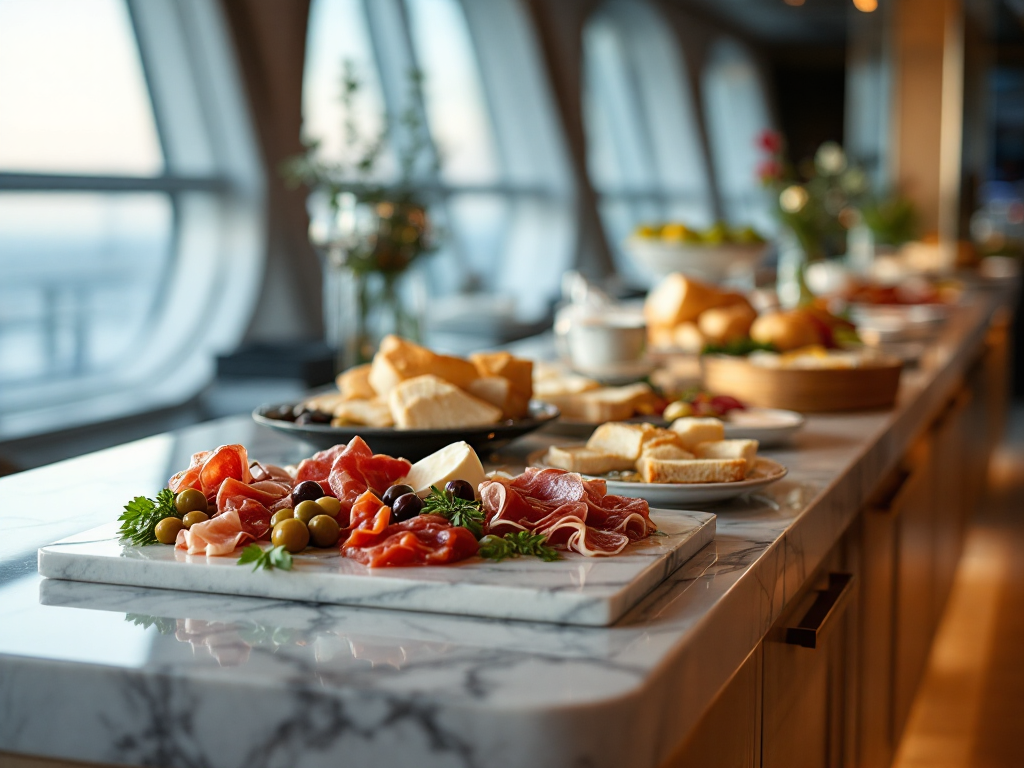
- Late-Night Italian Bar: Meraviglia-class ships have a dedicated Italian appetizer bar open 10:30 PM-midnight with no charge. Burrata, prosciutto, cured meats. Most people don't know about it.
- Room Service Costs: Standard continental breakfast is free (coffee, pastry, fruit). Full room service meals cost $10-20 and are actually decent if you want to skip dining one night.
- Buffet Timing: The best time for lunch buffet is 1:00-2:00 PM (after the rush, before afternoon activities). Dinner buffet is dead after 8:30 PM.
- Italian Restaurants on Older Ships: Sometimes called "L'Olivo" — these are far less impressive than Eataly on newer ships. Save your $25 and eat in the main dining room instead.
Comparing MSC Dining to Competitors in 2026
How does MSC stack up? Here's the honest take:
vs. Royal Caribbean: Royal has more specialty restaurants and more casual variety (like Windjammer Café). MSC is more formal and European-leaning. Royal is better if you want choice; MSC is better if you want quality Italian dining.
vs. Norwegian: Norwegian is completely casual and buffet-focused. MSC is formal with assigned seating. Norwegian has more à la carte options; MSC has fewer but better specialty restaurants. Pick your poison.
vs. Carnival: MSC wins decisively on dining quality and service formality. Carnival's dining is utilitarian; MSC feels intentional.
vs. Celebrity: Celebrity's dining is more upscale; MSC is more consistent. Celebrity ships are older and newer mixed together; MSC's class-based approach means more predictability.
Final Recommendations by Trip Type
Romantic Getaway: Book Meraviglia-class, skip beverage package, splurge on one Eataly dinner and one wine-pairing dinner. Total dining budget: $400-500 for two people, 7 nights.
Family Cruise: Seaside-class is better for families (smaller, more intimate, fewer formal dinners). Kids eat free in main dining room; specialty restaurants cost $10-20 for kids. Skip beverage packages entirely.
Solo Traveler: Request table for two or request a social table in advance. MSC does this well. Beverage package makes sense only if you're a regular drinker.
Foodie Cruiser: Meraviglia-class + Premium Beverage Package + Eataly dinner + wine-pairing dinner. Budget $1,000+ for dining across 7 nights.
The Bottom Line
MSC's dining is underrated. It's not flashy, but it's consistent, well-executed, and genuinely reflects Italian culinary traditions — which is exactly what they're going for. The key is matching your ship class to your expectations: newer ships (Meraviglia, Seaside-class) deliver better dining experiences than older classes, and specialty restaurants are worth one or two dinners, not every night.
Beverage packages make sense only if you're a regular drinker (2+ drinks daily). Everyone else pays à la carte and saves money.
The real insider move? Sail on Meraviglia-class or Seaside Nova, skip the premium beverage package, do Eataly once, enjoy the main dining room most nights, and pay attention to the little touches (late-night Italian bar, breakfast room service) that MSC doesn't advertise.
Have you sailed MSC before? Share your dining discoveries and favorite specialty restaurants in the MSC Cruises Ships community!