

Every time you turn on a tap aboard your cruise ship, you're witnessing one of the most impressive engineering feats at sea. Those massive vessels floating in the middle of the ocean somehow provide unlimited fresh water for thousands of passengers and crew members daily. After 40+ cruises, I've toured the water production facilities on ships from Norwegian Breakaway to Celebrity Edge, and the technology behind it is absolutely fascinating.
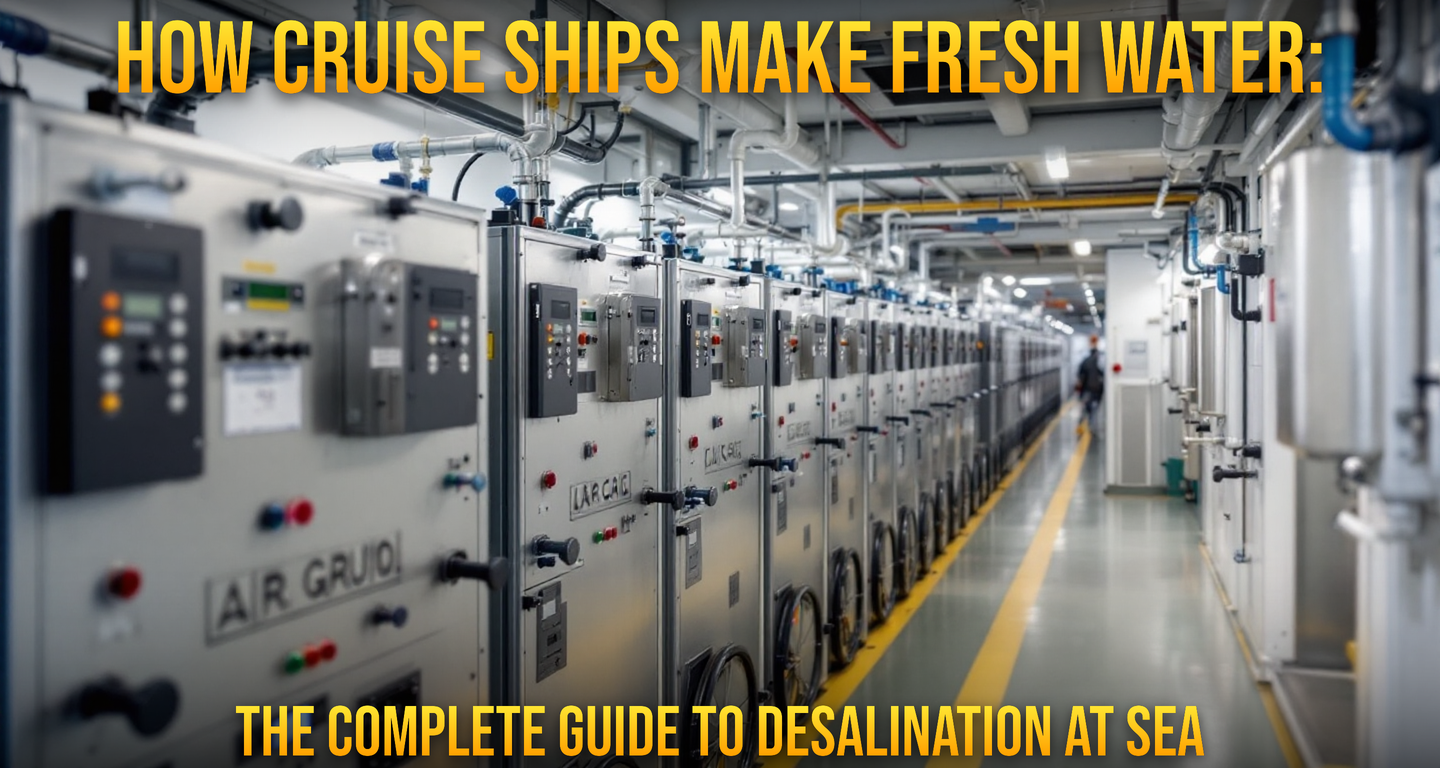
Before diving into how ships make water, let's talk numbers that'll blow your mind. A large ship like Royal Caribbean's Wonder of the Seas needs to produce approximately 350,000 gallons of fresh water every single day. That's enough to fill an Olympic-sized swimming pool halfway.
Each passenger consumes roughly 50-70 gallons daily when you factor in drinking water, showers, cabin sinks, laundry, food preparation, and deck cleaning. Add crew consumption and ship operations, and you're looking at water demands that would challenge a small city.
I remember chatting with the Chief Engineer on Carnival Panorama during a behind-the-scenes tour, and he told me their water production never stops - not even when docked. "We're making water 24/7," he said, "because tomorrow we might have 4,000 thirsty passengers boarding."
Modern cruise ships rely on reverse osmosis (RO) desalination systems to transform seawater into drinking water. This isn't some simple filtration process - it's sophisticated technology that literally separates water molecules from salt at the molecular level.
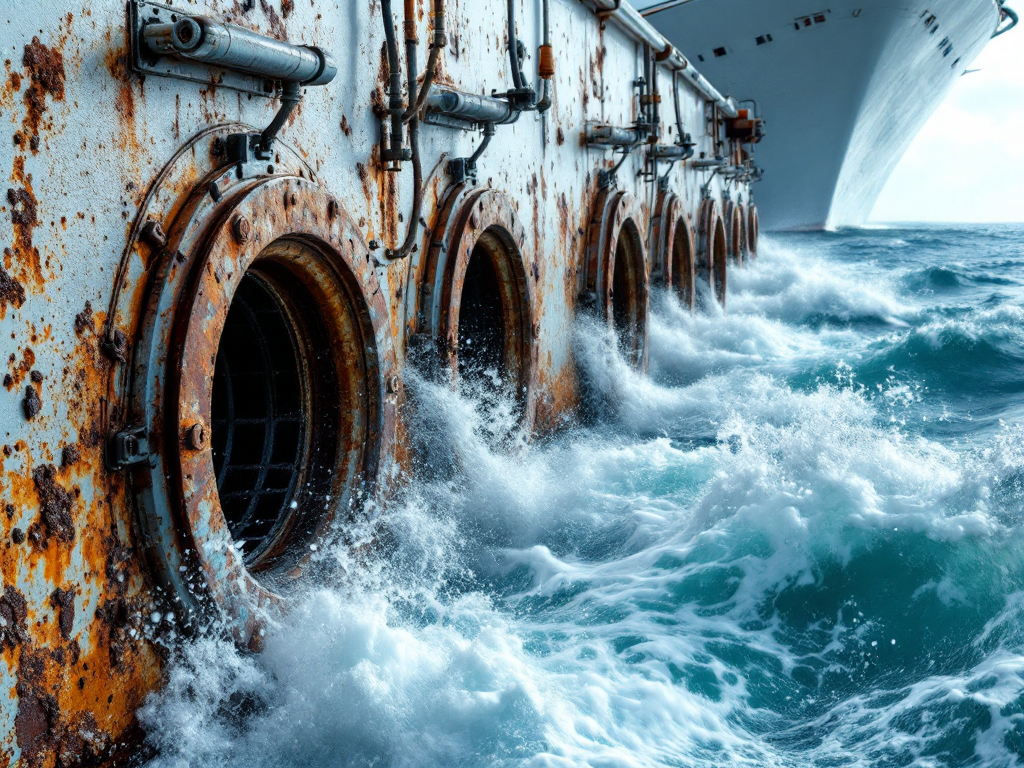
The process starts with massive intake valves on the ship's hull. As the vessel moves forward, seawater gets sucked into the system through these openings, typically located near the waterline. On newer ships like MSC World America, these intake systems can process thousands of gallons per minute.
Here's where it gets interesting: high-pressure pumps force that seawater through semi-permeable membranes under extreme pressure - we're talking 600-800 pounds per square inch. These membranes have microscopic pores that allow water molecules to pass through while blocking salt, bacteria, and other contaminants.
The result? Crystal-clear fresh water that often exceeds the quality standards of municipal water systems back home.
Stage 1: Seawater Intake and Initial Filtration
Seawater enters through hull intakes and passes through coarse filters to remove large debris, seaweed, and marine life. During my tour of Celebrity Beyond's water plant, I saw screens that catch everything from jellyfish to plastic debris.
Stage 2: Pre-Treatment and Chemical Conditioning
The water receives chemical treatment to prevent membrane fouling and biological growth. This stage removes chlorine residuals and adjusts pH levels for optimal membrane performance.
Stage 3: High-Pressure Reverse Osmosis
This is the main event. Industrial-grade pumps force seawater through multiple membrane arrays, typically producing 35-45% fresh water from the original seawater input. The remaining brine gets discharged overboard.
Stage 4: Post-Treatment and Mineralization
Pure RO water tastes flat, so ships add back essential minerals like calcium and magnesium for taste and health benefits. UV sterilization or chlorination provides final disinfection.
Stage 5: Storage and Distribution
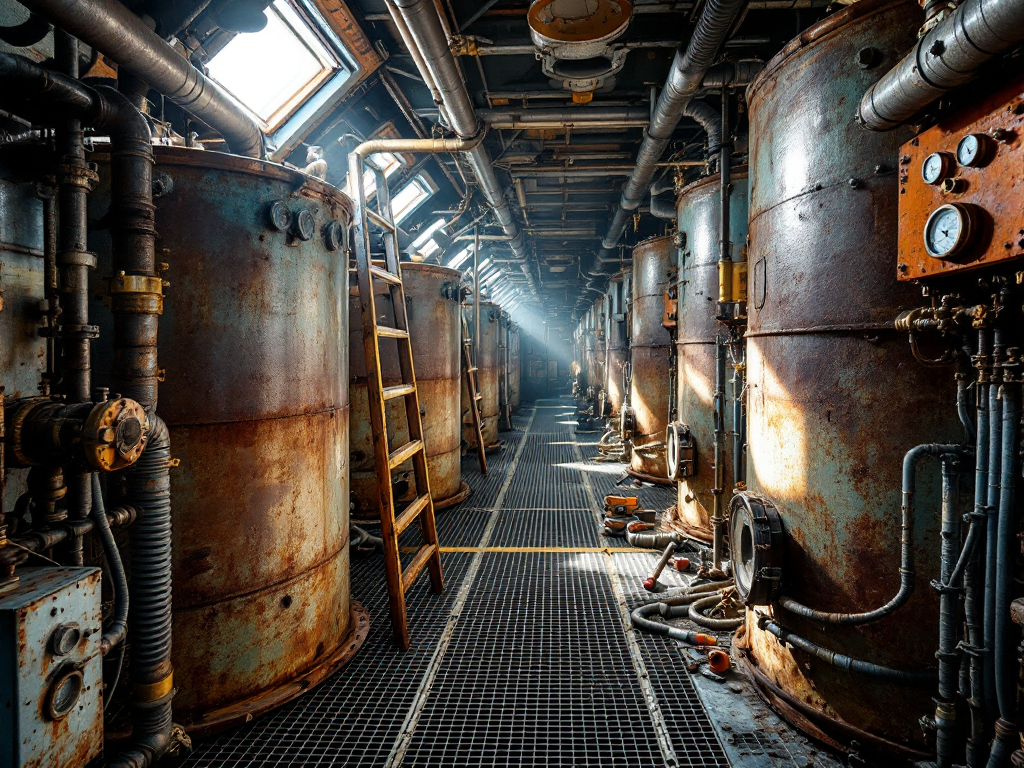
Finished water flows into massive storage tanks located throughout the ship. These tanks can hold 2-4 days' worth of water supply as backup.
Cruise ships don't mess around with water security. Every vessel has multiple redundant systems because running out of fresh water at sea isn't an option.
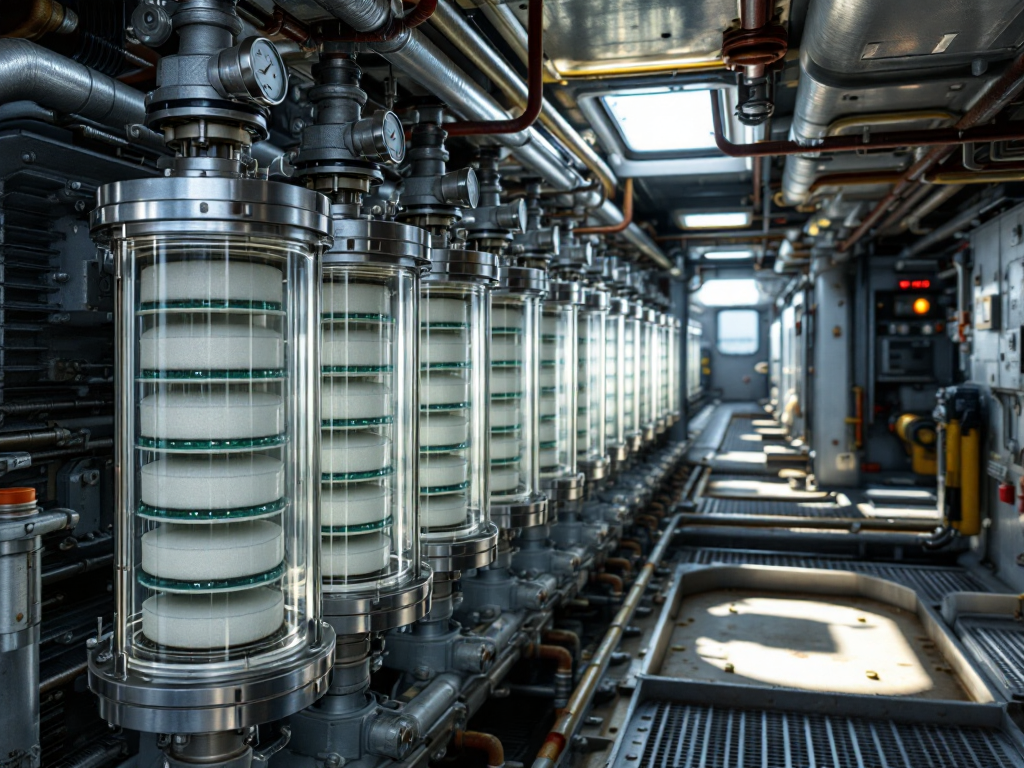
Most ships carry dual RO plants that can operate independently. If one system fails, the backup can handle essential water needs until repairs are made. During port calls, ships can also take on municipal water through shore connections - you'll often see thick hoses running from the dock to the ship during turnaround days.
The Norwegian Epic has three separate water production systems, each capable of handling different capacity demands. During my sailing on that ship, we experienced a minor equipment issue with one system, and passengers never knew because the other two picked up the slack seamlessly.
Water quality testing happens multiple times daily. The CDC's Vessel Sanitation Program requires cruise ships to maintain stricter water quality standards than many land-based systems. I've watched crew members collect water samples from different deck levels every few hours for bacterial testing.
The newest cruise ships are pushing water technology even further. Virgin Voyages' Scarlet Lady uses advanced membrane bioreactor technology that can actually purify and reuse wastewater for certain shipboard functions (don't worry - not for drinking).
Royal Caribbean's Icon of the Seas features next-generation RO systems that operate more efficiently and produce higher-quality water while using less energy. These systems can adjust production based on passenger load and weather conditions automatically.
Some ships now use energy recovery devices that capture pressure energy from the brine discharge to help power the high-pressure pumps, reducing overall energy consumption by up to 30%.
The bottom line: you can confidently drink the water aboard your cruise ship. In my 40+ sailings, I've never experienced water quality issues, and I always fill my reusable water bottle from cabin taps rather than buying bottled water.
Pro Tips for Cruise Water:
Some passengers still prefer bottled water, and that's fine. But understand you're paying premium prices (usually $3-5 per bottle) for convenience, not safety or quality.
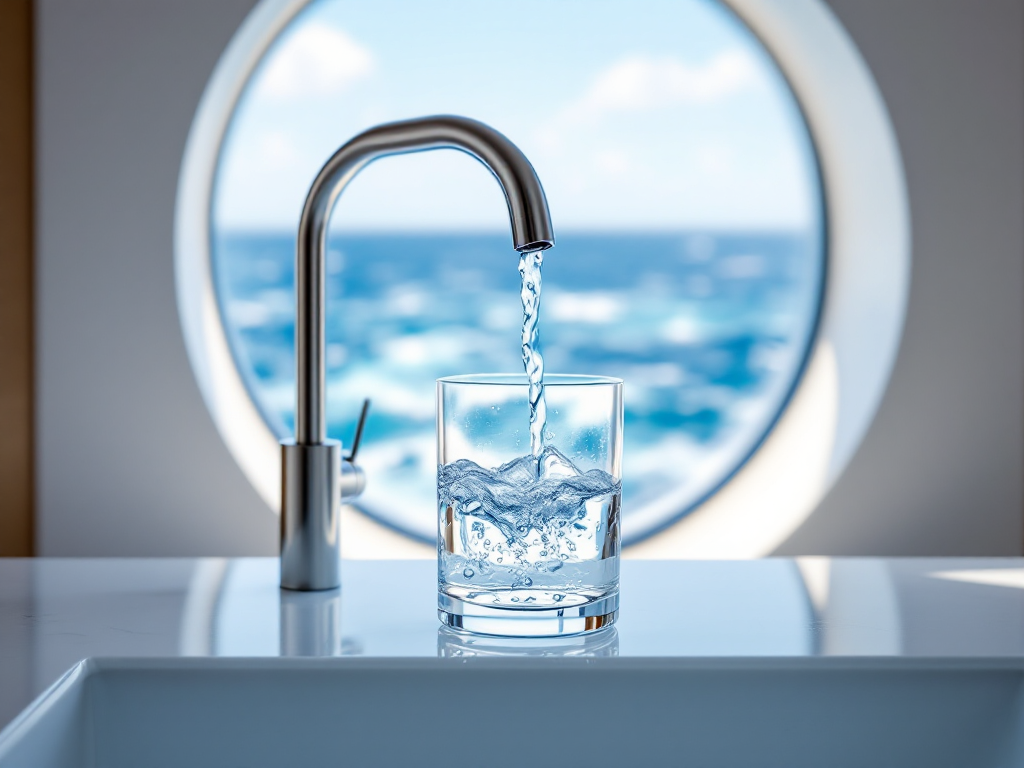
Next time you're standing on deck watching endless ocean in every direction, remember that somewhere below your feet, sophisticated machinery is literally creating drinking water from that same sea. It's a testament to human engineering that we can build floating cities capable of sustaining thousands of people indefinitely using nothing but seawater and technology.
The water flowing from your cabin faucet underwent a more rigorous purification process than most municipal water supplies. It's been filtered, pressurized, sterilized, mineralized, and tested multiple times before reaching your glass.
That daily shower, ice-cold drink, or morning coffee represents one of the most remarkable behind-the-scenes operations happening on your cruise ship - and most passengers never give it a second thought.
Share your experiences with cruise ship water systems and ask questions about shipboard engineering in our General Cruise Discussion forum!
The Massive Scale of Cruise Ship Water Consumption
Before diving into how ships make water, let's talk numbers that'll blow your mind. A large ship like Royal Caribbean's Wonder of the Seas needs to produce approximately 350,000 gallons of fresh water every single day. That's enough to fill an Olympic-sized swimming pool halfway.
Each passenger consumes roughly 50-70 gallons daily when you factor in drinking water, showers, cabin sinks, laundry, food preparation, and deck cleaning. Add crew consumption and ship operations, and you're looking at water demands that would challenge a small city.
I remember chatting with the Chief Engineer on Carnival Panorama during a behind-the-scenes tour, and he told me their water production never stops - not even when docked. "We're making water 24/7," he said, "because tomorrow we might have 4,000 thirsty passengers boarding."
Reverse Osmosis: The Heart of Ship Water Production
Modern cruise ships rely on reverse osmosis (RO) desalination systems to transform seawater into drinking water. This isn't some simple filtration process - it's sophisticated technology that literally separates water molecules from salt at the molecular level.
The process starts with massive intake valves on the ship's hull. As the vessel moves forward, seawater gets sucked into the system through these openings, typically located near the waterline. On newer ships like MSC World America, these intake systems can process thousands of gallons per minute.
Here's where it gets interesting: high-pressure pumps force that seawater through semi-permeable membranes under extreme pressure - we're talking 600-800 pounds per square inch. These membranes have microscopic pores that allow water molecules to pass through while blocking salt, bacteria, and other contaminants.
The result? Crystal-clear fresh water that often exceeds the quality standards of municipal water systems back home.
The Five-Stage Water Treatment Process
Stage 1: Seawater Intake and Initial Filtration
Seawater enters through hull intakes and passes through coarse filters to remove large debris, seaweed, and marine life. During my tour of Celebrity Beyond's water plant, I saw screens that catch everything from jellyfish to plastic debris.
Stage 2: Pre-Treatment and Chemical Conditioning
The water receives chemical treatment to prevent membrane fouling and biological growth. This stage removes chlorine residuals and adjusts pH levels for optimal membrane performance.
Stage 3: High-Pressure Reverse Osmosis
This is the main event. Industrial-grade pumps force seawater through multiple membrane arrays, typically producing 35-45% fresh water from the original seawater input. The remaining brine gets discharged overboard.
Stage 4: Post-Treatment and Mineralization
Pure RO water tastes flat, so ships add back essential minerals like calcium and magnesium for taste and health benefits. UV sterilization or chlorination provides final disinfection.
Stage 5: Storage and Distribution
Finished water flows into massive storage tanks located throughout the ship. These tanks can hold 2-4 days' worth of water supply as backup.
Backup Systems and Safety Protocols
Cruise ships don't mess around with water security. Every vessel has multiple redundant systems because running out of fresh water at sea isn't an option.
Most ships carry dual RO plants that can operate independently. If one system fails, the backup can handle essential water needs until repairs are made. During port calls, ships can also take on municipal water through shore connections - you'll often see thick hoses running from the dock to the ship during turnaround days.
The Norwegian Epic has three separate water production systems, each capable of handling different capacity demands. During my sailing on that ship, we experienced a minor equipment issue with one system, and passengers never knew because the other two picked up the slack seamlessly.
Water quality testing happens multiple times daily. The CDC's Vessel Sanitation Program requires cruise ships to maintain stricter water quality standards than many land-based systems. I've watched crew members collect water samples from different deck levels every few hours for bacterial testing.
Advanced Water Technologies on Newer Ships
The newest cruise ships are pushing water technology even further. Virgin Voyages' Scarlet Lady uses advanced membrane bioreactor technology that can actually purify and reuse wastewater for certain shipboard functions (don't worry - not for drinking).
Royal Caribbean's Icon of the Seas features next-generation RO systems that operate more efficiently and produce higher-quality water while using less energy. These systems can adjust production based on passenger load and weather conditions automatically.
Some ships now use energy recovery devices that capture pressure energy from the brine discharge to help power the high-pressure pumps, reducing overall energy consumption by up to 30%.
What This Means for Your Cruise Experience
The bottom line: you can confidently drink the water aboard your cruise ship. In my 40+ sailings, I've never experienced water quality issues, and I always fill my reusable water bottle from cabin taps rather than buying bottled water.
Pro Tips for Cruise Water:
- Tap water in cabins comes from the same system as restaurants - it's all the same high-quality water
- If you're sensitive to chlorine taste, let water sit for 30 minutes or use a simple carbon filter bottle
- Ice machines throughout the ship use the same treated water as taps
- Ships sometimes switch to shore water in port, which might taste slightly different but is equally safe
Some passengers still prefer bottled water, and that's fine. But understand you're paying premium prices (usually $3-5 per bottle) for convenience, not safety or quality.
The Engineering Marvel You Never Think About
Next time you're standing on deck watching endless ocean in every direction, remember that somewhere below your feet, sophisticated machinery is literally creating drinking water from that same sea. It's a testament to human engineering that we can build floating cities capable of sustaining thousands of people indefinitely using nothing but seawater and technology.
The water flowing from your cabin faucet underwent a more rigorous purification process than most municipal water supplies. It's been filtered, pressurized, sterilized, mineralized, and tested multiple times before reaching your glass.
That daily shower, ice-cold drink, or morning coffee represents one of the most remarkable behind-the-scenes operations happening on your cruise ship - and most passengers never give it a second thought.
Share your experiences with cruise ship water systems and ask questions about shipboard engineering in our General Cruise Discussion forum!