

Sofia_Reyes
Moderator
Why Golden Hour Is a Cruise Photographer's Dream
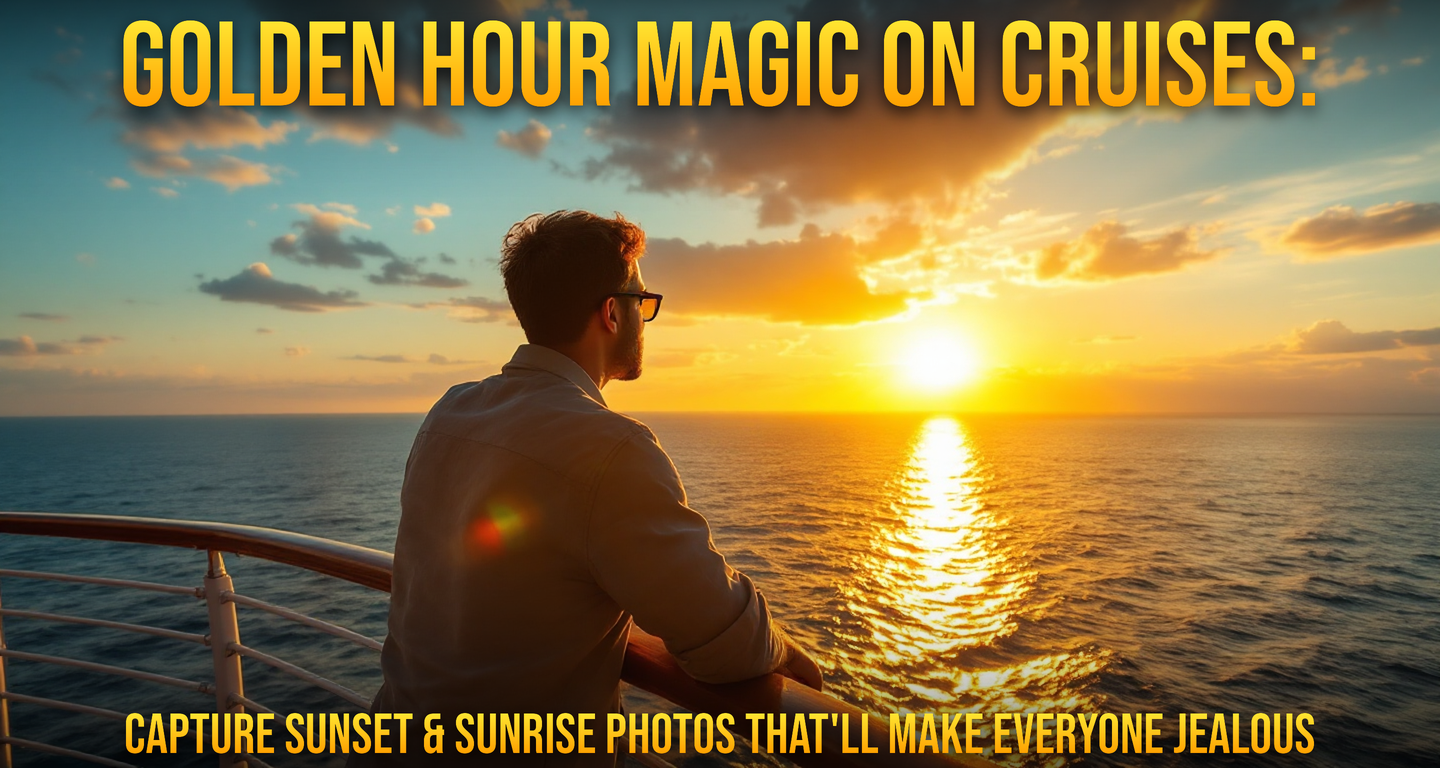
If you've ever stood on your balcony watching the sun melt into the ocean, you already know the magic is real. But here's what I've learned after 40+ cruises: golden hour—those 20 to 30 minutes before sunset and after sunrise—is when your cruise photos transform from "nice" to "wow, that's stunning." The light is warm, directional, and forgiving in ways midday sun simply isn't.
The best part? You don't need fancy gear or professional training to nail these shots. You just need to be in the right place at the right time with a plan.
Understanding Golden Hour Timing on Your Cruise
First thing: golden hour times change based on your ship's latitude and the time of year. In 2026, if you're cruising the Caribbean in winter, sunset might hit around 5:30–6:00 PM. In summer? Could be 8:00 PM or later. Alaska cruises? The "golden hour" barely exists in peak summer because the sun barely dips below the horizon.
Here's your action plan:
- Check the ship's daily program or your cruise line's app for exact sunset/sunrise times
- Set a phone alarm 15 minutes before the predicted time—don't rely on memory
- For sunrise, set it even earlier (maybe 20 minutes before) because the best light often comes before the sun crests the horizon
- Account for your ship's location: if you're sailing west (like on a Caribbean or Mexico cruise), sunset will be even more dramatic because you're chasing the sun
I learned this the hard way on a Royal Caribbean Oasis-class ship heading to Cozumel. I thought sunset was 6:15 PM based on my port guide. Nope—because we were sailing westbound, the actual magic hour was closer to 6:45. I nearly missed it.
Choosing Your Shooting Location: Balcony vs. Deck
Your balcony is convenient, but it's not always the best spot. Here's the honest breakdown:
Your Private Balcony: Pros are obvious—privacy, no crowds, access to your cabin to grab gear. But cons matter: railings (often opaque glass or metal) can obstruct shots or create unwanted reflections. The angle might be too narrow. And if you're on a lower deck, nearby structures can block the view.
Open Deck Areas: Places like the Promenade Deck, the ship's stern (aft), or dedicated observation decks give you 360-degree freedom and elevation. Higher up = bigger sky. The stern is my secret weapon—fewer tourists, unobstructed horizon, and you're looking in the direction the sun is actually setting. On ships like Celebrity's Edge-class vessels, the Magic Carpet deck at sunset? Unreal.
Port Locations: Here's what most cruisers miss: some of the best golden hour shots happen from the port, not the ship. Cozumel's beaches, Key West's Mallory Square pier, even the waterfront in Barbados—these locations + golden hour light = Instagram gold. Consider arriving at ports early or staying late specifically for sunset photography.
My honest take: Scout your ship before departure. Walk the decks. See which direction the sun will be setting from your itinerary. If you're sailing Caribbean routes (mostly westbound), the aft/stern decks will be your best bet. For European or repositioning cruises heading east, check the bow.
Learn more golden hour techniques and share your best shots in our cruise photography community!
Camera Settings for Golden Hour on Moving Decks
This is where most cruisers struggle. You're on a moving ship. The light is changing minute by minute. Your cabin mate is leaning on the railing next to you. You need settings that work now, not settings you saw in some YouTube tutorial.
For Smartphones (iPhone, Samsung, etc.):
- Use Portrait Mode or dynamic depth modes—they blur the background naturally and make the sunset the hero of the shot
- Tap the sun in your frame to expose for it, then let the foreground (your ship's railings, other passengers) go darker for drama
- Turn off the flash. Always.
- Use HDR mode if your phone offers it—golden hour light is high-contrast, and HDR balances highlights and shadows
- Shoot in a video format first to capture the changing light, then grab stills from the best frames
For Mirrorless or DSLR Cameras:
- Aperture: f/4 to f/8 (gives you sharp detail and a naturally soft background without needing a telephoto)
- Shutter Speed: 1/250th to 1/500th (you're on a moving ship; faster is safer)
- ISO: Start at 400–800, adjust up if needed (golden hour is bright, so you rarely need to push ISO)
- White Balance: Set to "Cloudy" or "Shade" mode, not Auto. Golden hour has a warm color cast—embracing it makes the image look intentional, not blown-out
- Focus Mode: Continuous autofocus. The ship's moving, the light's changing. Let your camera hunt.
- Exposure Compensation: +0.7 to +1.3 EV. Golden hour light fools meters. Overexposing slightly keeps the sky from turning gray.
Composition Tricks That Actually Work on Cruises
The Rule of Thirds (But Make It Cruise-Specific): Don't center the sunset. Place the horizon on the lower third of your frame if the sky is dramatic, or the upper third if the water reflection is the star. And here's the insider tip: include a small portion of your ship (a railing, a mast, another passenger's silhouette) in the foreground. It adds context and tells the story "I took this from a cruise ship."
Silhouettes: This is your golden ticket on crowded deck areas. Position other passengers between you and the sun. Their silhouettes become foreground elements—no detail needed, just shape. It's compositionally strong and honestly? It's more interesting than empty ocean.
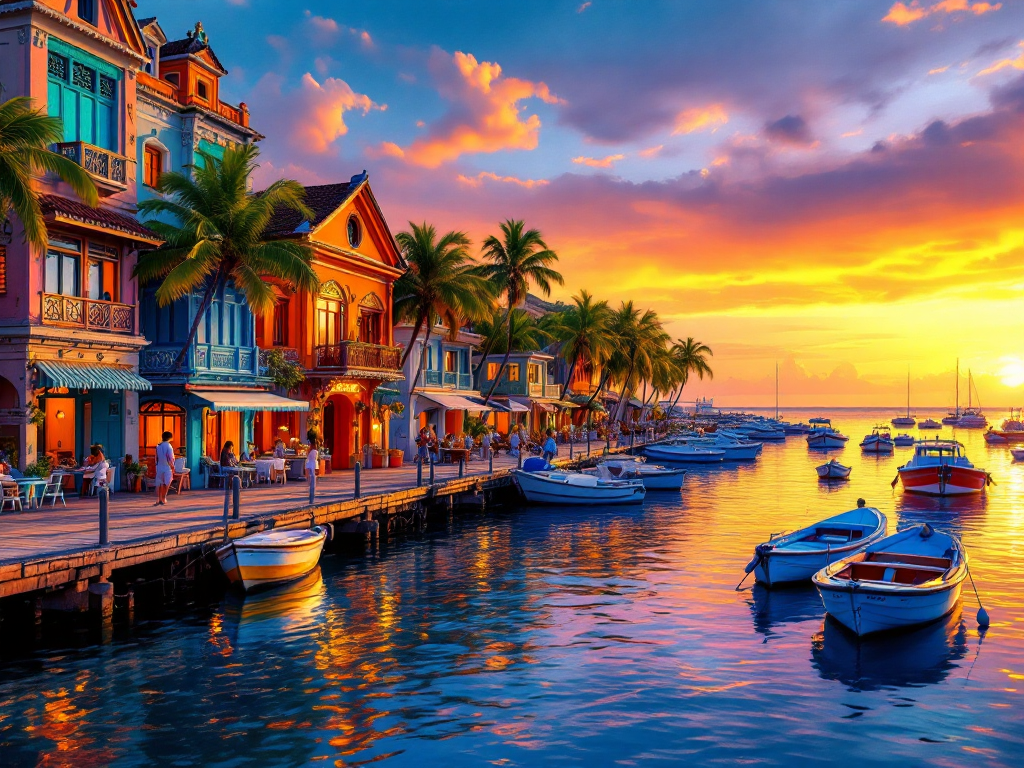
Reflections: If you can find wet deck areas, puddles from the rain, or calm water at ports, shoot the sunset and its reflection. Double the drama, half the effort.
Layers: Build depth. Foreground (ship railing), middle ground (calm water or port buildings), background (sunset). Your eye travels through the image. Compelling stuff.
Battling Common Golden Hour Obstacles
Crowds: Everyone has the same idea. My solution? Arrive 5 minutes early with a clear spot in mind. Or—and I'm not kidding—go early in the morning for sunrise instead. Sunrise has maybe 10% of sunset crowds, and the light is identical.
Ship Motion: On rough seas, use faster shutter speeds (1/1000th+) or find a sheltered spot that dampens the sway. Stabilize against a railing or wall.
Obstructed Views from Your Balcony: This is exactly why I sometimes book inside cabins on repeat cruises and explore open decks instead. The savings let me stay longer at ports or splurge on specialty dining.
Haze or Cloud Cover: Don't panic. Clouds diffuse sunlight, which means softer, more even illumination. Sometimes overcast golden hour beats clear skies. The dramatic reds and oranges still happen; they just get a moodier tone.
Port-Specific Golden Hour Opportunities
Different ports offer different golden hour experiences:
Cozumel & Playa del Carmen: The sunset hits directly across the water. Find a beach access point and shoot with the turquoise water catching that golden light. Absolute magic.
Key West: Mallory Square is famous for sunset (crowds are real), but the piers along Duval Street and the quieter waterfront areas give you the same light with fewer elbows.
Barbados (Bridgetown): The waterfront gets a straight-on western exposure. Grab a local photo from the pier—the coral-colored historic buildings + sunset sky is a photographer's dream.
Caribbean Private Islands: Cococay (Royal Caribbean) and Castaway Cay (Disney) both close at sunset, which means you're shooting the islands at their most beautiful light before boarding tenders back. Don't miss this window.
Alaska Ports: In peak summer (June–August), golden hour barely exists because the sun barely dips below the horizon. But the extended daylight means you can shoot port scenery in great light all evening. Focus on mountain reflections in calm water—that's your money shot.
Editing Golden Hour Photos (Keeping It Real)
You don't need Lightroom or Photoshop. Most phones have built-in editing that works perfectly:
- Increase saturation by 10–15% (golden hour colors are naturally vivid; a small bump makes them pop)
- Lift shadows slightly to reveal detail in dark foregrounds
- Pull back highlights if the sky is blown out (clipped)
- Warm the color temperature by 200–500K to emphasize that golden tone
- Add subtle contrast (+15–25) to separate the sky from the water
Resist the urge to oversaturate. Golden hour is already stunning. You're enhancing, not inventing.
My Golden Hour Ritual: How I've Shot 500+ Sunset Photos
After decades of cruising, I've developed a system:
Day Before: Check the sunset time. Plan my location. If I'm on a balcony, I test the railing and sight lines.
Hour Before: I charge my batteries. Full. No excuses.
30 Minutes Before: I'm at my chosen location with my camera ready, ISO set, aperture locked. I've seen the perfect shot happen in the first 5 minutes of golden hour, before most people even arrive.
During: I shoot constantly. Different angles, different exposures, different focal lengths. One great shot in 20 attempts is a win.
After: I back up my photos immediately (cloud storage, external drive, email to myself). Ship internet is finicky. Don't lose them.
The Honest Truth: Most of my "best" golden hour shots are accidents—happy accidents where I nailed exposure, composition, and timing by luck as much as skill. The discipline is showing up early, staying late, and shooting everything. The universe does the rest.
Sharing Your Golden Hour Masterpiece
Once you've captured something truly special, share it. Post it in our cruise photography forum and get feedback from 40+ years of combined experience. Seriously—our community will help you understand what worked, what didn't, and how to nail the next shot.
Final Thoughts
Golden hour on a cruise isn't about having the fanciest camera or the most technical knowledge. It's about being present, showing up early, and letting the light do what it does best. After 40+ cruises, my most treasured photos aren't the ones where I got every setting perfect. They're the ones where I was actually there, watching the sun sink into the ocean, forgetting about everything else.
That moment—that's the real magic. The photo is just proof it happened.
Share your golden hour breakthroughs and favorite sunset spots with fellow cruisers in our cruise photography community!