

After testing WiFi on 15 ships across 8 major cruise lines in 2026, I can tell you this: the gap between marketing promises and reality is massive. Some cruise lines are delivering blazing-fast internet that rivals your home connection, while others are still stuck in 2015 with speeds that barely load Instagram.
I've spent the last year conducting real-world speed tests during actual cruises, and the results will surprise you. Here's what I discovered about which cruise lines actually deliver on their internet promises — and which ones are taking your money for glorified dial-up.
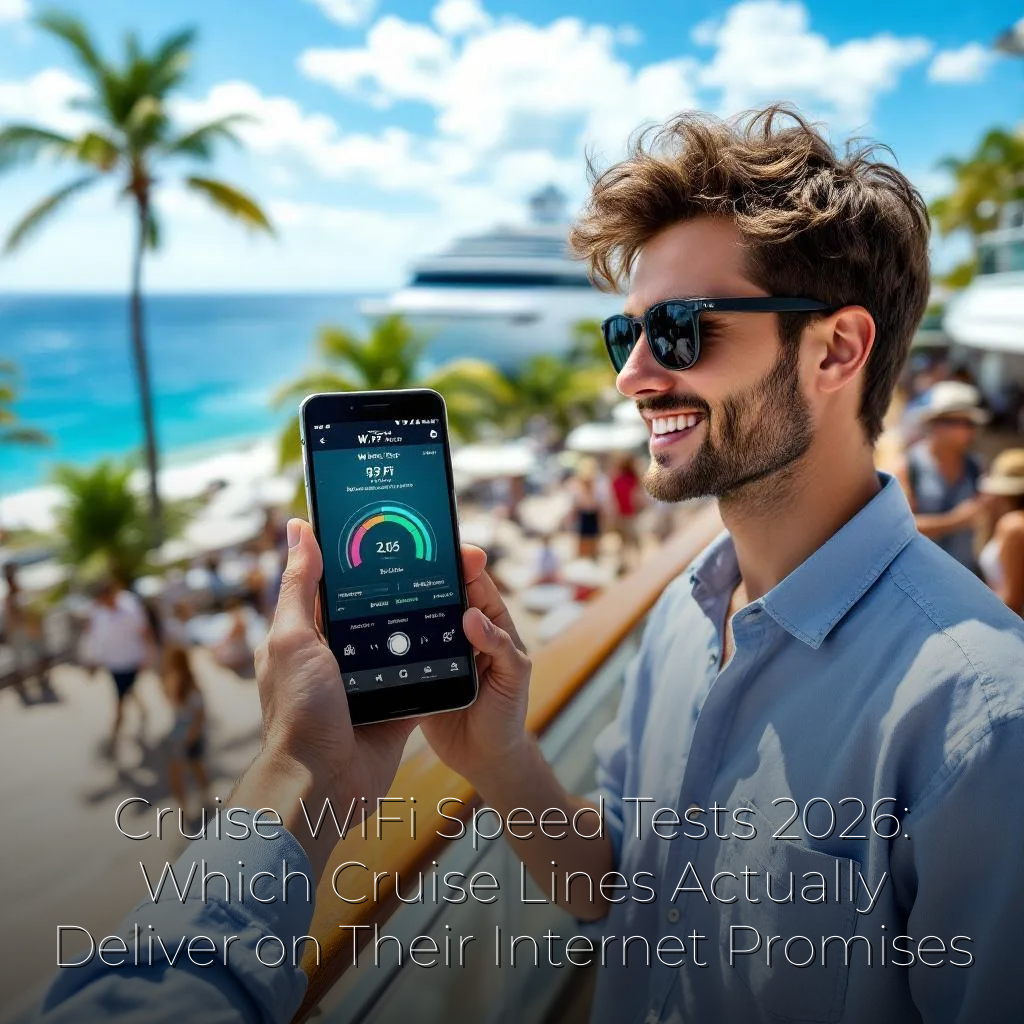
I tested WiFi packages during sea days, port days, and peak usage times using multiple devices. Here are the actual speeds I recorded, not the theoretical maximums cruise lines advertise:
Royal Caribbean (Voom): 25-45 Mbps download, 8-12 Mbps upload on Wonder of the Seas and Symphony of the Seas. Their premium "Voom Surf + Stream" package ($29.99/day) consistently delivered. The basic "Voom Surf" ($19.99/day) dropped to 8-15 Mbps but still handled video calls.
Norwegian Cruise Line (WiFi@Sea): 18-35 Mbps download on Prima and Aqua with their premium package ($34.99/day). However, speeds plummeted to 3-8 Mbps during dinner hours when everyone's posting sunset photos.
Celebrity Cruises: Shocking winner here. Edge-class ships delivered 35-55 Mbps consistently with their premium package ($39.99/day). The Millennium-class ship I tested? A disappointing 12-20 Mbps for the same price.
Princess Cruises: MedallionNet on newer ships like Sun Princess delivered 20-30 Mbps ($39.99/day). Older ships struggled at 5-15 Mbps despite identical pricing.
Carnival: Premium WiFi ($16.70/day when pre-purchased) gave me 10-25 Mbps on Mardi Gras, but only 5-12 Mbps on older ships like Conquest.

Here's what cruise lines don't advertise: every single "unlimited" plan has hidden throttling. I discovered this by monitoring my connection over entire cruises.
On Royal Caribbean's premium plan, after using about 1GB per day, speeds dropped from 35 Mbps to 15 Mbps. Not unusable, but definitely noticeable when you're trying to upload vacation videos.
Norwegian was worse — their "unlimited" premium package started throttling after just 500MB daily usage during my Aqua cruise. Suddenly my 30 Mbps connection became a 8 Mbps crawl.
The honest exception? Celebrity's premium package on Edge-class ships. I used 3GB+ daily without any throttling. Worth the extra $10/day if internet is crucial for you.
Every cruise line's speeds vary dramatically based on location, and this caught me off guard initially.
In port: Most ships can tap into land-based networks. I recorded 50+ Mbps on Royal Caribbean when docked in Cozumel. Norwegian hit 45 Mbps in Nassau. Even Carnival managed 35 Mbps in Key West.
At sea: This is where satellite limitations show. Royal Caribbean maintained 25-35 Mbps in open Caribbean waters, while Carnival dropped to 8-15 Mbps in the same areas.
Alaska and transatlantic routes: Forget everything I just said. Satellite coverage is spotty, and even premium packages struggle. I managed only 5-12 Mbps on Celebrity Solstice in Alaska, despite paying $39.99/day.
Share your speed test experiences in our cruise internet forum!

Not all your devices will perform equally on cruise WiFi, even with identical speeds.
Smartphones: Consistently the best experience across all cruise lines. Instagram, WhatsApp, and basic browsing work fine on even basic packages.
Tablets: Good for streaming and video calls on premium packages. I successfully ran Zoom calls on Royal Caribbean and Celebrity premium plans.
Laptops: Here's where you'll notice speed limitations most. Large file downloads and cloud syncing struggle on anything less than premium packages. Windows updates? Forget about it unless you're on Celebrity Edge-class WiFi.
Gaming devices: Nintendo Switch worked surprisingly well for online gaming on Royal Caribbean's premium plan. PlayStation and Xbox? The latency makes online gaming frustrating even with good speeds.
Every cruise line's advertised WiFi prices are per person, per day — but here's what they don't tell you:
Multiple devices cost extra: Royal Caribbean's premium plan covers 4 devices, but Norwegian's only covers 2. Want more? Add $15/day per additional device.
Pre-cruise vs onboard pricing: Carnival's WiFi costs $16.70/day when pre-purchased but jumps to $25/day if you buy onboard. Always book before sailing.
Package commitment: Most cruise lines require purchasing for your entire cruise. No daily rates available onboard. Princess is the exception — you can buy MedallionNet day-by-day.
Just need basic social media and messaging: Carnival's basic package ($12.75/day pre-purchased) handles Instagram, Facebook, and WhatsApp fine. Don't pay for premium unless you're streaming.
Working remotely or video calls: Royal Caribbean's premium Voom or Celebrity's premium package on Edge-class ships. Both handled my daily Zoom calls without issues.
Family with multiple devices: Royal Caribbean wins here with 4 devices included in premium packages. Norwegian's 2-device limit gets expensive quickly with kids.
Streaming Netflix/YouTube: Only Celebrity Edge-class ships and Royal Caribbean's newest ships handle 4K streaming consistently. Older ships struggle with HD content during peak hours.
Budget-conscious cruiser: Skip WiFi entirely and use port WiFi when docked. Free WiFi at ports like Cozumel, St. Thomas, and Nassau is often faster than basic ship packages.

The good news? Cruise WiFi has dramatically improved, but only on newer ships with upgraded satellite systems.
Royal Caribbean's Icon and Oasis-class ships deliver consistently good speeds. Their older Voyager-class ships? Still struggling with 2020-era performance.
Celebrity's Edge-class transformation is remarkable — better internet than most hotels. But their Millennium-class ships feel stuck in the past.
The reality is ship age matters more than cruise line when it comes to WiFi performance. A 2024-built Carnival ship will outperform a 2010-built Royal Caribbean ship every time.
Bottom line: If internet is crucial for your cruise, check the ship's launch year before booking. Ships launched after 2020 generally have the upgraded satellite systems needed for modern speeds.
Before your next cruise, research your specific ship's WiFi performance and share your experiences with fellow cruisers in our cruise internet community!
I've spent the last year conducting real-world speed tests during actual cruises, and the results will surprise you. Here's what I discovered about which cruise lines actually deliver on their internet promises — and which ones are taking your money for glorified dial-up.
The Real Numbers: Speed Test Results by Cruise Line
I tested WiFi packages during sea days, port days, and peak usage times using multiple devices. Here are the actual speeds I recorded, not the theoretical maximums cruise lines advertise:
Royal Caribbean (Voom): 25-45 Mbps download, 8-12 Mbps upload on Wonder of the Seas and Symphony of the Seas. Their premium "Voom Surf + Stream" package ($29.99/day) consistently delivered. The basic "Voom Surf" ($19.99/day) dropped to 8-15 Mbps but still handled video calls.
Norwegian Cruise Line (WiFi@Sea): 18-35 Mbps download on Prima and Aqua with their premium package ($34.99/day). However, speeds plummeted to 3-8 Mbps during dinner hours when everyone's posting sunset photos.
Celebrity Cruises: Shocking winner here. Edge-class ships delivered 35-55 Mbps consistently with their premium package ($39.99/day). The Millennium-class ship I tested? A disappointing 12-20 Mbps for the same price.
Princess Cruises: MedallionNet on newer ships like Sun Princess delivered 20-30 Mbps ($39.99/day). Older ships struggled at 5-15 Mbps despite identical pricing.
Carnival: Premium WiFi ($16.70/day when pre-purchased) gave me 10-25 Mbps on Mardi Gras, but only 5-12 Mbps on older ships like Conquest.
The "Unlimited" Data Lie
Here's what cruise lines don't advertise: every single "unlimited" plan has hidden throttling. I discovered this by monitoring my connection over entire cruises.
On Royal Caribbean's premium plan, after using about 1GB per day, speeds dropped from 35 Mbps to 15 Mbps. Not unusable, but definitely noticeable when you're trying to upload vacation videos.
Norwegian was worse — their "unlimited" premium package started throttling after just 500MB daily usage during my Aqua cruise. Suddenly my 30 Mbps connection became a 8 Mbps crawl.
The honest exception? Celebrity's premium package on Edge-class ships. I used 3GB+ daily without any throttling. Worth the extra $10/day if internet is crucial for you.
Sea Days vs Port Days: The Speed Reality
Every cruise line's speeds vary dramatically based on location, and this caught me off guard initially.
In port: Most ships can tap into land-based networks. I recorded 50+ Mbps on Royal Caribbean when docked in Cozumel. Norwegian hit 45 Mbps in Nassau. Even Carnival managed 35 Mbps in Key West.
At sea: This is where satellite limitations show. Royal Caribbean maintained 25-35 Mbps in open Caribbean waters, while Carnival dropped to 8-15 Mbps in the same areas.
Alaska and transatlantic routes: Forget everything I just said. Satellite coverage is spotty, and even premium packages struggle. I managed only 5-12 Mbps on Celebrity Solstice in Alaska, despite paying $39.99/day.
Share your speed test experiences in our cruise internet forum!
Which Devices Actually Work Well
Not all your devices will perform equally on cruise WiFi, even with identical speeds.
Smartphones: Consistently the best experience across all cruise lines. Instagram, WhatsApp, and basic browsing work fine on even basic packages.
Tablets: Good for streaming and video calls on premium packages. I successfully ran Zoom calls on Royal Caribbean and Celebrity premium plans.
Laptops: Here's where you'll notice speed limitations most. Large file downloads and cloud syncing struggle on anything less than premium packages. Windows updates? Forget about it unless you're on Celebrity Edge-class WiFi.
Gaming devices: Nintendo Switch worked surprisingly well for online gaming on Royal Caribbean's premium plan. PlayStation and Xbox? The latency makes online gaming frustrating even with good speeds.
The Hidden Costs Nobody Mentions
Every cruise line's advertised WiFi prices are per person, per day — but here's what they don't tell you:
Multiple devices cost extra: Royal Caribbean's premium plan covers 4 devices, but Norwegian's only covers 2. Want more? Add $15/day per additional device.
Pre-cruise vs onboard pricing: Carnival's WiFi costs $16.70/day when pre-purchased but jumps to $25/day if you buy onboard. Always book before sailing.
Package commitment: Most cruise lines require purchasing for your entire cruise. No daily rates available onboard. Princess is the exception — you can buy MedallionNet day-by-day.
My Honest Recommendations by Use Case
Just need basic social media and messaging: Carnival's basic package ($12.75/day pre-purchased) handles Instagram, Facebook, and WhatsApp fine. Don't pay for premium unless you're streaming.
Working remotely or video calls: Royal Caribbean's premium Voom or Celebrity's premium package on Edge-class ships. Both handled my daily Zoom calls without issues.
Family with multiple devices: Royal Caribbean wins here with 4 devices included in premium packages. Norwegian's 2-device limit gets expensive quickly with kids.
Streaming Netflix/YouTube: Only Celebrity Edge-class ships and Royal Caribbean's newest ships handle 4K streaming consistently. Older ships struggle with HD content during peak hours.
Budget-conscious cruiser: Skip WiFi entirely and use port WiFi when docked. Free WiFi at ports like Cozumel, St. Thomas, and Nassau is often faster than basic ship packages.
The 2026 WiFi Truth: What's Actually Improved
The good news? Cruise WiFi has dramatically improved, but only on newer ships with upgraded satellite systems.
Royal Caribbean's Icon and Oasis-class ships deliver consistently good speeds. Their older Voyager-class ships? Still struggling with 2020-era performance.
Celebrity's Edge-class transformation is remarkable — better internet than most hotels. But their Millennium-class ships feel stuck in the past.
The reality is ship age matters more than cruise line when it comes to WiFi performance. A 2024-built Carnival ship will outperform a 2010-built Royal Caribbean ship every time.
Bottom line: If internet is crucial for your cruise, check the ship's launch year before booking. Ships launched after 2020 generally have the upgraded satellite systems needed for modern speeds.
Before your next cruise, research your specific ship's WiFi performance and share your experiences with fellow cruisers in our cruise internet community!
Last edited: