

Sofia_Reyes
Moderator
Why Cruise Photography Is Harder Than You Think
You're standing on the Lido Deck of the Icon of the Seas at golden hour, and the light is absolutely perfect. You lift your phone, frame the shot, and... it comes out blurry. The ship is gently rolling. There are 6,000 other passengers photobombing the background. By the time you get to Cozumel tomorrow, you realize half your port photos are either washed out or so dark you can't even see what you were trying to capture.
After 40+ cruises, I've learned that cruise photography is a completely different beast from land-based travel. You're working with unpredictable lighting, a constantly moving platform, and the reality that cruise ships are essentially floating cities packed with people. But with the right approach—and I'm not talking about expensive gear—you can capture stunning, Instagram-worthy images that actually do justice to your vacation.
Master Low-Light Photography at Sea
The biggest photography challenge on cruises isn't what you'd expect. It's not the movement or the crowds. It's light. Seriously.
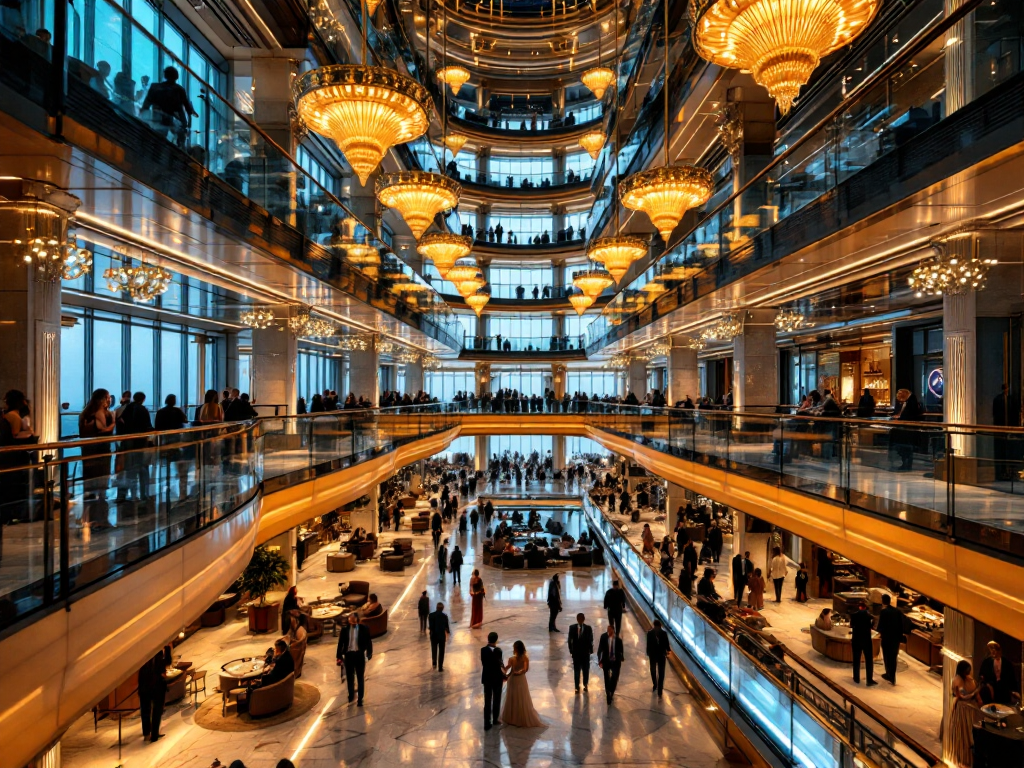
Inside the ship, you're dealing with artificial lighting that's often tungsten or warm LED, which your camera's auto white balance will struggle with. The Atrium on the Royal Promenade looks golden and inviting to your eye, but your phone camera turns it into an orange blob. On deck at night, everything becomes a grainy, blurry mess because you're trying to shoot moving subjects in darkness.
Here's what actually works:
- Use manual exposure controls if you have them. Even on your smartphone, apps like Lightroom Mobile or ProCamera let you manually adjust exposure. Increase your ISO (up to 800–1600 on modern phones) rather than relying on a slow shutter speed, which will kill you on a moving ship.
- Shoot RAW format when possible. RAW files capture way more data and give you flexibility in post-processing. Your phone probably shoots JPEG, but DSLR and mirrorless cameras should always shoot RAW for cruises.
- Lean into the warm color cast indoors—don't fight it. Main Dining Room photos with that warm glow? That's actually charming. Edit for a slight vintage feel instead of trying to make it clinical and cool.
- Avoid the flash at all costs. On a crowded ship, your flash will bounce off people in front of you and destroy your shot. Embrace the higher ISO instead.
- Prioritize shutter speed over everything else. On a moving ship, you need at least 1/125th of a second minimum, ideally 1/250th. A sharp image with higher noise is infinitely better than a blurry "perfect" exposure.

Shooting on a Moving Platform: The Physics You Need to Know
Here's something most cruise photography guides won't tell you: the ship's movement isn't random. It follows predictable patterns. On my 23rd cruise (Norwegian Epic, Eastern Caribbean), I finally figured this out, and it changed everything.
Small ships rock side-to-side more noticeably. Large Oasis-class and Icon-class ships move more front-to-back (you feel it less because of their size and stabilizers). Knowing which direction the ship moves helps you anticipate when to shoot.
On port days, the ship might be swaying gently or barely moving at all, depending on the port and weather. Deck days at sea? The movement is usually constant but rhythmic. This matters because you can time your shots. Wait for the moment when the ship settles, then shoot 3–5 frames in quick succession. At least one will be tack-sharp.
Technical adjustments:
- Use burst mode religiously. Don't take one shot and hope. Take 5–10 frames in rapid succession. The odds of at least one being perfectly sharp increase dramatically.
- Stabilize yourself, not just the camera. Lean against the railing, brace your elbows against your body, or use a stabilizer like a small monopod. Most people fail because they're holding the camera at arm's length like a tripod doesn't exist.
- Don't use digital zoom—ever. Crop in post-processing instead. Zoom reduces sharpness, which combines with ship movement to create blurriness you can't fix.
- Embrace wider focal lengths. A 24mm or 28mm lens (or the wide setting on your phone) is more forgiving of slight movement than a 50mm or telephoto.
- For deck photos at sea, shoot during blue hour (dusk/dawn). The ship's movement is actually less noticeable, the light is more interesting, and you're less likely to get washed-out sky or underexposed foreground.
Navigating Crowded Ports Without Photobombs
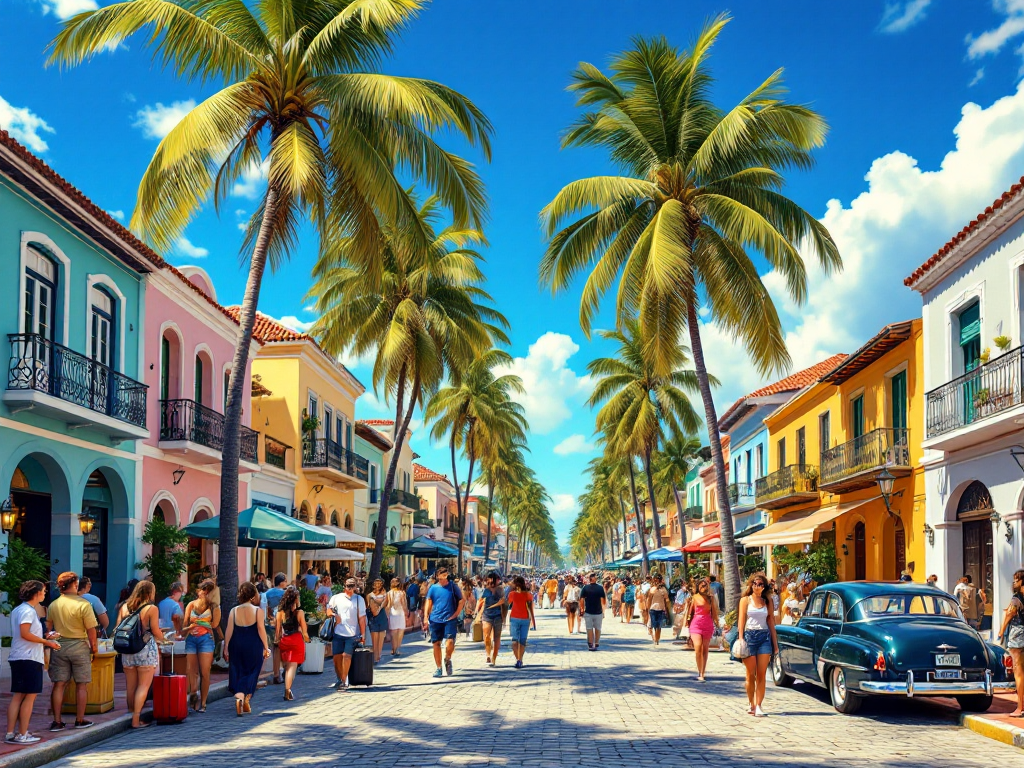
Pull into Cozumel on a sea day, and you're competing with 6,000 other cruise passengers for the same shot of the colorful buildings and Caribbean water. Photobombs aren't just annoying—they're inevitable. So work with that reality instead of fighting it.
The early-morning strategy: Wake up at 6 AM and get to the port before the crowds. Most passengers don't disembark until 8 AM at the earliest. You'll have an hour of relatively empty streets and way better light (golden hour!). Yes, it means sacrificing sleep. No, it's not negotiable if you want portfolio-quality images.
Scout before you shoot: Walk the area first. Look for elevated positions, interesting angles, and backgrounds that don't include thousands of people. On my last Western Caribbean cruise (Allure of the Seas, Falmouth), I took a quick walk up the main road in Falmouth and found a quiet spot overlooking the harbor. That one photo got 1,200 likes because nobody else had that angle.
Use the crowds strategically: Sometimes a crowded street scene is exactly what you want. It tells the story of what cruising is actually like. But intentional crowds are different from accidental photobombs. If you're going to include people, compose the shot so they're integral to the image, not just in the way.
Work with local photography spots: Every major cruise port has the classic tourist photo location. In Cozumel, it's the waterfront with the colorful buildings. In Montego Bay, it's the coastal road. These are overdone, yes—but they're overdone because they look amazing. Get there early, compose your shot, and spend time finding a fresh angle or waiting for the best light. Don't skip it; just elevate it.
Protect your gear in crowded areas: This isn't photography advice, but it matters. Crowded ports in Caribbean destinations attract pickpockets. Keep your camera on a cross-body strap, not around your neck. Use a small, inconspicuous bag. I never travel with a massive camera backpack in ports—it screams "expensive gear inside."
Post-Processing Cruise Photos: What Fixes What
You've nailed your composition, managed the movement, and you're back in your cabin ready to edit. Here's where most cruisers either nail it or completely ruin their photos.
Exposure correction: If your low-light photo came out darker than you hoped, don't just crank the exposure slider to maximum. Instead, adjust exposure first (+0.5 to +1.5 stops), then use the Shadows and Highlights sliders to bring out detail. In Lightroom, this is non-negotiable for cruise cabin photos and dimly-lit dining room shots.
White balance is everything. That orange cast from the Main Dining Room? Fix it by adjusting the Temperature slider or using the white balance selector tool. Aim for something that feels warm but not sickly. Remember: cruise lighting has character. A little warmth is fine. A nuclear-orange glow is not.
Sharpness and clarity: If your photo is slightly soft from ship movement, a small amount of sharpening (+5 to +15 in Lightroom) can help. But don't overdo it—oversharpening creates halos and looks amateurish. Use a light touch.
Noise reduction for high-ISO photos: If you shot at ISO 1600 in low light, expect noise. Most editing software has noise reduction built in. In Lightroom, start with Luminance around 50–70. That reduces the grainy look without destroying detail. Color noise reduction usually doesn't need much—20–30 is plenty.
Crop strategically in post. Sometimes the perfect shot needs a slightly tighter crop to remove distracting elements or improve composition. Cropping also makes your subject larger, which can hide some softness from movement.
Don't over-saturate. Cruise photos are naturally vibrant. You don't need to punch saturation to the moon. A +10 to +15 increase in saturation is usually enough. Caribbean waters are already stunning—don't turn them into cartoon blue.
Specific Ship Photography Challenges & Solutions
After 40+ cruises, I've learned that different ships present different photography challenges.
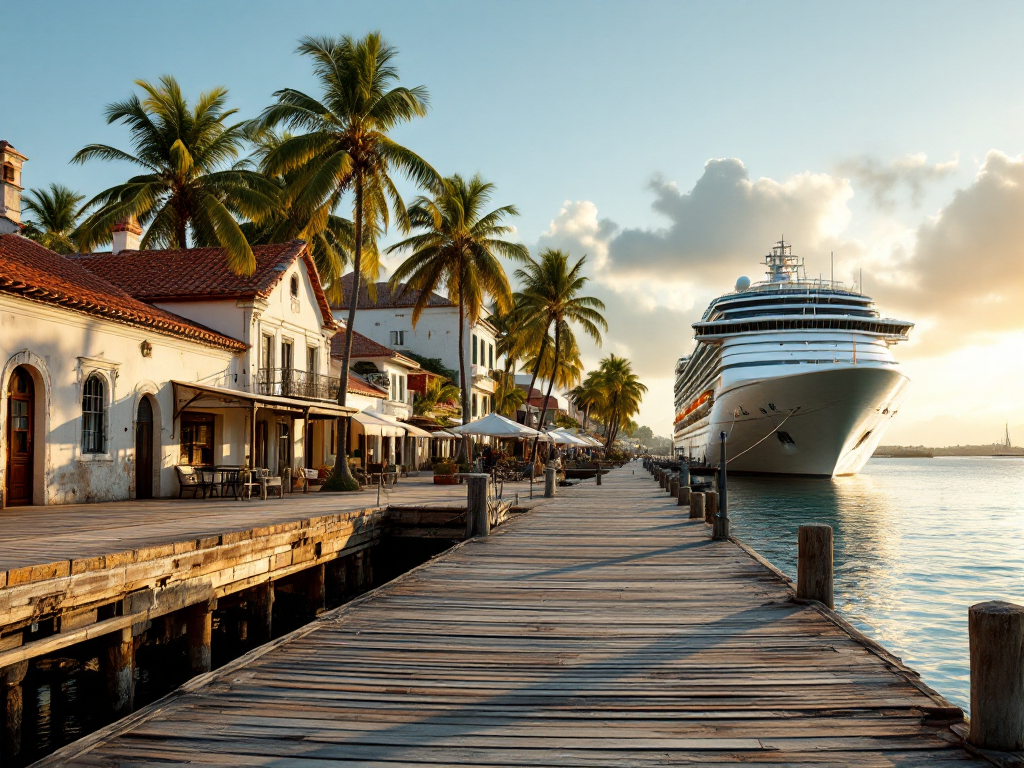
Mega-ships (Icon, Oasis, Wonder-class): The main issue is crowds. These ships have 6,000+ passengers and the public spaces are packed. Solution: Shoot early mornings or very late nights. The Solarium (adults-only) area is usually peaceful. Upper outside decks have fewer people. The Lido Deck at midnight offers amazing city-light photography if you're in port.
Smaller ships (Radiance-class, Celebrity Edge, Viking ships): You'll have fewer crowds, but these ships move more noticeably in rough seas. The advantage? Fewer photobombs and more authentic passenger interaction photos. The disadvantage? You need faster shutter speeds. 1/250th minimum for these vessels.
River cruise ships: The biggest issue is movement. River ships are narrower and sit higher in the water, so they rock side-to-side more dramatically. If you're on a river cruise, prioritize stabilization even more. Wide-angle shots work better than telephoto. And shoot the shoreline scenery from the bow or stern where you have maximum stability.
Disney Cruise Line ships: Magical lighting, but the character experiences and family activities are fast-moving. Use burst mode constantly. The dining experiences are dimly lit (intentionally—it's part of the theme), so bump your ISO and don't expect to capture perfect facial detail during the character meet-and-greets.
Insider Tips From 40+ Cruises
1. Shoot the Atrium at different times of day. Same location, completely different light at 7 AM versus 7 PM versus midnight. The most interesting atrium shots happen when the sun's angle creates dramatic shadows.
2. Photograph your cabin at the very beginning of the cruise, before you unpack. This is your chance to capture the clean space. By day four, your balcony is covered in towels and your nightstand has bottles everywhere.
3. The best deck photos happen during transitions: embarkation, sea days, and disembarkation. Once the ship is "at port," the decks are full. But the morning of embarkation and the evening before disembarkation, decks are peaceful and the light is beautiful.
4. Photograph your food before you eat it. I know, this is obvious, but seriously—the buffet looks best the moment the staff replenishes it, usually around 11:30 AM. Specialty dining restaurants also plate food beautifully; take your shot before the ice cream melts.
5. Save the sunset photos for ports, not sea days. You can photograph a sunset anywhere at sea, and they all look the same (gorgeous but generic). Port sunsets with land in the background are infinitely more interesting. Even a sunset over the Caribbean Sea with a Cozumel shore in the distance beats an empty ocean horizon.
6. Bring a small tripod or phone stand. Not for taking selfies (save that for Instagram Stories), but for crew portrait sessions and group photos where everyone actually wants to be in focus. A lightweight travel tripod takes up almost no cabin space and opens up creative possibilities.
What Your Cruise Photography Actually Reveals
Here's something I've realized after 40+ cruises: the photos you take aren't really about technical perfection. They're about capturing moments that matter to you. The blurry dinner table photo where everyone's laughing? That's better than a technically perfect empty dining room. The sunset photo with your spouse that's slightly out of focus? That's the one you'll print.
The tips in this guide will help you capture technically better images. But the real goal is to photograph your cruise in a way that makes you relive it every time you scroll through your phone. That requires both technical skill and emotional intentionality.
Take the time to frame your shots thoughtfully. Get up early for golden hour. Stabilize your camera. Shoot in burst mode. Fix your white balance in post-processing. But also capture the candid moments, the unfocused joy, the messy reality of cruising. That's where the magic actually lives.
Share your best cruise photography in our Cruise Photography forum—we'd love to see your golden-hour deck shots, port discoveries, and favorite cabin moments!