

Let me be honest with you: after 40+ cruises, I've seen seasickness hit everyone from cruise veterans to first-timers. The good news? I've also learned exactly what works (and what's just cruise ship folklore). Whether you're worried about your first sailing or you've had rough experiences before, this guide covers everything you need to know about preventing, treating, and managing seasickness at sea.
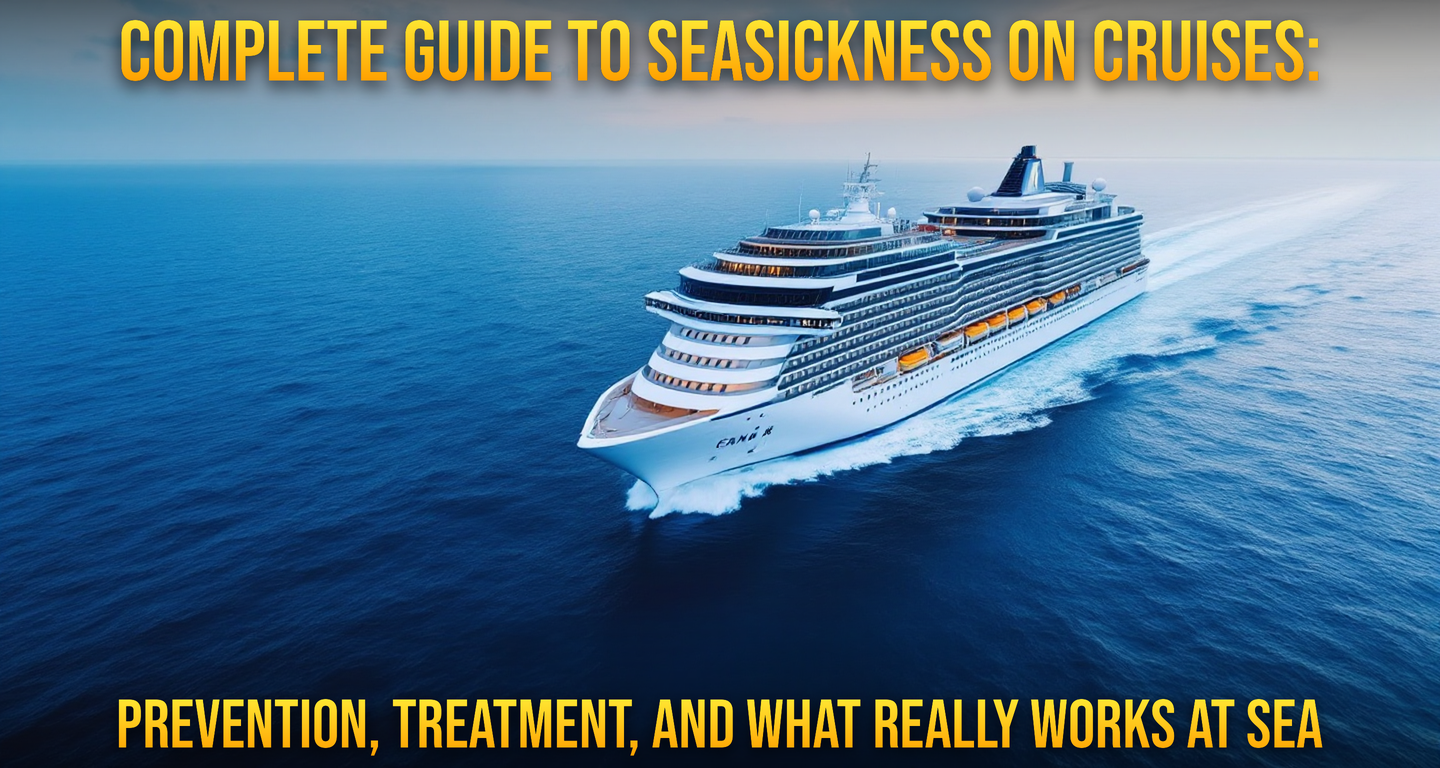
Here's what the cruise lines won't tell you upfront: ship size and technology make a massive difference. I sailed on Royal Caribbean's Icon of the Seas in rough weather last year, and barely felt movement thanks to advanced stabilizers. Compare that to my experience on an older Celebrity Century-class ship in similar conditions – night and day difference.
Ships with the best motion control in 2026:
These newer mega-ships (150,000+ tons) have sophisticated stabilization systems that older or smaller ships simply can't match. If you're prone to motion sickness, avoid older ships under 80,000 tons on itineraries known for rough seas.
After trying everything from ginger supplements to prescription patches, here's my honest ranking of what prevents seasickness:
Tier 1 (Most Effective):
Tier 2 (Moderately Effective):
Tier 3 (Limited Effectiveness):
Pro tip: Start your chosen medication 24 hours before embarkation, not when you board. Your body needs time to build up effective levels.
Cabin location can make or break your cruise experience. Here's where to book (and where to avoid):
Best locations for minimal motion:
Worst locations if you're motion-sensitive:
I learned this the hard way on Norwegian Epic in cabin 15010 (forward, deck 15). Even in calm seas, I felt constant motion. My midship cabin 8234 on the same ship during a repositioning cruise? Barely noticed we were moving.
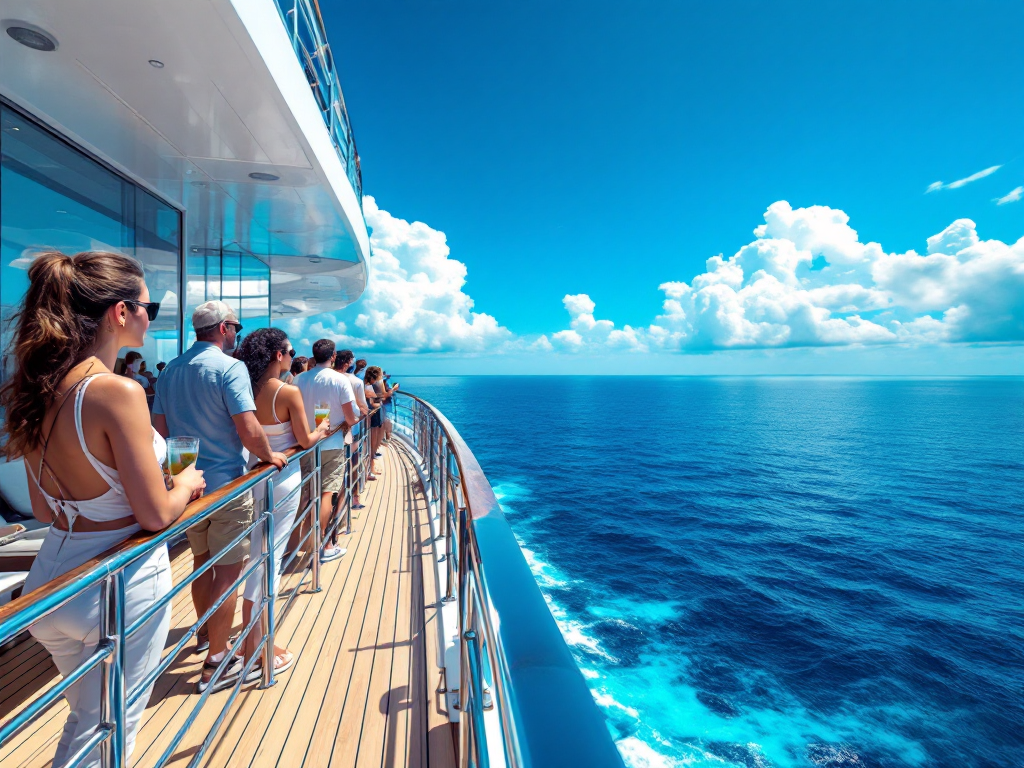
Despite your best prevention efforts, seasickness might still strike. Here's my battle-tested action plan:
Immediate steps:
Foods that help (from ship restaurants):
Foods to avoid:
I've found that walking the Promenade on Royal Caribbean ships (decks 4-5) or the Waterfront on Norwegian helps tremendously. The combination of fresh air and gentle movement seems to recalibrate your balance.
Every cruise ship has a medical center, but services and costs vary significantly. Here's what you can expect in 2026:
Standard medical consultation fees:
What medical centers can treat:
What they cannot handle:
The medical staff on Oasis of the Seas helped me when food poisoning hit during a Caribbean cruise. The consultation cost $150, anti-nausea medication was $45, and I felt human again within hours. All charges went directly to my cabin folio.
Insurance tip: Most travel insurance policies cover onboard medical expenses, but you'll pay upfront and file for reimbursement later.
After decades of cruising, I've picked up techniques that most first-timers never learn:
The "Horizon Trick": When feeling queasy, find a forward-facing window and focus on the horizon line for 5-10 minutes. The Pool Deck on deck 11-12 works best on most ships.
Timing your activities: Motion is typically worst during:
Schedule important activities (specialty dining, shows) during calmer periods if seas are rough.
Alternative cabin hack: If you book an interior cabin and seasickness hits, ask guest services about upgrading to a midship ocean view. They often have last-minute availability and may offer deals to keep you happy.
The "buddy system": Cruise with someone who handles motion well. They can fetch supplies, help with cabin service requests, and provide moral support during rough patches.
Roughest cruise routes (extra precautions needed):
Calmest cruise routes:
If you're extremely motion-sensitive, stick to Caribbean or Mediterranean itineraries on large, modern ships for your first few cruises.
Severe seasickness can legitimately impact your vacation enjoyment. Here's how to handle it:
Document everything:
Contact guest services immediately: Don't wait until the end of your cruise. Most cruise lines will offer:
Royal Caribbean gave me a $400 future cruise credit when seasickness knocked me out for two days on Harmony of the Seas during an unusually rough Caribbean crossing.
Here's the reality: about 15% of first-time cruisers experience some seasickness, but only 3-5% have it severely enough to impact their entire vacation. With proper preparation, smart ship selection, and the strategies in this guide, you can minimize your risk significantly.
Modern cruise ships are engineering marvels designed to provide the smoothest possible ride. The newer and larger the ship, the better your odds of a comfortable sailing.
If you're still nervous, consider a short 3-4 day cruise on a large ship to test your sea legs before booking that dream 12-day Mediterranean voyage.
Have questions about specific ships, medications, or itineraries? Share your concerns and get advice from experienced cruisers in our cruise discussion forums – we've all been there and we're happy to help!
The Truth About Modern Cruise Ship Motion
Here's what the cruise lines won't tell you upfront: ship size and technology make a massive difference. I sailed on Royal Caribbean's Icon of the Seas in rough weather last year, and barely felt movement thanks to advanced stabilizers. Compare that to my experience on an older Celebrity Century-class ship in similar conditions – night and day difference.
Ships with the best motion control in 2026:
- Royal Caribbean Oasis and Icon classes (Wonder, Icon, Star of the Seas)
- Norwegian Prima and Viva classes (Prima, Viva, Aqua)
- Celebrity Edge class (Edge, Apex, Beyond, Millennium)
- MSC World class (World Europa, World America)
These newer mega-ships (150,000+ tons) have sophisticated stabilization systems that older or smaller ships simply can't match. If you're prone to motion sickness, avoid older ships under 80,000 tons on itineraries known for rough seas.
Pre-Cruise Prevention That Actually Works
After trying everything from ginger supplements to prescription patches, here's my honest ranking of what prevents seasickness:
Tier 1 (Most Effective):
- Scopolamine patches: Get these from your doctor before cruising. Apply 4+ hours before boarding. Cost: $15-30 for 4 patches. They work for 72 hours each.
- Meclizine (Bonine): Take 1 hour before boarding, then once daily. Less drowsy than Dramamine. About $8 for a box.
Tier 2 (Moderately Effective):
- Sea-Bands: Acupressure wristbands work for mild motion sensitivity. $12-15 pair.
- Dramamine Less Drowsy: Effective but can still cause fatigue. $6-10.
Tier 3 (Limited Effectiveness):
- Ginger supplements (work for some, not others)
- Essential oils and aromatherapy (mostly placebo effect)
- Homeopathic remedies (no scientific backing)
Pro tip: Start your chosen medication 24 hours before embarkation, not when you board. Your body needs time to build up effective levels.
Smart Cabin Selection for Motion-Sensitive Cruisers
Cabin location can make or break your cruise experience. Here's where to book (and where to avoid):
Best locations for minimal motion:
- Midship, decks 6-8: The sweet spot on most ships
- Lower decks: Less sway than higher floors
- Interior or ocean view: Balconies can amplify motion perception
Worst locations if you're motion-sensitive:
- Forward cabins (bow area) – these pitch up and down
- Aft cabins above deck 10 – maximum sway zone
- Cabins on deck 15+ on any ship – too high up
I learned this the hard way on Norwegian Epic in cabin 15010 (forward, deck 15). Even in calm seas, I felt constant motion. My midship cabin 8234 on the same ship during a repositioning cruise? Barely noticed we were moving.
What to Do When Seasickness Hits
Despite your best prevention efforts, seasickness might still strike. Here's my battle-tested action plan:
Immediate steps:
- Get to an open deck immediately: Fresh air and horizon views help reset your inner ear
- Find the midship area on deck 7-9: Least motion, best stability
- Avoid your cabin: Enclosed spaces make symptoms worse
- Stay hydrated: Sip water or ginger ale slowly
Foods that help (from ship restaurants):
- Plain crackers from room service (free on most lines)
- Ginger tea from specialty coffee bars
- Green apples from the buffet
- Plain rice or toast from the main dining room
Foods to avoid:
- Greasy buffet options
- Alcohol (makes motion sickness worse)
- Dairy products
- Strong-smelling foods
I've found that walking the Promenade on Royal Caribbean ships (decks 4-5) or the Waterfront on Norwegian helps tremendously. The combination of fresh air and gentle movement seems to recalibrate your balance.
Onboard Medical Centers: Services and Real Costs
Every cruise ship has a medical center, but services and costs vary significantly. Here's what you can expect in 2026:
Standard medical consultation fees:
- Basic visit during regular hours: $125-$175
- After-hours or emergency visit: $200-$350
- Seasickness injection (Phenergan): $50-$85 plus consultation fee
- IV fluids for severe dehydration: $200-$400
What medical centers can treat:
- Severe seasickness with anti-nausea injections
- Dehydration from vomiting
- Motion sickness complications
- General illness symptoms
What they cannot handle:
- Major medical emergencies (require helicopter evacuation)
- Complex prescription needs
- Surgery beyond minor procedures
The medical staff on Oasis of the Seas helped me when food poisoning hit during a Caribbean cruise. The consultation cost $150, anti-nausea medication was $45, and I felt human again within hours. All charges went directly to my cabin folio.
Insurance tip: Most travel insurance policies cover onboard medical expenses, but you'll pay upfront and file for reimbursement later.
Advanced Strategies from Cruise Veterans
After decades of cruising, I've picked up techniques that most first-timers never learn:
The "Horizon Trick": When feeling queasy, find a forward-facing window and focus on the horizon line for 5-10 minutes. The Pool Deck on deck 11-12 works best on most ships.
Timing your activities: Motion is typically worst during:
- Early morning (5-8 AM) as ships adjust course
- During port departures when turning
- Rough weather (obviously)
Schedule important activities (specialty dining, shows) during calmer periods if seas are rough.
Alternative cabin hack: If you book an interior cabin and seasickness hits, ask guest services about upgrading to a midship ocean view. They often have last-minute availability and may offer deals to keep you happy.
The "buddy system": Cruise with someone who handles motion well. They can fetch supplies, help with cabin service requests, and provide moral support during rough patches.
Itinerary-Specific Advice
Roughest cruise routes (extra precautions needed):
- Transatlantic crossings: April-May and September-October
- Alaska Inside Passage: Glacier Bay can get choppy
- Baltic Sea: North Sea crossings particularly rough
- Cape Horn (South America): Notoriously rough waters
Calmest cruise routes:
- Caribbean (Eastern/Western): Protected waters year-round
- Mediterranean: Generally calm April-October
- Fjords (Norway): Protected waterways
- River cruises: Minimal to no motion
If you're extremely motion-sensitive, stick to Caribbean or Mediterranean itineraries on large, modern ships for your first few cruises.
When Seasickness Ruins Your Cruise: Getting Compensation
Severe seasickness can legitimately impact your vacation enjoyment. Here's how to handle it:
Document everything:
- Medical center visits and receipts
- Missed excursions due to illness
- Inability to eat in specialty restaurants
- Missed entertainment or activities
Contact guest services immediately: Don't wait until the end of your cruise. Most cruise lines will offer:
- Cabin service accommodations
- Room service credits
- Future cruise credits (typically 10-25% of cruise fare)
- Specialty restaurant credit transfers
Royal Caribbean gave me a $400 future cruise credit when seasickness knocked me out for two days on Harmony of the Seas during an unusually rough Caribbean crossing.
The Bottom Line: Don't Let Fear Stop You
Here's the reality: about 15% of first-time cruisers experience some seasickness, but only 3-5% have it severely enough to impact their entire vacation. With proper preparation, smart ship selection, and the strategies in this guide, you can minimize your risk significantly.
Modern cruise ships are engineering marvels designed to provide the smoothest possible ride. The newer and larger the ship, the better your odds of a comfortable sailing.
If you're still nervous, consider a short 3-4 day cruise on a large ship to test your sea legs before booking that dream 12-day Mediterranean voyage.
Have questions about specific ships, medications, or itineraries? Share your concerns and get advice from experienced cruisers in our cruise discussion forums – we've all been there and we're happy to help!
Last edited: