

You've booked that perfect seven-day Caribbean cruise for September, only to watch a tropical storm form three days before departure. Sound familiar? After 40+ cruises through hurricane season, I've learned that successful Caribbean cruising from June through November isn't about avoiding storms—it's about understanding how cruise lines handle them and knowing your rights when plans change.
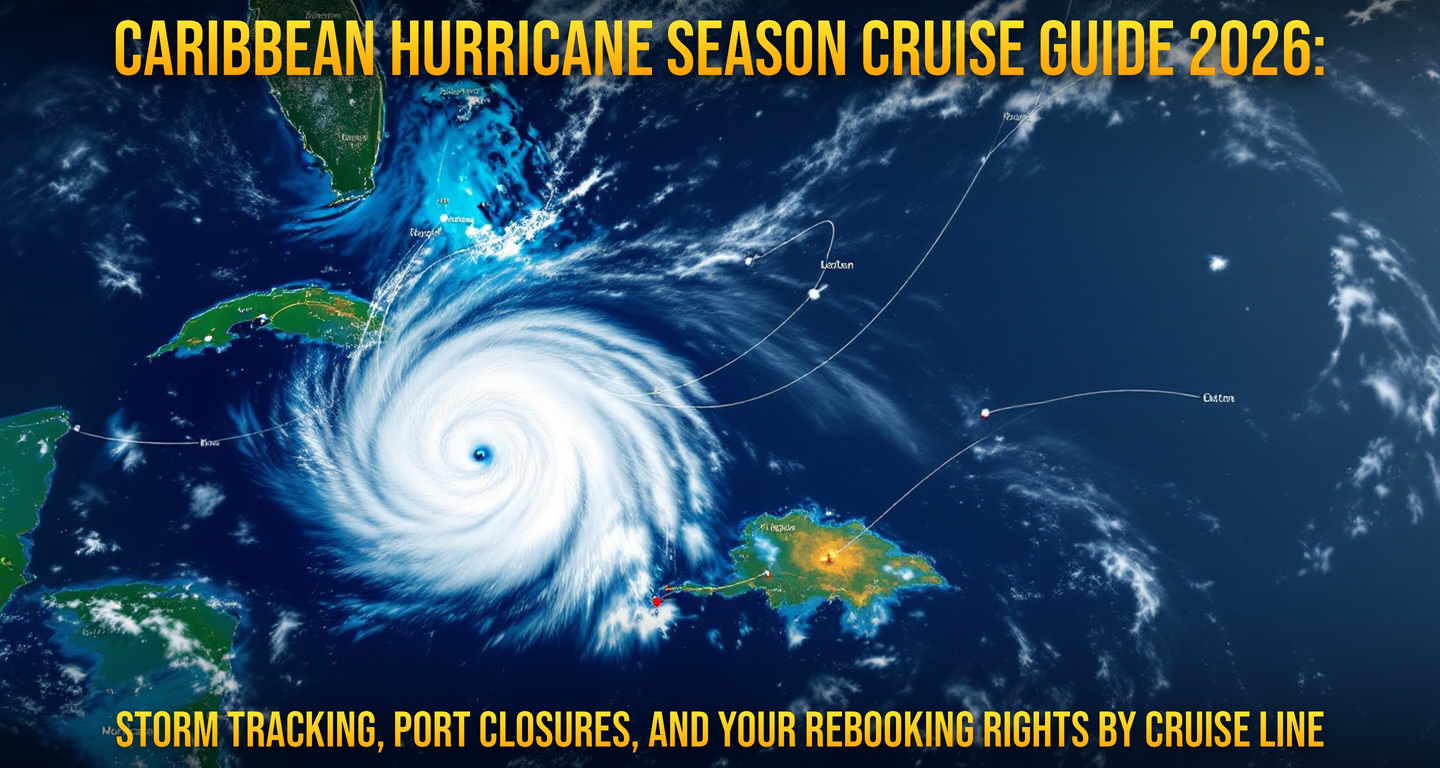
Let me be straight with you: Caribbean hurricane season runs from June 1st through November 30th, with peak activity typically from mid-August through October. But here's what the cruise lines won't tell you upfront—they're incredibly good at working around storms, and cancelled cruises are actually rare.
I've sailed through hurricane season on Royal Caribbean's Symphony of the Seas, Carnival's Mardi Gras, and Norwegian's Breakaway during active storm periods. In most cases, you'll experience itinerary changes rather than full cancellations. The Captain might swap out St. Thomas for Nassau, or replace Cozumel with an extra sea day, but the ship keeps sailing.
The honest pros and cons:
Royal Caribbean's Storm Policy:
Royal Caribbean typically makes itinerary decisions 48-72 hours before departure. If they cancel your cruise entirely, you get a full refund plus a future cruise credit equal to the cruise fare. For itinerary changes, they offer onboard credit—usually $50-100 per stateroom for missed ports.
I experienced this firsthand on Mariner of the Seas in August 2026 when Hurricane Franklin forced us to skip Barbados. Royal Caribbean gave us $75 onboard credit and extended our stay in St. Maarten by four hours.
Carnival's Approach:
Carnival is often the most flexible with last-minute route changes. They'll literally change course mid-cruise to chase better weather. On Carnival Horizon, we were supposed to hit Amber Cove but ended up in Grand Turk instead—and honestly, Grand Turk was better.
For cancelled cruises, Carnival offers 100% future cruise credit plus reimbursement for non-refundable airfare up to $200 per person. Itinerary changes get you $50 onboard credit per missed port.
Norwegian Cruise Line's Policy:
NCL tends to make decisions later than other lines—sometimes just 24 hours out. They offer the most generous compensation for major itinerary changes: up to $200 per stateroom in onboard credit for two or more missed ports.
However, their rebooking fees are stricter. If you want to change your cruise dates due to weather concerns, you'll pay $300 per person plus any fare difference, even during active storm warnings.
Here's my proven system for monitoring storms when you have a Caribbean cruise booked:
Start tracking 10 days out: Use the National Hurricane Center's website (nhc.noaa.gov) and download the Hurricane Tracker app. Don't rely on general weather apps—they're not specific enough for marine conditions.
The 5-day rule: If a storm is forecast to impact your cruise region within 5 days of departure, start checking your cruise line's website twice daily. They'll post updates in the "Travel Advisories" section.
Watch the cone, not the center: The "cone of uncertainty" on hurricane maps shows possible storm paths. If any part of your itinerary falls within this cone 72 hours before departure, expect potential changes.
Key indicators for cruise disruption:
Connect with other cruisers tracking the same storms in our Caribbean Ports forum for real-time updates and experiences.
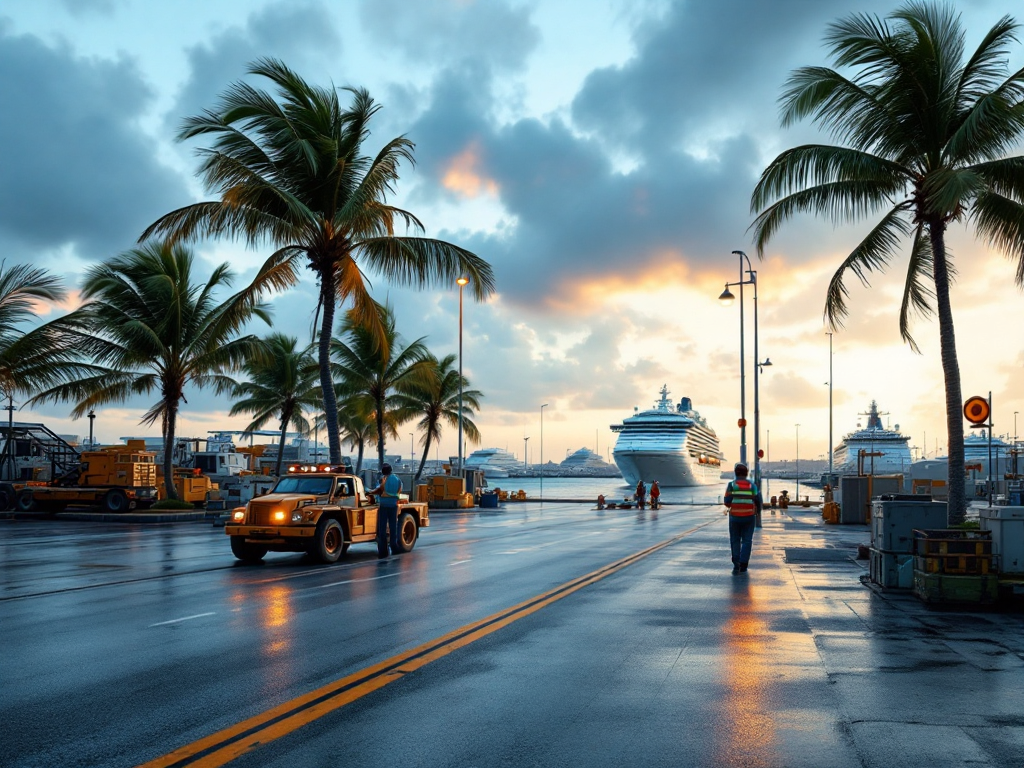
Not all Caribbean ports handle storms the same way. Here's what I've learned about closure patterns:
Most Storm-Resilient Ports:
Frequently Affected Ports:
When ports close, cruise lines have go-to alternatives. If St. Thomas closes, expect St. Maarten or San Juan as replacement. Cozumel closures usually mean Costa Maya or an extra sea day.
Insider tip: Private island destinations (Perfect Day at CocoCay, Half Moon Cay) close fastest and reopen slowest. If these are must-sees for you, avoid cruises when any storm activity is forecast within 500 miles.
Before Your Cruise Departs:
If your cruise is cancelled due to weather, every major line offers full refunds OR future cruise credits. Here's the catch—future cruise credits are usually worth more. Royal Caribbean, for example, gives 100% refund OR 125% future cruise credit.
The 24-hour rule: Most cruise lines allow penalty-free cancellation if they issue a "significant itinerary change" notice within 24 hours of departure. This means changing 2+ ports or canceling the cruise entirely.
What doesn't qualify for penalty-free rebooking:
Travel insurance reality check: Standard cruise travel insurance rarely covers "fear of storms." You need "Cancel for Any Reason" coverage, which costs about 40% more but lets you cancel up to 48 hours before departure for 75% refund.

After cruising through multiple hurricane seasons, here's my proven approach:
Book refundable rates when possible: Yes, they cost $200-400 more, but the flexibility is worth it during storm season. I learned this the hard way when Hurricane Ida forced a $600 rebooking fee on a non-refundable Carnival cruise.
Choose longer cruises: Seven-day cruises have more flexibility to reroute than shorter ones. I've seen 10+ day cruises completely change regions—going to the Western Caribbean instead of Eastern—and still deliver amazing experiences.
Avoid back-to-back cruises: If the first cruise gets delayed or rerouted, you risk missing your second cruise entirely. Carnival doesn't waive rebooking fees for this scenario.
Pack for flexibility: Bring clothes for both beach destinations and extra sea days. That sundress won't help if you're spending two days at sea instead of in St. Thomas.
The bottom line? Hurricane season Caribbean cruising can offer incredible value if you go in with realistic expectations and understand your rights. I've had some of my best cruise experiences during shoulder season—just be prepared to be flexible.
Share your hurricane season cruise experiences and get real-time storm updates from fellow cruisers in our Caribbean Ports forum!
The Reality of Caribbean Hurricane Season Cruising
Let me be straight with you: Caribbean hurricane season runs from June 1st through November 30th, with peak activity typically from mid-August through October. But here's what the cruise lines won't tell you upfront—they're incredibly good at working around storms, and cancelled cruises are actually rare.
I've sailed through hurricane season on Royal Caribbean's Symphony of the Seas, Carnival's Mardi Gras, and Norwegian's Breakaway during active storm periods. In most cases, you'll experience itinerary changes rather than full cancellations. The Captain might swap out St. Thomas for Nassau, or replace Cozumel with an extra sea day, but the ship keeps sailing.
The honest pros and cons:
- PRO: Significantly lower prices (I've seen $200-400 per person savings)
- PRO: Fewer crowds at ports and on ships
- PRO: Crew members often have more time for personal attention
- CON: Potential for rough seas and seasickness
- CON: Last-minute itinerary changes can disappoint
- CON: Some shore excursions may be cancelled for safety
How Each Major Cruise Line Handles Storm Disruptions
Royal Caribbean's Storm Policy:
Royal Caribbean typically makes itinerary decisions 48-72 hours before departure. If they cancel your cruise entirely, you get a full refund plus a future cruise credit equal to the cruise fare. For itinerary changes, they offer onboard credit—usually $50-100 per stateroom for missed ports.
I experienced this firsthand on Mariner of the Seas in August 2026 when Hurricane Franklin forced us to skip Barbados. Royal Caribbean gave us $75 onboard credit and extended our stay in St. Maarten by four hours.
Carnival's Approach:
Carnival is often the most flexible with last-minute route changes. They'll literally change course mid-cruise to chase better weather. On Carnival Horizon, we were supposed to hit Amber Cove but ended up in Grand Turk instead—and honestly, Grand Turk was better.
For cancelled cruises, Carnival offers 100% future cruise credit plus reimbursement for non-refundable airfare up to $200 per person. Itinerary changes get you $50 onboard credit per missed port.
Norwegian Cruise Line's Policy:
NCL tends to make decisions later than other lines—sometimes just 24 hours out. They offer the most generous compensation for major itinerary changes: up to $200 per stateroom in onboard credit for two or more missed ports.
However, their rebooking fees are stricter. If you want to change your cruise dates due to weather concerns, you'll pay $300 per person plus any fare difference, even during active storm warnings.
Your Storm Tracking Strategy
Here's my proven system for monitoring storms when you have a Caribbean cruise booked:
Start tracking 10 days out: Use the National Hurricane Center's website (nhc.noaa.gov) and download the Hurricane Tracker app. Don't rely on general weather apps—they're not specific enough for marine conditions.
The 5-day rule: If a storm is forecast to impact your cruise region within 5 days of departure, start checking your cruise line's website twice daily. They'll post updates in the "Travel Advisories" section.
Watch the cone, not the center: The "cone of uncertainty" on hurricane maps shows possible storm paths. If any part of your itinerary falls within this cone 72 hours before departure, expect potential changes.
Key indicators for cruise disruption:
- Sustained winds over 39 mph in port areas
- Storm surge warnings for departure or destination ports
- Ports of call issuing "Condition Yankee" (prepare for storm) or "Condition Zulu" (storm imminent) warnings
Connect with other cruisers tracking the same storms in our Caribbean Ports forum for real-time updates and experiences.
Understanding Port Closures and Alternatives
Not all Caribbean ports handle storms the same way. Here's what I've learned about closure patterns:
Most Storm-Resilient Ports:
- Nassau, Bahamas - rarely closes, well-protected harbor
- Cozumel, Mexico - only closes for direct hits
- San Juan, Puerto Rico - excellent storm infrastructure
- Barbados - southern location avoids most storm paths
Frequently Affected Ports:
- St. Thomas - exposed harbor, closes early in storm approach
- Key West - shallow waters make docking dangerous in rough seas
- Half Moon Cay/Perfect Day - private islands close at 25+ mph winds
- Jamaica (Ocho Rios/Montego Bay) - limited hurricane season operations
When ports close, cruise lines have go-to alternatives. If St. Thomas closes, expect St. Maarten or San Juan as replacement. Cozumel closures usually mean Costa Maya or an extra sea day.
Insider tip: Private island destinations (Perfect Day at CocoCay, Half Moon Cay) close fastest and reopen slowest. If these are must-sees for you, avoid cruises when any storm activity is forecast within 500 miles.
Your Rebooking Rights and When to Use Them
Before Your Cruise Departs:
If your cruise is cancelled due to weather, every major line offers full refunds OR future cruise credits. Here's the catch—future cruise credits are usually worth more. Royal Caribbean, for example, gives 100% refund OR 125% future cruise credit.
The 24-hour rule: Most cruise lines allow penalty-free cancellation if they issue a "significant itinerary change" notice within 24 hours of departure. This means changing 2+ ports or canceling the cruise entirely.
What doesn't qualify for penalty-free rebooking:
- Changing departure time by less than 6 hours
- Replacing one port with another in the same region
- Adding sea days while keeping 50%+ of original ports
- Rough weather that doesn't force port closures
Travel insurance reality check: Standard cruise travel insurance rarely covers "fear of storms." You need "Cancel for Any Reason" coverage, which costs about 40% more but lets you cancel up to 48 hours before departure for 75% refund.
My Hurricane Season Booking Strategy
After cruising through multiple hurricane seasons, here's my proven approach:
Book refundable rates when possible: Yes, they cost $200-400 more, but the flexibility is worth it during storm season. I learned this the hard way when Hurricane Ida forced a $600 rebooking fee on a non-refundable Carnival cruise.
Choose longer cruises: Seven-day cruises have more flexibility to reroute than shorter ones. I've seen 10+ day cruises completely change regions—going to the Western Caribbean instead of Eastern—and still deliver amazing experiences.
Avoid back-to-back cruises: If the first cruise gets delayed or rerouted, you risk missing your second cruise entirely. Carnival doesn't waive rebooking fees for this scenario.
Pack for flexibility: Bring clothes for both beach destinations and extra sea days. That sundress won't help if you're spending two days at sea instead of in St. Thomas.
The bottom line? Hurricane season Caribbean cruising can offer incredible value if you go in with realistic expectations and understand your rights. I've had some of my best cruise experiences during shoulder season—just be prepared to be flexible.
Share your hurricane season cruise experiences and get real-time storm updates from fellow cruisers in our Caribbean Ports forum!