

Sofia_Reyes
Moderator
When Your Cruise Cabin Becomes Your Worst Vacation Memory
I've spent over 200 nights in cruise ship cabins across 40+ voyages, and I can tell you with absolute certainty: a bad cabin can ruin an otherwise perfect cruise. Whether it's the couple above you practicing their tap-dancing routine at 2 AM, water pooling under your bathroom door, or a thermostat that refuses to cooperate, cabin problems are real — and they're more common than cruise lines like to admit.
The good news? Most of these issues are fixable if you know how to handle them. I'm going to walk you through exactly what I've learned from dozens of cabin problems — and more importantly, how to get your room changed without jumping through endless hoops.

Noisy Neighbors: The Most Common Cabin Complaint (And How to Actually Solve It)
Let's start with the elephant in the room — literally. Noisy neighbors are the number-one complaint I hear from cruisers, and honestly, cruise ship walls are thinner than you'd expect for a luxury vacation.
What you're actually hearing:
Cruise ships are floating cities. Sound travels differently at sea, and cabins — especially inside cabins and lower deck balconies — amplify noise in ways you won't experience in hotels. I once had neighbors who seemed to rearrange furniture at midnight. Turns out they were just walking in heavy shoes on a deck that transmitted vibration directly into my cabin.
- Footsteps and dragging luggage (incredibly common on your first and last nights)
- Voices through paper-thin cabin walls
- Plumbing sounds that echo through shared pipes
- Nightclub/lounge noise (especially if you're booked near the Atrium on lower decks)
- Deck chairs scraping, pool noise, and kids running around upper decks
Your first move: document and report immediately
Don't wait until night 3 to complain. If noise starts on your first night, call Guest Services before bed. Here's why: crew members work during the day and document complaints as they come in. The earlier you report, the higher priority your request becomes.
When you call, be specific: "There are loud conversations coming from the cabin above me" is better than "it's too loud." Give them a timeframe and describe the noise type.
The cabin change conversation
This is where most cruisers mess up. You call Guest Services and ask for a room change. They tell you there's nothing available. You accept this and suffer for 7 days. Don't do this.
Instead, here's what actually works:
- Ask specifically: "I understand the ship may be full, but I've been experiencing significant noise that's affecting my sleep. What options do you have on higher decks or in quieter areas?" Quieter cabins almost always exist — crew just don't volunteer them without a push.
- Offer alternatives: "Would a cabin toward the front or back of the ship help? I'm flexible on location." Midship cabins near the Atrium are typically noisier; forward and aft cabins are quieter.
- Ask about timing: "Can we move me tomorrow morning instead of waiting?" Many ships can relocate passengers between 8 AM and noon when cabins are being cleaned.
- Escalate politely: If Guest Services says no, ask to speak with the Hotel Manager (the head of hotel operations). They have more authority and deal with serious guest complaints.
I got moved within 18 hours on a Carnival Breeze sailing after reporting noise on night one. The Hotel Manager offered me a cabin that was two categories higher at no charge. They have options — you just have to ask the right way.
Insider tip: The absolute quietest cabins on any ship are forward-facing aft cabins (toward the very back of the ship). These rarely have neighbors to the sides, and they're naturally isolated from main ship noise. If a room change is offered, ask for one of these specifically.
Plumbing Problems: From Leaks to Backed-Up Toilets
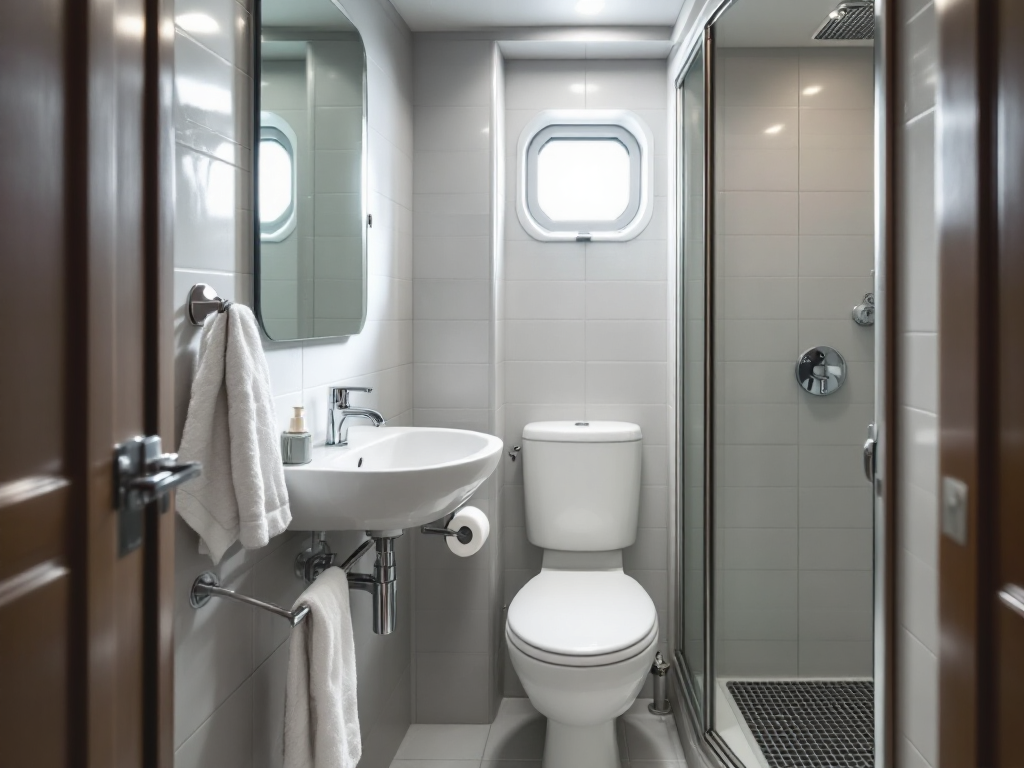
Water issues in cruise cabins range from minor inconveniences to absolute disasters. I've experienced both — and I've learned that how you report plumbing issues matters enormously.
Common plumbing nightmares:
- Toilet backup: This happens more often than you'd think, especially on lower decks where main drainage lines pass overhead. Call immediately — don't use the toilet again.
- Shower/tub drainage issues: Water pooling around your feet in the shower is a safety hazard and a sanitation issue.
- Sink clogs: Usually minor, but annoying when you can't brush your teeth or wash your face.
- Leaking ceiling/wall: This is the serious one. Water leaking from above means something is wrong above your cabin — it could be a waste line, freshwater line, or A/C condensation issue.
- Seawater leaks (rare but devastating): Actual ocean water getting into your cabin means a hull or window seal problem.
What to do immediately:
- For minor issues (slow drain): Call Guest Services. They'll often send a plumber within an hour. It's usually just debris. Don't panic.
- For serious issues (backup, leak from above): Call immediately AND put a "Do Not Disturb" sign on your door. Seriously. This prevents housekeeping from entering a potentially contaminated space. Then call Guest Services and ask for a room change before attempting any repair.
- Take photos of any water damage. You'll need these for the complaint resolution process.
The reality check:
Cruise ship plumbing is engineered to handle thousands of people dumping stuff down toilets 24/7. Most clogs are preventable — the biggest culprit? People flushing things that shouldn't go down a marine toilet. Only human waste and toilet paper. Seriously. Not even "flushable" wipes (those lie). Not feminine hygiene products. Not dental floss. Just the basics.
I was in a cabin with a backed-up toilet on a Disney Dream. Maintenance cleared it in 45 minutes and moved me to a cabin on a higher deck at no charge. The key was calling immediately without trying to plunge it myself.
If you get a room change due to plumbing: Ask for compensation (a drink package credit or onboard credit). You've been displaced through no fault of your own. Many cruisers don't ask, but this is absolutely reasonable.
Temperature Control: The Thermostat Wars
This one drives me crazy because it's almost always solvable, but it's also almost always misunderstood.
Your cabin thermostat isn't broken — it's just not the same as a hotel thermostat. Here's why:
Cruise ship cabins have centralized HVAC (heating/cooling) systems. Your cabin's thermostat doesn't control the temperature the way you'd expect. It controls the proportion of hot and cold air flowing into your space. The overall ship temperature is set centrally, and your thermostat just adjusts the balance.
What this means in practice: If the ship is running cooler overall (which they do at night to save fuel), your thermostat might be set to full heat and your cabin still feels cold. This is not a broken system — it's a design limitation.
The temperature complaint playbook:
- First attempt: Set your thermostat to the specific temperature you want, not just "hot" or "cold." If your cabin has digital controls, this is usually 72-74°F. Don't just turn it to the highest setting.
- Give it 30 minutes. The HVAC system doesn't respond instantly. Temperature changes take time.
- Check for thermostat placement issues: If your thermostat is above a bed or in direct sunlight, it might be reading incorrectly. Some modern cabins have sensors in weird spots.
- If it's still too cold: Call Guest Services and ask them to increase the supply temperature to your cabin. Don't ask for an HVAC tech yet — the crew can often adjust this manually from the bridge.
- If that doesn't work: Request a cabin in a different location. Some cabins on the same deck run warmer/cooler than others depending on proximity to the funnel, A/C returns, or engine room.
The thermostat trick I've learned:
On some ships (especially older Carnival and Norwegian vessels), the thermostat controls can be overridden using the door sensor. If your cabin door is left open, the A/C shuts off or changes behavior. If you're having temperature issues at night, make sure your door is fully closed. I've had guests think their thermostat was broken when it was just reacting to a door that wasn't latched completely.
Real talk about temperature expectations:
Cruise ships run cooler than most people expect. This is intentional — it saves energy on a vessel that runs 24/7, and it helps manage humidity in tropical climates. Your cabin might be 74°F, but it'll feel cooler than a hotel at the same temperature. Bring a light sweater or ask the crew for an extra blanket (they usually provide these immediately).
I once requested a cabin change because I was cold the entire first night. Maintenance showed me that I'd set the thermostat to 68°F, which is freezing for a tropical cruise. That was user error, not a ship problem.

The Nuclear Option: Getting Your Cabin Changed When Guest Services Won't Help
You've called Guest Services. You've been polite. You've documented the issue. And they still won't move you. Here's your escalation path:
Step 1: Ask for the Hotel Manager
This is the person in charge of all hotel operations on the ship. They answer directly to the Captain on guest-facing issues. When you call Guest Services and get "no," ask to speak with the Hotel Manager. When they get on the phone, explain your situation calmly and specifically. Say something like: "I've called Guest Services three times about [specific issue]. I've given them time to resolve it. I'm requesting a room change to another area of the ship that might work better for my situation."
Hotel Managers have significantly more authority than front desk staff. They can authorize cabin changes, compensation, and special accommodations on the spot.
Step 2: If that fails, ask for the Guest Relations office
This is a separate department from Guest Services, usually located near the Atrium or front desk. They handle formal complaints and resolution. Ask for a formal complaint form and submit it in writing. This creates a paper trail that cruise lines take seriously.
Step 3: Mention you're a repeat cruiser (if you are)
Cruise lines track loyalty heavily. If you mention you've cruised before and plan to cruise again, you immediately become more valuable to them. They're more likely to make exceptions for repeat customers because losing your business costs them more than upgrading your cabin.
Step 4: Don't mention legal action, but be clear about your expectations
Don't say "I'm calling my lawyer" — that shuts down negotiations immediately. Instead, say: "I want to find a solution together. I'm not comfortable in this cabin, and I'd like to move to a different location. What can we do?"
The compensation conversation
If you get moved due to a legitimate cabin problem, you should receive compensation. This might be:
- Onboard credit ($50-$300 depending on severity and ship size)
- Free beverage package for the remaining nights
- Upgrade to a better cabin category
- Future cruise credit
Don't expect this automatically — ask for it. Say: "Since I've been displaced from my original cabin due to [issue], what compensation can you provide?"
I got $150 in onboard credit plus a beverage package when I was moved from a cabin with a toilet backup on a Royal Caribbean Oasis-class ship. The crew didn't volunteer this — I asked.

How to Avoid Cabin Problems Before They Start
Not every cabin problem is solvable once you're at sea. Some prevention goes a long way:
1. Avoid known problem decks
Each ship has predictable noise patterns:
- Decks directly below pool decks are louder (voices carry from above)
- Cabins near the Atrium are noisier (it's the social hub of the ship)
- Lower decks near the main theater can have audio bleed during shows
- Cabins above the main galley (kitchen) sometimes have odd temperatures
- Inside cabins (no window) in the center of the ship are typically quieter than balcony cabins
2. Request a quieter cabin when booking
When you book your cruise (through our Trip Planner or by contacting our concierge), mention that you prefer a quiet cabin in a forward or aft location. Some cruise lines honor these requests automatically.
3. Choose cabin location strategically
Forward and aft cabins are quieter. Mid-ship cabins are noisier but closer to restaurants. Balcony cabins are louder than inside cabins. Higher decks are slightly quieter than lower decks. There are tradeoffs — figure out what matters most to you.
4. Pack earplugs and a white noise app
Seriously. I travel with noise-canceling earplugs and sometimes use a white noise app on my cabin TV. They're lifesavers on busy sea days when other guests are in their cabins.
5. Avoid embarkation and disembarkation nights if possible
The first and last nights are always noisier because everyone is either checking in or packing. If you're sensitive to noise, consider arriving a day early or staying a night after disembarkation.
The Bottom Line: You Have More Power Than You Think
Cruise lines want you to have a good experience — a bad cabin experience leads to negative reviews, failed repeat bookings, and complaints to credit card companies. This is leverage you can use. You're not being unreasonable by asking for a room change due to legitimate problems. You're being a reasonable guest asking for a livable cabin.
The key principles:
- Report problems immediately, not on your last night
- Be specific about what's wrong, not just vague complaints
- Ask for a room change by name, not hints
- Escalate to the Hotel Manager if Guest Services won't help
- Ask for compensation — you're entitled to it for displacement
- Take photos of physical damage (plumbing, mold, structural issues)
I've been moved within hours on some cruises and denied on others — the difference was always in how I communicated the problem and how persistent I was with escalation. Cruise lines count on guests accepting "no" the first time. Don't be that guest.
Have you dealt with cabin problems at sea? The Problems & Complaints resolution forum is the perfect place to share your story and get advice from thousands of cruisers who've been there.